
Raiders of the Left Ark


I can recall first encountering Denis Freney‘s expose on the DSP, Raiders of the Left Ark, some time around 2000. Then I thought it was a thoroughly scurrilous and highly enjoyable piece of journalism: now I think it’s only a slightly scurrilous, but still reasonably informative and entertaining, piece of writing.

I can also remember asking around inre the author’s identity (I believe it’s been circulated under a number of different pseudonyms, and possibly even titles), and also inre the accuracy of some accounts; especially where they intersected with anarchist activism. Broadly speaking, it appears to be a largely accurate, if biased, account of some of the more memorable escapades in the DSP’s short history.

Its continued circulation also appears to upset the DSP leadership, so what the hell? Nick Fredman says: “This piece of scurrilous garbage was written by an arch-sectarian Stalinist hack, the late and unlamented Denis Freney (I have a copy of the anarchist mag Rebel Worker in which it was reprinted in 1991), so [there] won’t be no vol 2, sorry for all you left train spotters and gossip mongers. It has flown around the internet a bit in recent years, without Freney’s byline, sometimes with the intro that it was written recently by an unnamed ex-DSP member, despite the fact that it refers to nothing after 1990, showing that some people will believe anything that will reinforce their schemas.”

In the interest of ‘shoring up my schemas’, then, here ’tis:

======

RAIDERS OF THE LEFT ARK

A LITTLE BIT OF HISTORY

The DSP’s origins can be traced to the formation of Resistance in Sydney in 1967. Resistance was formed from among anti-war youth who joined the Vietnam Action Campaign (VAC). Resistance had a parallel “adult” organisation, the International Marxist League which maintained a clandestine existence at this time.

Although the VAC had a wide membership, it was dominated by Bob Gould and his student supporters Jim and John Percy. After some initial success, the VAC was unable to obtain a breakthrough in mobilising very large numbers against the Vietnam War and Conscription.

In 1969, a broad sponsoring group began organising for the Vietnam Moratorium held in May 1970. This was too broad and large for Gould or the Percys to control.

The growth of the Moratorium led to divisions inside Resistance-IML. The Percy brothers wanted both to become disciplined and structured organisations, while Gould wanted a loose one which he could control. The other major dispute concerned the Third World Bookshop which was formally owned and operated by the VAC, which had virtually stopped existing.

The Percys claimed the bookshop should become the property of Resistance, while Gould claimed it as his own private property (having legally made sure this was so). The bitter and at times violent dispute did not stop both trying to stack meetings and ferociously resisting demands that the Vietnam Moratorium Committee (VMC) be a delegate body, with representatives from its many affiliates.

SOCIALIST YOUTH ALLIANCE & SOCIALIST WORKERS LEAGUE – SOCIALIST WORKERS PARTY

Resistance became the Socialist Youth Alliance in 1970 and in 1972 the “adult” and fully “Leninist” party, the Socialist Workers League (SWL) was formed and became at first a “sympathising section” of the Fourth International and not long after the “Australian Section”. In 1976 the SWL because the Socialist Workers Party (SWP).

The Fourth International was founded in 1938 on the basis of “international democratic centralism” and its various “sections” would become parties with mass followings able to lead revolutions. Instead, they soon became narrow sects revolving around leaders jealously guarding their cult following.

In 1979, the US SWP supported the Soviet invasion of Afghanistan. Later in 1982, they reversed their earlier support. But the Australian SWP for the first time ever disagreed with their American mentors and continued to stridently defend the invasion.

Relations with the US SWP rapidly deteriorated and in August 1983 the Percy leadership forbade any Australia SWP member to have any political collaboration with the US SWP, even though both organisations were formally members of the Fourth International.

Immediately after, a grouping of long-time Australian SWP members and leaders were subject to an “investigation committee” and after an inquisitorial examination were summarily expelled because they agreed with the US SWP and disagreed with a number of Percy policies.

[A contemporary anarchist response to the formation of the SYA may be found here.

The Re-Emergence Of Obsolete Communism (1972)

The re-emergence of all the old Maoists’ philosophies in the last two years is a more disturbing event than any more blatant counter-revolutionary trend. That W.S.A. [Worker Student Alliance – Maoist], S.Y.A. [Socialist Youth Alliance – nominally Trotskyist], etc., are counter-revolutionary is obvious from their dogma, organisation and activities.

They have dragged up all the antiquated shit that should have long ago been placed in its historical perspective, relevant to capitalism and society in C19th Europe. And even then it was corny.

The authoritarian vanguard-style of revolution, advocated by Marx and all the varieties evolving from him, have led to a consistent betrayal of popular uprisings. That the vanguard party become counter-revolutionary is obvious from a few examples.

The role of Lenin and Trotsky in post-revolutionary Russia was primarily to dismantle the workers’ councils or soviets as autonomous bodies and to place them under the control of the Central Committee. These experiments in free self-management were working successfully in the factories and free rural collectives which were established in the Ukraine. The Bolsheviks systematically dismantled these until in 1921 workers and sailors in Petrograd revolted. Their demand – “All power to the Soviets”. The very same demand the Bolsheviks fought for in 1917. Trotsky had them slaughtered. Immediately after the revolution much sexual repression in Russian society was swept away. By 1922 these advances had been renounced, laws against homosexuality and sexual freedom were re-introduced. In “revolutionary” China sexual repression and the authoritarian family structure are still a part of society. The link between sexual intolerance and a repressive state has often been made by people such as Wilhelm Reich…]

IN THE EIGHTIES

From the early 1980s the Percys had discussions with the Socialist Party of Australia (SPA) [founded in 1971; known since 1996 as the Communist Party of Australia]. Although the SWP supported Poland’s “Solidarnosc”, its previous harsh criticism of the Soviet Union and Stalinism was softened and eventually virtually disappeared from the pages of “Direct Action”. By 1984-85, the SPA and SWP had formed the “Socialist Alliance” which contested elections for a number of years[!].

In August 1985, the Australian SWP formally announced its split from the Fourth International. The SWP was no longer Trotskyist, Percy declared; the 1938 formation of the Fourth International was a mistake and it was necessary to open up to the “communist current”, namely the Brezhnevite leadership of the USSR. The SPA “alliance” served to gain some introductions, and for the following couple of years the SWP pursued this attempt to win friends in Moscow with energy. But it achieved little.

NUCLEAR DISARMAMENT PARTY

The spectacular success of the NDP in 1984 including the near election of Peter Garrett and Jo Vallentine’s actual election to the Senate occurred without the NDP having any structure, constitution or policy outside the three nuclear disarmament points. This naturally attracted the attention of the SWP whose members were directed to join what NDP branches existed and to form them where they did not.

Jim Percy wrote in a booklet, “The ALP, the NDP and the Elections”, that “we should be in there helping to build it (the NDP). We don’t know where it’s going but it’s going to go better if we’re in there, provided we don’t go in there with lead boots and stamp all over the place. There is absolutely no contradiction between us loyally building the NDP and continuing to build the SWP… The most important concern is the use we make of the campaign to get our ideas around…”

The NDP was, as Peter Garrett later put it, clearly seen by Percy as a “host” party for the growth of the SWP. After the NDP success in the 1984 elections, preparations began for the founding national conference. It was an open conference held in Melbourne in Easter 1985, at which anyone with an NDP membership card issued freely for a nominal charge, could attend. Of the 170 present, it was estimated that 70 were SWP or Resistance members. Jim Percy sat at the back of the hall, directing SWP tactics.

The SWP blocked any voting on resolutions proposed, including those most hotly in dispute: that members of other parties could not be members of the NDP and a proposal that the NDP call for nuclear disarmament “East and West”. Out of frustration, the leading figures in the NDP proposed that all proposals not voted on be submitted to a referendum of NDP members. This was defeated 87 votes to 86. The conference then divided and in the emotional heated atmosphere, the result was unclear and the NDP leadership around Jo Vallentine and Peter Garrett walked out.

Others like NDP founder Michael Denborough remained, as did Robert Wood (later NDP Senator) along with others who did not understand the walkout. But the SWP’s “lead boots” had effectively “stomped over” any hope of the NDP becoming a viable formation. Their use of well-tried meeting tactics and number-stacking against people inexperienced in such operations made sure of that.

The SWP opposition to the slogan “Disarmament East and West” which had been accepted widely including in the Palm Sunday rallies reflected their flirtation with the SPA and the Soviet leadership. Their opposition to any ban on two Party membership reflected their desire to build the SWP through the NDP.

The SWP quietly withdrew most of its cadres from the NDP. Only Rob Wood and friends kept it operative in Sydney. The SWP however did recruit a few members from the NDP experience, proving no doubt that it was worth the effort…

NEW PARTY OF THE LEFT – THE “CHARTER” PROCESS

In 1984 the CPA (Communist Party of Australia) publicly called for a process for the “renewal of socialism” including the formation of a new party of the Left. This was attacked by the SWP. The Broad Left Conference held in Sydney in Easter 1986 brought together a wide range of some 1600 left, environmental and other activists. The SWP also strongly attacked the organisers of this conference.

Later in 1986, when a wide range of activists issued a call for a New Party of the Left, the SWP after initially attacking it, almost overnight changed its position and asked to join in the process. Despite doubts among many involved in what became known as the “Charter Process”, the SWP’s public acceptance of the principles set out in the Charter meant that the SWP was allowed to participate in preparation for an initial conference.

The SWP leadership initially agreed to the principle that members of any New Party of the Left could not be at the same time members of another party or para-party. As the conference to discuss the new party draw close, the SWP began to back-track and floated the idea that Resistance would continue as an independent grouping. Many saw this as a manoeuvre to keep the SWP operating under a different guise.

At the conference, the principle was adopted that the major documents, particularly the call for a founding conference of a new party would have to be adopted by a two-thirds majority. At the conference, the SWP had about a third of those present and with a few supporters was able to block the final document, which had already been substantially modified to try to accommodate their demands. The conference broke up in disarray. The SWP tried to continue the fiction of their own Charter process, but this was soon dropped by their leadership.

A group of long-time SWP members, including leading figures in its Sydney organisation, who had been deeply involved in the Charter Process and genuinely worked hard for its success disagreed with the SWP veto of decisions at the Melbourne conference. They were summarily expelled by the Percy leadership without even the minimal democratic processes.

Only in July 1990 was the New Left Party [a short-lived group that later collapsed into the Search Foundation] formally founded after another long and laborious process initiated in 1988 by a second broad range of sponsors. Two-party membership was banned. The SWP was not invited to take part.

THE DEMOCRATIC SOCIALIST PARTY

In late 1989, the SWP announced that its national committee had voted to change its name to the Democratic Socialist Party. The DSP was to be more democratic and open to varying views. But it has remained as tightly disciplined as ever with any dissent severely repressed.

In part, the change of name can be explained by the discredit the SWP had earned itself throughout the broad Left, ecology and peace movements by its manipulative practices throughout the previous twenty years. Second, it was part of a new strategy to hitch itself to the process of renewal and radical change taking place in eastern Europe and Gorbachev’s Soviet Union.

In these few years, Percy and other SWP/DSP leaders paid numerous visits to Moscow and other east European capitals. Resources were found to place two SWP/DSP leaders in Prague for a long period. During these visits, Jim Percy forged links with various forces inside the Soviet Union, including many radicals, who may or may not have been aware of the SWP’s stand supporting Brezhnev’s invasion of Afghanistan.

Some visits were made via Libya on tickets supplied by that country’s government through one Robert Pash, a long-standing neo-Nazi. But the large expenditure on such trips cannot be accounted for from that source alone.

The various DSP initiatives in eastern Europe and the Soviet Union gained credibility for the DSP as the local representative of renewal in that part of the world. They also formed part of Jim Percy’s empire-building aimed at proving to his former comrades in the Trotskyist Fourth International that he was a force to be reckoned with, and that he was successfully integrating himself in the old communist movement.

An important DSP venture is the Green Left Weekly. Despite its claim to be “independent” and under the supervision of a “broad” range of sponsors, the paper remains very much under DSP control. GLW is well known for refusing to publish or censoring articles which, although revolutionary and anti-capitalist, do not conform to the Marxist-Leninist Party line.

ENTRISM – “DEEP” AND “RAIDING PARTIES”

The key to understanding the varied history of SWP/DSP intervention in mass movements is the concept of “entrism”. It was proposed by Trotsky in the Thirties when his movement was very small and isolated. Under tactics based on “entrism”, Trotskyists entered the mass communist or social democratic parties to form their own leftwing groups.

Such entrism was mostly carried out secretly and without acknowledging membership of another party. The idea was to build a revolutionary left within these mass parties which would, in a crisis, be able to lead the masses, after taking control of the mass party.

There are several variants of “entrism”:

“DEEP ENTRISM” implies the concentration of all members of the Trotskyist Group in entrist work in the “host” party. No independent Trotskyist publication is produced, with all efforts going into a newspaper produced under the name of the front entrist Group. The most successful applicants of the strategy have been the “Militant Tendency” in Britain which over decades [once] worked with the Labour Party, denying the existence of the secret Trotskyist group. The Militant Tendency won control of the Labour Party’s youth wing and city branches. In Liverpool it controlled the city council through its majority in the caucus.

“RAIDING PARTY ENTRISM” on the other hand, scorns such long term tactics and concentrates on relatively short-term entrism by a minority of members of the Trotskyist Group into the mass party. This was the policy of the SWP in the 1970s when it kept some undercover members in the ALP and produced a small magazine “Labor Militant” a few times a year. At times, the numbers in the ALP might increase when it seemed there were chances of recruitment, but generally the number of SWPers undercover were small.

Most European Trotskyist groups have adopted a policy which spreads numbers more or less evenly between “entrist” and “open” work, switching emphasis as times change.

Although the SWP/DSP in the past decade has virtually stopped all entrist work in the ALP, urging all left wingers to leave, it has adapted the tactic to other formations and movements. Being very flexible, the Percys find-tuned the old entrism tactic to a degree not seen elsewhere.

TASMANIAN UNEMPLOYED WORKERS UNION

The UWU in Hobart was unusual for such groups because it had been a financial success. It established the first wholefood store in Hobart and prospered. But by 1984 the initial founders of the UWU had drifted out of the organisation due to other commitments. As an Unemployed Workers Union it was moribund and not serving its initial functions. Among the few remaining people active in it were the leading people in the small SWP organisation in the State.

In April 1984, a special general meeting was called, supposedly to secure its assets against a (non-existent) right-wing take over and to deal with taxation and other difficulties. To stack the meeting, 25 SWP members were flown in from Sydney and Melbourne and given UWU membership on the spot. They voted to transfer its assets, of around $30 000, to a new organisation the Tasmanian Progressive Society (TPS).

The TPS was not incorporated and had, to say the least, very strange rules. Its constitution and rules spelled out that it would “not consist of more than six members”. New members could join by “invitation only”. The president was appointed by resolution to hold office “until death or resignation or unless removed from office by resolution” of the other five members. The President was none other than Jim Percy!

He could remove trustees and expel other members. And “there [was] no quorum required” for meetings of the TPS. As President, Percy had the “sole authority for the interpretation of these rules” and his decision was “final and binding”!

David Mazengarb, a leading SWP member in Hobart had second thoughts about the asset-stripping and alleged that the money went not to help the UWU (as required in the TPS rules), or even to help the SWP operations in Tasmania, but rather to fund the SWP’s national operations based in Sydney. He and other leading SWPers resigned in disgust and exposed what had happened.

The only response offered by the SWP when their UWU operation was exposed, was to say that Mazengarb and the other resigned SWPers had been part of the operation transferring the UWU money to TPS/Jim Percy agreed with it at first, only to reject it later. The SWP then accused the four ex-SWPers of wanting to grab the money for themselves and, when they couldn’t get it, setting up a rival wholefood shop to the one controlled after April 1984 by TPS/Percy.

Nothing has been heard of the TPS since. The “Corporate Raiders of the Left Ark” moved on to other goals.

The Tasmanian UWU operation can be seen as a new variant of raiding-party “entrism”, with the sole aim of gaining access to a large amount of money.

THE “LEFT-WING” USTASHA OF THE HDP

The HDP (Croatian Movement for Statehood) never hid its admiration for the Ustasha puppet regime established after Hitler’s troops conquered Croatia and the rest of Yugoslavia in 1941. Like other Ustasha groups in the West, it celebrated April 10, the date the neo-Nazi regime was established. It glorified the Ustasha fuehrer Pavelic and General Luburic who were responsible for the massacres of hundreds of thousands of Serbs, Jews, Gypsies and anti-fascist Croats.

The HDP leader was Nicola Stedul, who left Yugoslavia in 1956 for West Germany to join the movement headed by Pavelic and later a rival one, the HNO (Croatian National Resistance) headed by Lubiric. He was an HNO representative in Australia from 1966 to 1971, a time when the HNO and other radical Ustasha groups carried out a series of bomb attacks. The then Liberal Government and ASIO outrageously covered up for those responsible for these bombings. The SWP at the time condemned these terrorist attacks.

The HNO, which later became the HDP, was also on record as carrying out numerous terrorist attacks in Western Europe. In one attack, HDP hero, Miro Baresic, assassinated the Yugoslav Ambassador in Sweden in 1971. He was released the following year when Ustasha terrorists hijacked a jet. He went to Spain, then Paraguay, where he joined the death squads of the dictator Stroesner. Baresic was arrested in the USA by the FBI and returned to prison in Sweden.

The neo-Nazi credentials of the HDP were as clear as a pike-staff. But they also tried to woo the left. Stedul formed the “Socialist Party of Croatia” in exile precisely for the purpose. In Australia, they approached Left Labor figures …and the SWP. Only the SWP welcomed them.

In 1982, the HDP tried to march on May Day in Melbourne and received a hostile reception. The SWP took up their cause and for the next few years campaigned vigorously on their behalf against every other section of the left and progressive movement who pointed out the HDP’s attitude to the Ustasha and its terrorist and neo-Nazi links. It was pointed out that in the early 1970s, war criminals here such as Srecko Rover tried to woo the Left and that early Ustasha and then the HDP had a well documented record of trying to woo the Soviets ever since the Tito split with Stalin in 1948.

What were the reasons for the SWP’s blind endorsement of these Ustasha? SWP leader David Holmes wrote in August 1983 that “the HDP leaders are revolutionaries…As a result of the collaboration between the HDP and the SWP and also through the development of the class struggle in this country, many more Croatians will come to see the need to build a revolutionary workers’ party here and fight to overthrow capitalism.”

It is easy to see the very special “entrism” involved here. It is into a whole community – there were then over 150 000 Croatian migrants in the Australian workforce. The HDP had some support among them. By “collaborating” with them, the SWP hoped to recruit among that community which would see the need for a “revolutionary workers’ party” (that is, naturally the SWP/DSP). It is a very big raiding party involved; a couple of hundred SWPers taking over the Croatian community… Such is the stuff of dreams!

Enough then to ignore what the HDP actually wrote about the Ustasha regime, enough to even lionise the terrorist neo-Nazi Baresic in the columns of Direct Action (now “Green Left Weekly”).

The SWP did recruit a few HDP members into their ranks, but after all their abject apologising for the HDP, its leaders here soon broke off links with the SWP, precisely because the SWP was trying to recruit its members. Even then, the SWP refused to criticise the HDP or admit its error, speaking of it following a “rightwing drift” in 1984, although its extreme-right credentials were available well before.

[See also Joan Coxsedge, Ken Coldicutt and Gerry Harrant’s Rooted in Secrecy: the clandestine element in Australian politics, esp. ‘One, Two, Three — Ustasha Are We!’, pp.43-59.]
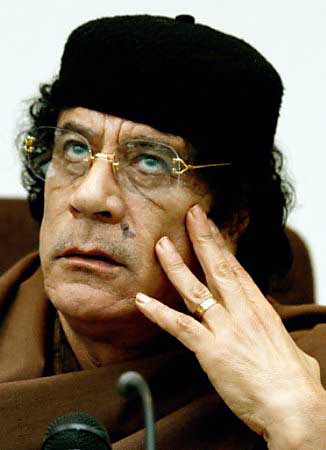
ROBERT PASH AND THE LIBYAN CONNECTION

Robert Pash has long been a member of the small neo-Nazi network in the country. For many years he was a one-man Nazi band in Brisbane, heading National Vanguard from a post office box in Capalaba. For some time he was head of the Brisbane branch of National Alliance, then the Progressive Nationalist Party and finally, for a brief period, of National Action.

But in 1984, Pash formed the All-Peoples Congress, began circulating the Green Book on Libya’s Ghaddafi and made the first of many trips to Libya. Soon he was the semi-official representative of Libya here, much to the consternation of its embassy.

Under attack from the Left, Pash felt if necessary to seek friends on that part of the political spectrum. He contacted the SWP who expressed interest in the free round-the-world air tickets he was handing around for those who were friendly to Libya and himself. Always interested in the main chance, Pash denounced the racists in National Action and swore himself a friend of the non-Europeans around the world, after some of his earlier productions had been widely exposed. But Pash remained in close contact with anti-Semitic and neo-Nazi circles here and in Britain, organising the visit of leaders of the neo-Nazi British National Front to Libya. Pash did try to act out his Nazi fantasies a little more discreetly than in the past, although the “Protocols of the Learned Elders of Zion” were still on sale in the Libyan Cultural Centre he operated in Melbourne.

In a repeat of the HDP experience, Direct Action defended Pash ferociously, accusing his critics of being anti-Libyan and anti-Arab.

A number of SWPers did get those round-the-world airfares which meant useful trips to Europe and the USA.

OTHER EXPERIENCES

The various forms of entrism have also been applied to many other mass organisations over the past twenty years. In the “Committee in Solidarity with the Caribbean and Central America” (CISCAC) in the early ’80s, it provoked a split with almost all other forces when it insisted that it have half of the membership of the ruling body as against all others, Latin Americans included.

[QGN and DSP

There is an idea that members of the Democratic Socialist Party (DSP), as affiliates of the Queensland Green Network (QGN), are proposing. It is that an national “Alliance” and not a Green Party is the way to go. The DSP tell people how wonderful the Green Alliance campaign in Brisbane was, and how good the QGN is. But there was discontent amongst green activists in QGN who thought they were being manipulated by the DSP. The DSP’s constitution states:

“Article 4. Paragraph 2. Members of the party shall have the following obligations: (a) To be loyal to the aims of the party, to reject any conflicting political loyalty, to place all their political activity under the direction of the party, and to engage in the work of the party to the best of their ability.”

It is hard for me to see how any organisation with this constitution can honestly participate within a grassroots democracy without making a mockery of it for the other people involved. How can non-DSP people expect to use consensus when there is a disciplined block of DSP members arguing one line and unwilling to compromise or change their position for the benefit of the group?

To me participatory democracy is not where some people dominate discussion at the expense of others. It is where all people contribute equally and not only in relation to a timeframe. Contributing equally means not having dogmatic ideas or being bound to decisions made by other organisations but is when each person respects the others ideas. It does mean willingly being able to modify your ideas with respect to what has been said at the meeting. I feel a true grassroots participatory democracy does away with the patriarchal system of individual competitiveness which simple majority voting is associated and replaces it with a system, as the ecofeminists may describe it, of love and caring for the group.

I think the question should be asked now. How can an organisation who has a constitution stating the members must be loyal to the aims of the DSP, reject any conflicting party loyalty and place their political activity under the direction of the DSP be trusted to follow the direction of an “Alliance” if they were elected to parliament? An “Alliance” in the future with the DSP would be pointless because it would not benefit the “Alliance” only the aims of the DSP. Therefore the QGN preferred model of including a proscription clause in the constitution of a national Green Party is a sensible and one which I support.

Ian Murrell
Arana Hills Qld]

In the “Bring the Frigates Home Coalition”, formed in Sydney around the Gulf War, the SWP supported IS/Socialist Worker (whose slogan was “Victory for Iraq”) in blocking a resolution that would have also condemned Hussein’s invasion of Kuwait, while keeping the major emphasis on opposing the US war. The SWP in fact had “two-bob each way”, formally opposing Iraq’s invasion in Direct Action, but arguing that to include such a demand among those advanced by the Coalition would have made it “narrow”, even though “Socialist Worker” were about the only ones opposing it.

In the early 1980s, the “Movement Against Uranium Mining” (MAUM) in Sydney faced the usual SWP takeover numbers-game when it began to mobilise many of the tens of thousands on the streets. The SWP was slow to jump on the bandwagon, but when they did, they did so with a vengeance, stacking one ordinary meeting with some 70 of its members, gaining the majority. However, this was overturned the following meeting when all the other forces in MAUM, particularly the non-party independents, rallied all their supporters to stop the SWP take-over. The SWP/DSP can only succeed in such operations when the numbers in the target organisation are small, or it is moribund and at the end of its life.

CONCLUSION

The DSP, and other Marxist-Leninst groups like Socialist Worker [ISO], continue to intervene in single-issue campaign groups, trying to recruit new members. Stacking meetings, caucusing, blocking resolutions, accessing contact lists, and other political manoeuvrings have often caused groups to spend more time on dealing with internal wrangling, than with practical work.

Some caveats are necessary: many ordinary and younger DSP/Resistance members are completely unaware of how their organisation works. Hence they genuinely believe they are doing the right thing, seeing no contradiction between “entrism” and real work for the campaign group concerned. In the past, such people have often been expelled when they have questioned the end results of the tactics they have worked hard to implement.

Second, there can be no question the DSP/Resistance has every right to advance their views, act around their beliefs and join campaign groups. But such organisations also have the right to expose and defend themselves, against those who undermine campaigns by participating with ulterior motives and hidden agendas.

In its own internal operations and in contrast to what it preaches, the SWP/DSP/Resistance leadership rules with a rod of iron. They not only refuse membership to those whose first loyally is to another party, but will expel any dissident who persists in this error.

No DSP/Resistance member can ever give their full commitment to a campaign, nor can they participate as an individual with their own ideas. As the Constitution of the DSP states, “Members of the party shall… place ALL of their political activity under the DIRECTION of the party…”. DSP branches “[direct] the work of party members in non-party organisations and movements… in accordance with the Program, policies and decisions of the party”.

The DSP’s principles and practice of manipulation, deception and opportunism are anything but “democratic” and “socialist”.

======

According to Dave Murray:

…On the UWU takeover… I remember Percy saying to me that “wholefoods were better than books”. A clear reference to what Percy always referred to as Gould’s theft of “his” bookshops back in the Vietnam Moratorium days in Sydney. The UWU wasn’t moribund as the writer implies in the article. In fact it was very active and had participated in many actions in the interests of the unemployed. It was because of the activities of the UWU that Percy became interested. He wanted to know how the UWU could afford to produce the leaflets and other material that I regularly sent to SWP National Office. I told him about the financial arm of the UWU, that is, The Wholefoods Shop. He flew down within the week. He hadn’t been in Hobart since 1972!!! He had in fact actively sought to close the Tasmanian branch of the Party. We were always considered a little too critical of the Party on many questions. He strolled through The Wholefoods Shop freely helping himself to whatever took his fancy. He resolved there and then that he wanted the assets. The Shop was turning over $400,000 a year. Run by volunteers. He came up with the schema of a supposed right wing take over which the SWP would protect the UWU from by holding all its assets. Hence the Tasmanian Progressive Society (TPS). The rest is history. Except to add the post script that the DSP after over 15 years of ripping off the fruits of the UWU finally abandoned the shop in 2001 by simply walking out and letting it collapse. A look at the financial records for the past 15 years would make for interesting reading. This action was as a result of the stink that hovered over their ownership of the shop. In the face of attempts to become part of a newly emerging left alliance they finally realised the liability of Percy’s legacy. They spent years slandering myself and others involved in exposing the UWU takeover. I’m pleased that some of their shameful antisocialist behaviour is at last coming to light.
Ozleft has some out-of-print or hard-to-get material on the history of the DSP and ISO:

The Politics of the DSP and ISO, by Chris Gaffney, is a two-part piece on the response of these organisations to the rise and fall of Gorbachev and the break-up of the Soviet Union. It was written in 1994.

Sectarianism and the Socialist Workers Party, by George Petersen, is an extract from his memoir, George Petersen Remembers, published in 1989. It mainly focuses on the 1982 elections in the Federated Ironworkers Association, and particularly the Wollongong steelworks, where the DSP (then the SWP) ran under the name, Militant Action Campaign.

The Socialist Workers League and the NSW Socialist Left, also an extract from George Petersen’s memoir, concerns the SWL’s role in attempts to form a Socialist Left in the NSW ALP in 1971.

As for Trotskyists in the Mother Country:

Vampire Alert! The Revolution will not be Bolshevised

Soon after the global day of action on June 18th 1999, the Socialist Workers’ Party (SWP) started to take a keen interest in the ‘direct action movement’ generally and anti-globalisation issues specifically. Obviously pissed off that they’d let 15,000 people smash up the City of London without any of their paper sellers around to tell people about the ‘socialist alternative’, they targeted the action on November 30th (N30) as the next big thing.

An article from [the superb] Do or Die, #9. In the paper edition, this article appears on page(s) 134-135.

Unfortunately, I can’t find a copy of Carry on Recruiting online. I have, however, found this review:

Review: Carry on Recruiting! (Why the SWP Dumped the ‘Downturn’ in a ‘Dash for Growth’) by Trotwatch (AK Press).

Many people find a critique of Bolshevism boring. Unfortunately even one’s uninteresting enemies can be powerful.

Of more recent vintage is:

1) Class War, London Calling, November 2004:

SWP – FRIENDS OF THE FILTH

THE EUROPEAN SOCIAL Forum took place in London from 15 to 17 October [2004]. The ESF is supposed to be a massive forum where progressive and revolutionary ideas and experiences can be shared, and areas of mutual concern – such as the war in Iraq – can be addressed in an open and non-oppressive fashion. That’s the theory! In practice, though, it was very different.

The Socialist Workers Party had teamed up with ‘Red’ Ken Livingstone in a state-sponsored jamboree supposed to show off London and to boost the SWP’s credentials – as well as giving Livingstone some much-needed radical chic. Ken threw at least £400,000 of council-tax payers’ money down the drain on the ESF – paying for the travel of 20,000 lefties, subsidising accommodation, at the Millennium Dome if you please, printing fuck loads of nonsense – and hiring Alexandra Palace.

Throughout the event, working class people including many anarchists were excluded from the junket. It was something like £30 for a ticket, and all the decisions relating to the ESF were taken in closed meetings months ago. Trots and their lickspittles do do one thing well! They can stitch up events and conferences with great skill. And this time they had Ken Livingstone and his police force on their side.

The Wombles organised an alternative, Beyond ESF, which was a well-attended event in Tottenham. They did themselves proud by organising, at short notice, a full programme of events and discussions, and provided free accommodation for hundreds of people from across Europe in squats. Sadly, their event was marred by the constant presence of the filth. Forward Intelligence Teams sat outside the venue the Wombles had hired, they dogged the Wombles’ footsteps – and generally made their lives a misery.

To protest the ESF stitch-up, to highlight the way the SWP and Livingstone had gerrymandered the entire social forum process, and to bring the views of the anarchist alternative to the ESF we stormed Alexandra Palace. Well, not so much stormed as pushed our way in! But from the response of the SWP and their poxy lickspittles you’d think we’d lynched St Paul Foot or something!

We heard that Livingstone had cried off addressing a meeting, curiously about racism and fascism, because the police had wind of the plot to gatecrash the ESF and couldn’t guarantee his safety. When we got into the large hall at Ally Pally there was a bit of confusion – but nothing violent. In retrospect, we might as well have smacked a few SWPers, they acted like we had anyway.

Weyman Bennett, an SWP bigwig claims that his mobile and wallet were stolen, and that he was assaulted in the irruption of anarchists. Lee Jasper claimed, in a letter to the Guardian, that the uninvited guests were all white males – which we plainly weren’t – hellbent on smacking black and Jewish people. Which is utter bollocks: the following day the Guardian had the decency to publish a letter from a number of people who’d observed the to-do which righted the previous day’s nonsense.

Still, the SWP refuse to retract their libellous attacks on anarchists – and we feel strongly that they should not be treated as comrades (though given the SWP’s attitude to us over the years, we doubt any CW reader or supporter has any sympathy for them anyway).

To add injury to insult, at the ESF anti-war get-rid-of-Bush march on the Sunday of the ESF, the SWP had the gall to hand anarchists over to the police. When members of the Wombles tried to make an announcement from the podium in Trafalgar Square, the stewards apparently initially said it was fine, then some SWP “arrested” them and passed them to the filth. Such behaviour marks a new nadir in the SWP’s pisspoor record.

See The Guardian’s Special Report on the ESF for more; also the Wombles’ reflections.

2) Finally, check out Monopolise Resistance:

In early September 2001 (before the 9-11 attacks) SchNEWS put together a pamphlet in response to the sudden involvement of the Socialist Workers Party (SWP) in the ‘anti-globalised-capitalism’ movement through a front group called ‘Globalise Resistance’…

Several months after this was published, and the war in Afghanistan had started, the SWP then began putting their energy into another front group – the Stop The War Coalition. We looked at this and updated the pamphlet in an article in SchNEWS Of The World, which you can read here.

[Oh, and Desist! and Desist! (2) by the Anarchist Federation.]

Posted in History, Trot Guide | 2 Comments

Anarchy in Melbourne

Below is some blah blah blah that I prepared earlier. It concerns a statement of ‘What We Believe’ for Barricade Books (est.1995), an anarchist infoshop in Melbourne.

======

NB. As far as I’m aware, the ‘Barricade Policy’ was first developed some time after the shop opened (in February 1995), possibly during the course of 1997. (A printed copy I have in my possession states that the document in question was adopted in September 1997, although whether or not this refers solely to the passages on that page—regarding the obligations of residents and user groups—or the document as a whole isn’t clear.) In any case, the current version is based on this earlier version, and was written largely by me, in consultation with other collective members, sometime during my previous stint as a collective member in late 1998 – early 2000.

B’s comments and my own reply follows.

· We recognise that the land on which we stand belongs to the Wurundjeri people and we participate alongside the Koori community in the struggle for land rights and self-determination.

Proudhon: “Property is theft.” In what sense does this land “belong” to the Wurundjeri? If it’s not in the propertarian sense, fine, but clarify it. Those who currently need and use this land are the ones who can most rightly claim it. Denying even the property rights of indigenous Australians does not preclude a statement recognising that the current use of former Wurundjeri land by non-indigenous Australians (and probably non-Wurundjeri indigenous Australians) is the indirect result of regrettable acts of violent displacement and slaughter by British colonists.

I agree with B that the meaning of this passage is unclear. (I think Bonnie, among others, has also pointed this out at some point.) To begin with, the notion that the land “belongs” to the Wurundjeri would seem to be in contradiction to the (anarchist) claim that “Property is theft” (that is, under capitalism). Perhaps it would be more correct to say that, on the basis that “[t]hose who currently need and use this land are the ones who can most rightly claim it”, the land once belonged to the Wurundjeri, but now belongs to others as well.

However, I believe that there are a number of problems with this approach. For it seems to me that there are other obligations on the part of non-indigenous peoples—us mob—in regard to this, ‘a little matter of genocide’. For example: what, if any, are the practical consequences of acknowledging that our occupation of this land “is the indirect [?] result of regrettable acts of violent displacement and slaughter by British colonists”? I think that one possible problem with identifying colonialism as being ‘an historical event now superseded by events’—which is what I think this passage does, not that I think that this was necessarily B’s intention—is that it essentially absolves those who have benefited from this process of any responsibility for confronting the awful consequences this has had for Australia’s indigenous populations; in particular, the Wurundjeri. In this context, the notion that “we participate alongside the Koori community in the struggle for land rights and self-determination” is intended to supplement our belief that the land “belongs” to the Wurundjeri.

“Never ever can you take the land away from us and the land will always belong to Aboriginal people, as we are a part of the land and the land a part of us. You can’t own your mother, she owns you.”

Secondly, as far as I’m aware, and as the above passage indicates, the Wurundjeri have never ceded sovereignty over their land. In other words, it would be wrong of us to believe that, because people other than the Wurundjeri now ‘make use’ of the(ir) land, it now ‘belongs’ to these others. Even if we were to embrace the notion of usufruct—the right to enjoy the use of another’s property short of the destruction or waste of its substance—given the massive damage to the natural environment that has occurred and that has been an integral part of the colonialist project, we could hardly claim our occupancy as being ethical on these grounds.

In any case, the notion of ‘ownership’ need not have exclusively ‘propertarian’ overtones. For example, my understanding is that, in Australia, Aboriginal societies developed a precise, although complex, concept of landholding, in which individual men and women hold particular relationships to land, inherited from parents and arising from their own conceptions and birth sites. These relationships entail obligations and responsibilities to protect the land, its species and people from damage and unauthorised use; and to husband the land, use it, harvest it and do the things it needs to maintain its productivity. Thus the Aboriginal concept of landholding is very different from the (hegemonic) European concept of land as individually owned private property, a commodity to be bought, sold and used to generate profit. So yes, the land “belongs” to the Wurundjeri people; more importantly, the Wurundjeri belong to the land.

So where does this leave us? Over to you, comrades!

· We work for the creation of a society that encourages cultural diversity and we reject all forms of racial and ethnic prejudice, nationalism and patriotism. We are not patriots, we are revolutionaries.

We work for the creation of a society that encourages cultural diversity and we reject all forms of nationalism and patriotism, and the racial and ethnic prejudice on which they are founded. We are not patriots, we are revolutionaries.

I have a minor quibble with this re-phrasing. In my view, nationalism and patriotism need not be founded on racial or ethnic prejudice. In other words, it would be possible to envisage a society—a ‘multicultural’ society—in which nationalist and patriotic values are encouraged while racial and ethnic prejudices are disavowed. (This is not to say that I don’t recognise the extent to which nationalist values encourage various forms of prejudice and discrimination…)

· We believe that the working class and the employing class have nothing in common. There can be no peace as long as hunger, want and boredom are found among millions of working people and the few, who make up the employing class, have all the good things of life. We advocate the abolition of capitalism and the wage system and their replacement with workers’ self-management of the means of production and the distribution of goods and services according to need not profit.

We believe that there can be no peace as [long as?] the working multitudes suffer hunger, want, and boredom, while the minority employing class monopolises power, wealth, and freedom. We advocate the abolition of capitalism and the wage system and their replacement with workers’ self-management of the means of production and the distribution of goods and services according to need rather than profit.

I think this phrase should be deleted for two reasons. One, it’s totally untrue. The working class and employing class share a good deal of the material conditions under which they both exist. Secondly, working and employing people are all degraded by living in a society which is not a free association of economic and political equals. This should be a cause for solidarity rather than antagonism. Maybe we could even have a statement that recognises this. The statement here seems lifted from a Class War publication, and the brutal, alienated and alienating politics that movement espouses are something I’d be keen to distance myself from. They do nothing to promote anarchism and anarchist modes of social and economic organisation as palatable alternatives to capitalist representative democracy.

B’s guess is correct. The first portion of this statement has indeed been lifted from a Class War publication… well, of sorts! It is, in fact, a slightly re-worded version (I added the term ‘boredom’) of the first passage from the Industrial Workers of the World (IWW) Preamble, adopted at its founding conference in Chicago on July 3, 1905.

I quite like it! Here’s why:

While it’s true that the working class and employing class do in fact “share a good deal of the material conditions” under which both labour (sic), I believe it would be a mistake to interpret this statement too literally. In essence, what this statement expresses is class consciousness—or a ‘radical working class subjectivity’ (if you prefer). It’s based on an acute recognition by workers—in the case of the Australian IWW of the early twentieth century, chiefly ‘unskilled’—of class exploitation. To recognise our society as one divided on class lines, and to struggle against the rule of state and capital, forms the very basis of anarchism (at least as I understand it). Further, while it’s true that both workers and bosses are degraded by capitalism, it’s also true that, in a capitalist society, some—the employing class—are ‘more equal than others’. The idea that this should be a cause for solidarity with rather than antagonism to our rulers—that is, (class) conflict or (class) struggle—is, in my opinion, not only mistaken, but also contrary to any authentic expression of revolutionary anarchism. Some problems are based on objective conflicts of interest, and in these instances striving to resolve “misunderstandings” through dialogue is essentially useless. “Power concedes nothing without a demand. It never did and it never will” (Frederick Douglass).

Finally, as far as the impact of such organizations as Class War or the IWW on the promotion of anarchism is concerned—or, of more relevance in this context, the French CGT prior to its ideological and political collapse at the commencement of WWI, or the CNT-FAI, especially during the Spanish Civil War—I would argue that these organizations have probably done more than any other to advance the cause of anarchism, especially and most significantly, among workers. Indeed, to ignore the contribution of ‘class struggle anarchists’ to the history of anarchism would be tantamount to consigning anarchism to that overflowing dustbin called history. Thus whatever the particular form support for class conflict takes in the publications of the group Class War (I’m thinking here of the original Class War Federation, not the… [group] from Sydney), to conflate their ideology with the theory and practice of class struggle as a whole is simply wrong. In any case, it’s not a commitment to class struggle on the part of workers that I find to be distasteful; on the contrary, it is capitalism that is “brutal, alienated and alienating”—precisely why it must be dismantled and a libertarian form of socialism implemented.

Nevertheless… I find B’s rationale for making such a re-statement much more objectionable than the revised passage itself!

· We believe that the state, like capitalism, cannot be reformed, and refuse to support participation in parliamentary elections on that basis. We advocate the abolition of all forms of government and the state and the replacement of hierarchical political structures with those based on direct, participatory democracy.

I won’t rewrite anything here, because I know my opinion here will be highly controversial. Abstention doesn’t make a great deal of political sense, except as a symbolic gesture. In reality, the opportunity to vote does put a small degree of power in the hands of citizens, and they can use this (if they are anarchists) to back representatives that will attempt to maximise liberty and political and economic equality. Especially in the contemporary world, anarchists need to use this power to back parties that will not punish their revolutionary politics by classifying them as treasonous and terroristic. Ideally, non-abstentionist anarchists would be able to vote for a political party that would abolish the state if elected to a majority government (possibly ignoring constitutional obstacles if necessary), and in the meantime block any legislation that curtailed civil liberties or provided protection for the capitalist class and its interests, and constantly introduce repeals of such legislation to Parliament, reducing the effectiveness of government. Participation in elections does not necessarily entail support of representative democracy and the capitalist ruling class it currently serves.

Why abstain from participating in governmental elections? Well, as the old saying goes, ‘If it is humiliating to be ruled, how much more so to choose our rulers?’ Seriously though… it seems to me that what is at issue here is our understanding of ‘the state’: what it is, what it does, and what approach anarchists should take towards it. For Gustav Landauer, “the State is a condition, a certain relationship between human beings, a mode of behaviour; we destroy it by contracting other relationships, by behaving differently”. I share Landauer’s perspective, and it is from this vantage point that I take issue with B’s argument regarding the utility of elections.

To begin with, I should say that I don’t really care all that much whether others, even other anarchists, vote or not. To me, it’s an irrelevancy. What matters is not whether we vote, but how we live our lives. That said, I think that one aspect of advancing an anarchist—which is to say, radical—understanding of society is the attempt to grasp things as they really are, rather than as they are conveyed to us via the prism of the dominant, capitalist ideology. A belief that a change in government could possibly bring about a real change in our lives is, I would argue, an illusion. (‘A change in government is the joy of fools’.) Moreover, the idea that “a political party… would abolish the state if elected to a majority government” is, to put it bluntly, absurd. As far as I’m concerned, to believe that this is a possibility, even if only “ideally”, is to completely misunderstand the nature of the state as a particular form of social relations. The best that we can expect from governments, by their very nature, is the ratification—and therefore potential recuperation—of a de facto reality. This is precisely the situation that revolutionary movements have encountered on innumerable occasions previously, and to ascribe to the state a power that is solely the province of revolutionary social movements is to undermine the very foundations of anarchist thought and practice. This practice is embodied in the notion of direct action, which is the very antithesis of the ameliorative practice of parliamentary or legislative reform. As someone else once wrote: “If it seems absurd to talk about revolution, this is because organized revolutionary movements have long since disappeared from the countries where the possibilities of a decisive transformation of society are concentrated. But everything else is even more absurd, since it is limited to what exists and to the various ways of putting up with it.”

· We reject patriarchy and fight for the empowerment and liberation of women.

We reject all forms of sex-based hierarchy and fight for a world free of sex discrimination.

It’s worth making these changes because men suffer discrimination from women who ascribe all brutality and oppression in this world to them, and such women don’t deserve any implicit support from us by our leaving out the fact that matriarchy would be just as bad as patriarchy, only upside-down.

It’s undoubtedly true that some men suffer from discrimination from sexist women, and we, as anarchists, should obviously not support this practice. It’s also true that we don’t desire to replace a male-dominated society with a female-dominated one. However, it seems relatively uncontroversial to me to acknowledge that contemporary Australian society is a patriarchal one. Further, that to acknowledge this fact in no way implies support for a matriarchal alternative. So, my problem with B’s phrasing is not so much what it does say—I am completely in agreement with B on this—so much as what it doesn’t. Is this worth expressing in a collective statement on ‘What We Believe’? I think so.

· We also reject compulsory heterosexuality and fight for the empowerment and liberation of gay, lesbian, bisexual and transgender people.

We also reject all forms of normative sexuality and fight for the sexual empowerment of all people.

I’ve made this change because minority sexual politics ignores the degree to which heterosexuals are repressed by normative constructions of their sexuality. There’s a theme to my suggestions, you’ll notice: everyone gets a bad deal under capitalism, and no-one is entitled to special treatment.

I suppose that, like B, there’s a certain theme to my comments. It’s not so much that I don’t reject “all forms of sex-based hierarchy” or “all forms of normative sexuality”—well, in theory anyway—but that it would be remiss not to specify in some way the fact that, in our society, women and those who don’t conform to heterosexist norms—especially ‘GLBITs’—experience particular forms of oppression. (And if I could express that idea more elegantly, believe me, I would!)

More broadly, I think the supposition that “everyone gets a bad deal under capitalism” is beside the point. (It also begs the question: if ‘everyone’ suffers under capitalism, why doesn’t ‘everyone’ organise to overthrow it?) In other words, I would argue that, while it may be true that Phil Ruddock (for example) may have experienced some discomfit during his tenure as Minister for Immigration—and that this discomfit may be in some way traced to ‘capitalism’—it is as nothing compared to the horrors enforced upon those incarcerated in his concentration camps. Similarly, the profits that Australian companies extract from Australian workers may cause their CEOs some degree of uncertainty regarding how best to reinvest these, but again, I believe our solidarity should be extended to those (others) who are exploited; not those who profit from this exploitation.

Finally(!), regarding the notion that any of this has anything to do with according anyone “special treatment”, I couldn’t disagree more. Under capitalism—or ‘capitalist patriarchy’—different groups are positioned differently in terms of the webs of power and domination within which we find ourselves. If we are to extract ourselves from these and construct a society based on anarchist principles of autonomy, direct action and self-management, then we must recognise that this ‘power’ is distributed in a grossly unequal manner—with all the implications this has for our ability to freely (re-) create our lives and our selves. As such, and to put it bluntly, we cannot avoid ‘taking sides’. This is not only necessary, but completely in keeping with anarchist understandings of society and social change. “We are not patriots, we are revolutionaries”, and the revolution we seek to foster can only come from below, from all those who are oppressed and exploited…

· We recognise that our natural environment is under continual assault from the forces of capitalist industrialism and support its defence by any means necessary. We look forward to the creation of a free society in harmony with nature.

We recognise that our natural environment is under constant threat from the excesses of capitalist production and consumption, and support that environment’s defence by any means necessary. We look forward to the creation of a free society in harmony with nature.

Leaving aside the relationship between capitalism on the one hand and industrialism on the other, I would argue that, in order to forestall a total or near-total ecological collapse, we must combat not only capitalism’s excesses but also capitalism itself. In short, there is no such thing as ‘sustainable capitalism’.

Posted in Anarchism | Leave a comment

Anarchy in Yiddish

Jesse COHN
Anarchy in Yiddish : Famous Jewish Anarchists from Emma Goldman to Noam Chomsky
Presentation given at Temple Israel, Sat., March 2nd, 2002

It’s a bright May day in Paris in 1926, a quarter after two in the afternoon. A middle-aged watchmaker named Samuel Schwartzbard, a veteran of the French Foreign Legion and, as it happens, of the Red Army, is waiting outside the Chartier restaurant in the Rue Racine. A man with a cane, a former foreign dignitary now living in exile, steps out of the restaurant. Schwartzbard approaches him, and calls out in Ukrainian : “Are you Mr. Petliura ?” The man turns. “Defend yourself, you bandit,” shouts the watchmaker, drawing his pistol, and as Petliura raises the cane in his right hand, Schwartzbard shoots him three times, shouting, “This for the pogroms ; this for the massacres ; this for the victims.” And thus Samuel Schwartzbard – Shalom, as he was also called – assassinated General Simon Petliura, the former leader of the independent nation of Ukraine, who between 1919 and 1921 had ordered a wave of pogroms that had consumed the lives of sixty thousand Jews. Schwartzbard, who was also a Ukrainian, had survived a pogrom at the age of nineteen, fleeing to Romania ; much of his family did not escape or survive.

Since then, Schwartzbard had traveled, fought, written poetry, studied. He had made friends with several other expatriates in Paris, notably Alexander Berkman, Mollie Steimer, Senya Fleshin, and Nestor Makhno. Berkman, Steimer, and Fleshin were Jews from America, all of immigrant parentage, all now living in exile, having been deported. Makhno was a Ukrainian, the exiled leader of a failed peasant insurrection that, for a while, had battled both Trotsky’s Red Army and the White armies of Petliura and Denikin. All of them were anarchists.

More here.

Posted in Anarchism, History | Leave a comment

Top of the Pops

Share everything.
Play fair.
Don’t hit people.
Put things back where you found them.
Clean up your own mess.
Don’t take things that aren’t yours.
Say sorry when you hurt somebody.
Wash your hands before you eat.
Flush.
Live a balanced life.
Fascism bad.
Music good.

The following are doubleplusgood:

Asian Dub Foundation ::

As the title suggests, Tank is an album created in a world at war. Oil makes a stark reference to the economic interests at stake for the countries involved, Take Back the Power is an attack on the abuse of power by dictators, Warring Dohl focuses on the situation in Pakistan and Bangladesh, while The Round Up sounds a particularly grim warning: “When you hear the marching drum/You know your time soon come”. As in their previous albums, the lyrics are shot through with meaning, while the album’s enormous energy prevents it from sliding into dogma. ADF remains first and foremost a musical laboratory overflowing with ideas, drawing on sophisticated programming, deep bass sounds and searing riffs to create its one-of-a-kind kick. The collective reveals once more that it is open to new sounds: Mad Mike from the Detroit Underground Resistance (founded with Jeff Mills), another great name in the realm of integrity, collaborated on Powerlines while Tomorrow Begins Today takes an original reggae stance. Melody 7, the album’s closing instrumental piece, recalls the group’s work on the soundtrack for La Haine, which they have taken up again with La Bataille d’Alger, a film banned in France on its release in 1965 because of its political stance. And it’s still hot stuff: the Pentagon viewed the film in 2003 as part of its fight against rebel groups in Iraq.


Killdozer ::

Songs: “Final Market”, “Knuckles The Dog (Who Helps People)”, “Turkey Shoot”, “Grandma Smith Said A Curious Thing”, “Hot’n’Nasty [Black Oak Arkansas]”, “Peach Pie”, “Enemy Of The People”, “Earl Scheib”, “Das Kapital”, “The Pig Was Cool”, “Working Hard, Or Hardly Working?”

Snog ::

ABOUT THE IMCC

The IMCC is a multi-national, neo-global, conglomeration, created for the purpose of disseminating mind control materials and solutions. In short we have answers for
your life’s problems.

Users from all walks of life affirm that IMCC has helped them:
Gain more self-confidence in life
Achieve their goals
Attain self-respect
Feel good about themselves
Become successful in whatever they choose.

Our products cover every range of necessities:
Snog: Motivation
Soma: Soothes even the savage beast
Black Lung: Mind expanding

Whether you need to motivate your listless child or control your own unhealthy urges, the IMCC can help you fight the enemy within and achieve true happiness through submission to the will of the common subconscious. Individuality is no longer the route to fulfillment; only by becoming a part of the grand machination can we truly be complete.

Together with IMCC you can become a whole person, by becoming a part of the whole.

Speaking of which:

Gay, lesbian, queer, Arab, Muslim, links:

Al-Fatiha Foundation
Gay and lesbian Arabs
Queer Muslims
Muslims step out at Gay Pride (Sunday, 24 June, 2001)

Posted in Music | Leave a comment

Fightdemback BUSTED, or: The definition of BARKING


In his most recent paranoid outburst, titled ‘Tim Heggarty, Fightdemback and Brian Stokes’, Ben ‘Getaway Driver’ Weerheym claims to have uncovered the existence of a certain “Tim Heggarty”. Ben appears to believe “Tim” is some kind of private investigator operating out of Brisbane. Interestingly, Ben also claims that “Tim” claims that:

My payments come through [Fightdemback], but it’s certainly not their money originally.

On that subject, Ben writes:

FDB receives funding from the Anti-Defamation Com[m]ission of B’nai B’rith. The ADC is [“the human rights arm of B’nai B’rith Australia/New Zealand, which is part of B’nai B’rith International, the oldest and largest Jewish community service organization in the world. We aim to serve the Jewish and wider communities in Australia and New Zealand by dedicating ourselves to reducing antisemitism and combating racism, intolerance and prejudice of all kinds”; or, according to that nasty little anti-Semite Weerheym: an “international jewish organization”] which consists of an international network of spies, as has been officially documented in the USA. It is quite possible that the money comes from this group through FDB into Heggarty’s pocket. In the same breath, a close associate of Heggarty is the well known Brian Stokes, ex-journalist cum “anti-fascist”.

Not only that!

Information is gathered by Heggarty and other ADC agents implanted in government institutions from Licensing centres to Financial Institutions, Medicare to Centrelink. Private and Confidentual information is illegally accessed and obtained by these people who are trained in the art of deception and evasion of the law.

The last word goes to Darp:

After contacting Mathew Henderson-Hau by email to enquire about this affair, Henderson-Hau claimed no knowlege whatsoever of the person and that he had “no fucking idea”.

Posted in Anti-fascism | Leave a comment

Interview from Beating Fascism: Anarchist anti-fascism in theory and practice

Yes yes yes, it’s long long long, easily available elsewhere and… I like it. A lot. And it’s my blog. My blog. So f you!

::::::

Wednesday, October 26, 2005

Interview from Beating Fascism: Anarchist anti-fascism in theory and practice

Here’s a discussion (late 2005, each in their personal capacity) between somebody from the Kate Sharpley Library, a member of Class War (from the UK) and a North American comrade connected with ‘Three Way Fight’, an anti-fascist blog.

Anti-fascism Now

KSL: What’s your background in anti-fascism?

CW: I got involved with the anti-fascist movement after moving to London in 1992. I saw the ‘Battle of Waterloo’ on TV and thought – I want to be involved in that!

I wrote off to AFA a couple of times, but never got a reply. By that time I had joined Class War, and I just got involved in stuff from there. Usually we would just tag along on events organised by other anti-fascists – usually AFA if it was an action, but we would do our own thing around East London, or tag along with what used to be quite a big group of non-aligned anti-fascists around East London.

By the time AFA was coming to an end in the UK, I was convinced that a range of tactics was needed against fascism, and that direct action would need to be an option in any strategy. I was briefly involved with the No Platform group, and when that petered out I was one of the people who formed Antifa.

3WF: After several years of being active in punk and skinhead circles I came to see that radical anti-authoritarian politics had to be intersecting with a broader layer of people outside of a sub-cultural scene. I started doing Anarchist Black Cross work and got behind the support for an antifascist who was being charged with assault on a Nazi. The Anti Fascist Defense Committee (AFDC) had been created in Minneapolis, Minnesota by various anarchists and anti-racists. Love and Rage Revolutionary Anarchist Federation was also a key publicizer of the case and defense, with the defendant being a L&R member, as well as having been one of the founders of [Anti-Racist Action] in the late 1980’s. This defense campaign was around 1993.

With the ABC we were both supporting active militants (like in the case of the AFDC) as well as long time political prisoners (many of whom were Black/New African, Puerto Rican, and Native American/Indigenous). This work was a way to open up dialogue around the whole prison system concept and how ‘law and order’ had, and continues to be, a mechanism for social control, and within the context of the United States, disproportionately affecting poor people and people of color.

The ABC was a positive way of showing radical anarchist politics in motion. By working in united fronts with other groups we would bring our perspectives into the mix and by doing that hopefully contribute to the building of ourselves and our movement by being seen as committed, principled, and serious.

It was around this time that several anarchists and ABC groups started to develop relationships with Lorenzo Komboa Ervin. His book Anarchism and the Black Revolution had a real impact on many class struggle anti-racist anarchists. The fact that Ervin had also been involved with community (and personal) self-defense against White fascist attacks further cemented the link between militant anti-racism, class struggle politics, and revolutionary anarchism.

I had moved to Chicago, Illinois by now and through the ABC was working on different anti-police brutality, anti-prison, and anti-gentrification projects. The work was not necessarily antifascist, but we were always trying to come from a politic that had critical perspectives based on race and class (as well as gender and age).

For some of us, our ABC work started closer collaborations with antifascist projects like ARA. Eventually, the ABC group I had been involved in kinda liquidated itself into ARA. I have been involved expressly with ARA or antifascist politics since then.

KSL: What are the roots of ARA? What have been its most notable successes?

3WF: ARA formed in 1987 when there was a major rift in the skinhead scene between anti-racists and the White Power skins. ARA was created by the Baldies, a multi-racial skinhead crew in Minneapolis. Originally ARA was to be a vehicle to build a larger anti-racist presence to take on the Nazis but it really remained a skinhead movement for the first couple years of it’s life. The reputation of ARA and the Baldies got around the country and you started having ARA and anti-racist skinhead alliances form. The punk press like Maximum Rock and Roll magazine promoted ARA and reported on anti-nazi actions. Actually, MRR is where a lot of us in other parts of the country first heard about the Baldies and ARA, sometime around ’87 and ’88.

By the early 1990’s ARA had morphed into a broader youth oriented movement. It was overwhelmingly anarchist, but had a political openness that prevented it from becoming an exclusionary sect. Also, it was a fighting movement and that really set it apart from much of the left who talked the game but failed to put the boot in.

During the 1990’s ARA started to develop a more popular presence. Different chapters initiated projects ranging from anti-nazi activity, to attacking more institutionalized racism. This later aspect usually materialized as Cop Watch which was a way to monitor and disrupt police in our cities.

I would say that some of the success of ARA was that it was the largest antifascist movement in the US and Canada. During the 1990’s I think it would be fair to say that ARA politicized hundreds of militants and had hundreds more gravitating to it, not necessarily part of a core, but forming the essential periphery. Around 1997 an easy estimate of ARA’s numbers would be 1500-2000 people.

ARA had an uncompromising political edge as well as having a cultural aspect that attracted people. People felt like they were part of a real scene. Militants organized, traveled, and built a movement in a period when there was no internet (wow imagine that – ha!) We had a real network that was based on direct contact and relationships. You could travel to all kinds of cities and there would be an ARA crew to hook up with. More importantly, we were a direct challenge to racist and fascist groups who were trying to organize. Point one of ARA’s unifying plank is: ‘We Go Where They Go. Whenever the fascists are organizing or active in public we’re there. Never let the fascists have the streets!’

ARA took this seriously. All over the US and Canada from big cities to small towns, if the fascists were active, ARA would organize to shut them down and make it as difficult for them to function as we could. Obviously we had varying success. Sometimes we could smash the fash. Other times we would have to accept a defeat if we were outmanoeuvred and unable to take the ground. Even in those situations ARA tried to make an impact, but sometimes the battle was lost even if the war still went on.

Other instances saw ARA taking on the cops who would be mobilized to defend fascist gatherings. People wanted to get to the fascists and the wall of cops would become one more target of anger. You could have hundreds or thousands of people in some cities come out to protest the fascists. With these numbers you had all kinds of political agendas and perspectives mixing it up. ARA tried to relate to militant and working class anti-racists and ARA’ers would throw themselves into the thick of things. This got ARA recognized by a lot of people. It kinda built a situation where you either loved ARA or hated it, but could never ignore it.

ARA was definitely a big part in making it impossible for some fascist groups from operating. Organizations like the fascist World Church of the Creator eventually could not operate publicly without massive police protection. Even their cadre became targets in their own neighborhoods. I would say that ARA contributed in a big way to the demise of several fascist operations.

KSL: What’re you doing now?

3WF: The US antifascist movement is at a low point currently. For good or bad, groups like ARA follow the same patterns as the fascists. When open fascists are active, so is ARA. When there is no fascist organizing, ARA just kinda flounders. This lack of consistency and the inability to articulate a broader program has lead several militants to step back and rethink our agenda.

I think that fascist groups, like left groups, have periods of growth and action, while also having periods where there is uncertainty over political direction and strategy. What I think is constant is Fascism as an ideology with the potential to pop up and take advantage of situations that have become socially and politically polarized, especially around race, economics and culture. Antifascists need to be developing a broad analysis that considers where the fascist trends could and will emerge.

Unfortunately, most antifascist organizing exists to just engage the fascists on a quasi-military basis. The strategic and more ideological considerations are dealt with on such a minimal basis that sometimes it seems that they are not there at all. I think there is a danger of retreating into our heads and getting so caught up in abstract theorizing that we become do nothing, but there is also a real tendency to just act without an accompanying analysis.

CW: There is a lot to do at the moment. Simply gathering intelligence and being aware of far-right strategy, groups and activists is an enormous task. Anti-fascists in the UK are re-grouping at the moment, at a time when the fascists have never been stronger in this country. We are playing catch up. On a personal level I have spent a lot of time this year studying far-right websites (both UK and US sites) and a lot of time training at the gym – feeding the brain and the body!

KSL: Fascism is shit – is there anything else to say about it?

3WF: I think many people look at fascism and say, ‘What a load of crap. How could anyone really believe that stuff?’ Even many antifascists look at the fascist movement as a joke, violent, but a joke. No doubt the fascist movements have their share of the knuckle-draggers, idiots, and the politically inept, but don’t all movements have these types? I would actually say that in a real fascist movement, the more inept and foolish would be eliminated from the ranks. Fascism prides itself on ability, commitment, and sacrifice.

Fascist movements of the past were popular because they offered a total ideology with accompanying programs for action. Millions embraced fascism not because these people were stupid but because fascism provided a vision for social transformation amidst a time of international crisis. Fascism was able to mobilize masses of people.

I think this is important. The perspective I hold essentially sees fascism as a real movement of ideas that can draw people in and motivate them. It is a ideology and world view we are gonna have to compete with on more than a physical or military level.

CW: Fascism is a dynamic political ideology that seeks to appeal to all classes, to unite those classes within a strong state, under the control of a hierarchical elite. Usually race is a key component of fascism, and it is always staunchly anti-socialist, and opposed to any independent organisation of the working class. Fascism is usually opposed to internationalism, unless that internationalism is based on race.

KSL: What’s the current state of North American fascism?

3WF: When talking about the North American fascist movement I would first say it is in flux and there are several competing political tendencies. To give an answer I would break it down into three basic categories. Admittedly, the categories I lay out are simplified and consequently overestimate some trends and neglect other factions that are smaller, more ideological, and represent a more dissident fascism. These groups are what we might call the ‘Third Position’. A fuller elaboration would make a book. But nonetheless, I think the following breakdown gives an idea of what is here.

The first category is what I would call the Euro/White fascist block. This includes the National Alliance, The Creativity Movement (formerly called The World Church of the Creator), Aryan Nations, the various Nazi skinhead groups, the modern Ku Klux Klan, etc. Basically, those who trace their lineage back to White and European fascism and Hitlerian National Socialism.

Currently there are all kinds of rifts in these scenes. Several of the key leaders have died over the last few years and there has been a jockeying for power. I think one could also make the case that there has been a counter insurgency struggle being waged against the fascists by the US government in which there have been mysterious murders of nazi cadre by cops or the imprisonment of fascists on trumped charges. There is activity in the nazi circles but I think many groups are going through a process of regroupment.

The second block are not outright ‘fascist’ (and because of their Americanism some factions may claim an ‘anti-fascism’ and have an anti-racist platform based on Christian fundamentalism), but are based around a more popular far-Right, conservative, religious, and US Nationalist politic. There can be crossover with the hard-core fascists, but this block is unique in that it’s defined often as an ultra-conservative movement that still seeks to preserve the United States as a nation, albeit a White dominated and Christian nation. Another major political characteristic of this block is that it is isolationist and wants to remove the US from global affairs. I would say that this is a rather significant block in the US. If there is a deepening social crisis it could emerge as the strongest organized political tendency in opposition to the current two party electoral system. Anti-immigration and vigilante groups, rural militias, and sections of the activist anti-Choice movement would be included here. One important difference between this block and the out-and-out fascists is on the issue of revolution. Most neo-Nazis are for social revolution and the destruction of the US, this goes against the sensibilities of the ultra-conservatives. Though under the right social circumstances the conservatives could see the need for what amounts to a radical authoritarian ‘regeneration’ of US society. Political ideologues like Pat Buchanan and his journal, The American Conservative, could be considered an articulate voice in this block, though not necessarily the dominant one.

The last block is the wild card and has yet to materialize on any mass level, although the potentials for its emergence are present. Before laying this out I want to make clear that in this situation a blanket labeling of fascism has it’s problems. Nonetheless, certain characteristics are similar to fascism and any discussion demands serious attention and an analysis of this block’s authoritarian nature. I would consider this section to be based in the disorganized and marginalized masses of poor and working people. I would say that what could emerge are ultra authoritarian social movements that are male-centric, militarized, religious based, and insurgent.

These movements are not restricted to White/Euro culture, quite the opposite. Outside of the US, Hamas, the Sadrists in Basra, and the Al-Qaeda network are the most glaring examples of non-socialist, non-liberatory ideologically driven movements. Hamas, which has a strong presence in Gaza, has actual geographic space to define and control. They also have mass support due to their willingness to fight Israel and their development of social aid programs in their controlled areas. Now, the just mentioned groups have developed in their own unique sphere but I think that not so dissimilar situations could develop here. If a revolutionary ‘left’ opposition does not materialize in the States that is made up of and shaped by the oppressed, then more reactionary forms will emerge in that void. This position is controversial because it denies the view that the oppressed will necessarily form a left opposition to the State.

Here in the States there are vast armed criminal associations operating in the poor and people of color communities. These organizations may have links with elements of the government and cops, but they still have a relative autonomy that I think could provide the basis for an insurgent and authoritarian reaction against the State if there was a social shift in which resources and power were at stake.

Because I define three basic (and simplified blocks) I want to say also that this means there has to be different approaches to each. We can’t treat these movements in the same fashion. Fascism, and a more broad authoritarianism, is complex and our interactions with it can’t be static.

KSL: Can you say a bit more about the ‘a three way fight’ idea? As I understand it, it’s that the fascists are not necessarily an arm of the current ruling class.

3WF: In a way I already touched on this. The idea of the ‘Three Way Fight’ breaks down like this: First, the State and the capitalist ruling classes. Next, you have the insurgent forces from below who are fighting for their own vision and are autonomous from the State. This is where it gets drawn out into the sides. One force are the authoritarians. This would be fascists and the authoritarian socialists. In the other corner, you have us, the revolutionary anti-capitalist and libertarian left.

Now, these lines are not always neat and clear. This perspective doesn’t think Marxists and Leninists are fascists. And it doesn’t claim that the libertarian/anti-authoritarian left is free from mistakes and contradictions. What we think is that for our side, we are gonna be competing ideologically and on the ground with more than the State. We don’t consider there to be a simple dichotomy of ‘Us and Them’, it’s much more complicated. The authoritarian left suffered much discredit after the demise of the USSR, and with the rise of the ‘anti-globalization’ movement there has been a new wave of radical and popular anti-authoritarian politics. But all this can shift. There is no reason to think that authoritarian and Stalinized politics can’t make a come back, just as there is no reason to assume anti-authoritarian politics will progress and become the dominant political trend within the struggle against the State.

We must be offering perspectives and engaging in practice that is rooted in a radical libertarian and socialist vision. Not that everything we do has to have a big circle A stamped on it, but we have to be critical about strategy and political trends. Like I said before, if a revolutionary anti-authoritarian tendency is not present then more authoritarian politics will develop in that void.

You would think that this perspective is evident in anarchism, but I don’t think it is, at least not in North America. Fascism as an opposition is often underestimated or revolutionaries think when times get tough and that there is a radical challenge to the State, then it will ultimately coalesce a left opposition. I don’t hold that view, I think history points to something much more heterogeneous.

KSL: What’s the current state of British fascism?

CW: The way in which fascism adapts to a changing political climate, and its ability to move with the times, is remarkable when you compare it to the dinosaurs of the last century left (and at times the anarchist movement) Having punched below its weight for 50 years, British fascism has now got its act together.

Look at the way the British National Party have attempted to organise in South Yorkshire. They have spoken about contemporary issues – the rise of Islam, the changes brought about by asylum and the effect on social services, the corruption of long term Labour Councils – and the left is all too often wittering on about Palestine, or the miners defeat of 20 years ago. They are attempting to fill the vacuum.

Secondly, I think the international links that fascist groups in Europe/North America have developed put the links of European & US anti-fascists to shame. We need to up our game.

In the UK the fascists who have adapted to society have prospered politically (look at Nick Griffin) whilst those who are stuck in the old anti-semitic conspiracy theories have either stagnated, or are reliant on the arrival of recruits disillusioned with the populist approach of the ‘new’ BNP.

Nick Griffin’s masterstroke was removing the BNP’s commitment to compulsory repatriation of all non-whites. The policy was ridiculous (on many levels!) and removing it meant quite a few of the old nazi nutters left the BNP. With that policy gone, people who may have the odd black friend, get on well with the staff in their local Chinese or fancy the Asian woman in the corner shop, could vote BNP without feeling they are necessarily sending such people off to the gas chambers.

The second element in the rise of fascism in this country is entirely external, and is something that quite possibly anti-fascists can do next to nothing about. The rise of militant Islam is something outwith this interview, but the reality is that what has happened in many Muslim societies over the past 20-30 years, and what people see in some Muslim communities in Britain, scares the living daylights out of them.

This issue, and the third element, the poor levels of integration between British Muslims and other communities, has not been seriously addressed by the British political establishment. It is being addressed by the fascists. It is now being addressed by the old left, in the shape of the Respect Unity Coalition, who’s message is basically ‘Don’t Criticise the Muslims’. Things may get worse before they get better, especially if there are more suicide bombings by British Muslims.

KSL: Has the ‘War on terror’ had much effect?

3WF: I think it has put fear into a lot of radicals and made mass work difficult. The state is definitely operating with more repressive tactics. There is also massive propaganda that says: ‘You’re with America or you’re against America.’ There are actually media reports around that say that in addition to foreign born terrorists, there are home grown terrorists which included White Supremacists, Anarchists, and radical environmental groups like the ELF/ALF. In some ways, as the war in Iraq gets further drawn out, people are becoming disenchanted with it. There is a growing anti-war movement and this is collapsing the notion of loyalty to the current government. People are feeling more emboldened to speak out. This may open up more space for dialogue and radical voices.

CW: It has been a disaster for race relations in the UK. It has driven communities further apart, something that the US/UK political establishment is probably unconcerned about, and something the likes of Bin Laden, and British Muslim extremists would be delighted about.

When polarisation occurs, people take sides. And every time a British Muslim is seen talking about Jihad, or praising those fighting the US/UK troops in Iraq or Afghanistan, it is another stack load of votes and donations for the BNP.

KSL: What does the militant anti-fascist movement need to do to win?

3WF: Big question that I don’t have a good answer for.

I think most importantly we have to be engaging in struggles beyond just anti-fascist street battles. I think that we need to have monitoring groups and be keeping tabs on the various fascist fronts, but our challenge to fascism may be in broader arenas. I think we’re gonna be in combat with fascist politics (both openly and quasi-fascist) around immigration struggles and when doing anti-U.S. war work.

Also, we can’t just see fascism as a White/Euro politic. It goes deeper and is international. We have to be accessing the various opposition movements and be critical of what, how, and who we support. Some may think that those fighting US/British Imperialism in Iraq or Afghanistan are deserving of unconditional support, but what are these groups’ politics? Do we want to give support to movements that are anti-woman, anti-queer, authoritarian, and against popular participatory politics? I would say no. But for some these questions are irrelevant.

I think we have to really maintain an antifascist outlook at all times. Anti-fascism is a total politic, not just one for when were on the streets fighting nazi skins.

CW: To win we have to know our enemy, beat our enemy and replace our enemy.

I am not sure if we have a militant anti-fascist movement, and I am not sure we want to style ourselves as ‘militant’. I have always said I am a moderate – its the people who want to compromise with the fascists who are extreme!

KSL: Finally, what’s the best advice you can give someone new to the movement, on how to fight against fascism and for a free society?

3WF: Think, be critical, and don’t look at debate and analysis as something unrelated to our struggle. However, don’t let the complicated questions prevent you and your movement from action. The political situation changes and may call for new strategies; talk it over with those who seem serious and are interested in your ideas. And the last thing, think with security on your mind. Be smart, be cautious, don’t jump in without some plans.

CW: Know the sort of world you want. Know your enemy and remember this – we have to beat the fascists every time, they only have to beat us once. If they come into power, we are dead and buried. Literally.

Taken from:

Beating Fascism:
Anarchist anti-fascism in theory and practice
edited by Anna Key
Anarchist Sources Series #6 ISSN 1479-9065
ISBN 1-873605-88-9 Price £2.50 + 30p postage / $3
Available now from good book shops or straight from the publisher:
Kate Sharpley Library, BM Hurricane, London WC1N 3XX, UK or
Kate Sharpley Library, PMB 820, 2425 Channing Way, Berkeley CA 94704, USA

posted by threewayfight at 10:49 PM

Posted in Anarchism, Anti-fascism, History, State / Politics | Leave a comment

Solidatrity Forever

Weezil has written two very interesting articles on Fightback.org, the website Andrew Sanders authored.

As Weezil puts it:

Channel Nine’s reporter on the story in the 6:00pm news relied heavily on the story as told by Sanders’ attorney, calling the case ‘weak’ and all but declaring Sanders innocent. I do wonder if 5 brown boys had been caught with the same articles as Sanders and his mob are alleged to have had, whether they would have been bailed.

And just two months ago, this happened:

Muslims denied presumption of innocence
by Sarah Stephen
Green Left Weekly

In the early hours of November 8, some 400 police cordoned off streets in suburbs across Sydney and Melbourne. With helicopters hovering overhead, heavily armed officers made 17 arrests. One suspect allegedly opened fire on police before they shot him in the neck. He was rushed to hospital.

According to police, the arrests were part of a national operation, which had been underway for at least 18 months, to avert an alleged large-scale terrorist attack. It is all pretty dramatic stuff and, thanks to the media being tipped off, it immediately hit TV screens and newspapers around Australia and the world.

The media presence at the raids was an essential component of an operation that was suspiciously timed only six days after PM John Howard announced that a terrorist attack was imminent. Given the government’s pending new “anti-terror” laws, his claim was met with scepticism by much of the population. Furthermore, the raids took place the day before the government’s deeply unpopular industrial relations legislation was passed through parliament and Howard’s approval rating plummeted to its lowest level since 2001.

Paul White, coordinator of Muslims for Peace in Sydney, said in a November 10 statement: “The authorities admit that they are unable to prove that the accused Muslims were planning an actual terrorist attack. It is also admitted that they have been watching the arrested Muslims and their families for no less than two years. This surely must strengthen our suspicions that the timing of the raids was decided by only one consideration: to ratchet up the community’s fear of Muslims and terrorism, in order to help it push the new ‘anti-terror’ laws through parliament.”

Keysar Trad, founder of the Islamic Friendship Association, witnessed the aftermath of one of the raids. He told Green Left Weekly: “I was called by the media to do an interview on the scene. One reporter told me that he was alerted as early as 3am. I did not see the conduct of the raid, but I did see police still there.

“I have since been able to speak to members of the family whose mother suffered a heart attack as a result of the raid. The mother is still in a dangerous condition.”

Trad believes that the decision to tip off the media “is the greatest indication that [the police or government] did not take the threat seriously … that there were theatrics involved. If they genuinely feared this group, it would not be logical to expose media and neighbours to a possible cut-and-run terror attack.”

Nine Melbourne men were charged with being members of a terrorist organisation, not with conspiring or carrying out terrorist offences. The charge nevertheless carries a penalty of 10 years’ jail. A tenth Melbourne man was apprehended in Sydney on November 10 and faces the same charge.

Defence lawyer Rob Stary, representing eight of the nine arrested in Melbourne, told the media on November 8 that the assertion of “some imminent risk or imminent threat, that’s not reflected in the charges or the evidence so far as these nine accused are concerned”.

Contrary to police claims, the magistrate hearing a bail application for two of the men in Melbourne on November 9 said that evidence put before him established no link between the men in Sydney and Melbourne.

In Sydney, eight men were charged with conspiring, on May 1, to do an act in preparation for, or planning, a terrorist act — namely to manufacture explosives. A quantity of peroxide and acetone were allegedly recovered during the raids.

Adam Houda, the lawyer representing the nine Sydney men, told ABC radio on November 10 that he faced a two-month wait for a brief of evidence. “All we have is the allegations, a summary, a fact sheet from the prosecution which really doesn’t tell us that much … The prosecution cannot tell us when this terrorist act was to occur, or where, by whom, or anything like that.

“Their investigation went for 18 months, they tell us, and on the first day of court we were informed that they require up to 10 weeks to serve us with a brief of evidence, and that’s far from satisfactory.”

Referring to Howard’s announcement that Muslims should be reassured they are not being targeted, Trad told GLW: “Muslims are feeling under greater siege than ever before. Some young Muslims are even afraid to identify with their faith. The saturated coverage and the racist, intolerant attitudes of some tabloid journalists have exacerbated the situation to highly volatile levels.”

The presumption of innocence has not featured in the media treatment of these arrests. “Those arrested have already been found guilty by tabloid journalism and some official and unofficial spokespeople”, Trad said. “Headline-grabbing comments like ‘terror plot foiled’ and ‘catastrophe averted’ imply proven guilt rather than a presumption of innocence …

“People seem not to care about the rule of law, they have presumed guilt and the matter is finished, like some medieval kangaroo trial through public opinion. I do have confidence that the courts will have much to say in relation to this fiasco; the defendants have very capable legal representation.”

The Australian Muslim Civil Rights Advocacy Network is also deeply concerned about the presumption of guilt of those charged, adding in a statement: “We are very concerned about the politicisation of the events and that politicians and police are making statements that might possibly jeopardise any opportunity of a fair trial.

“When police say things like ‘these people are followers of bin Laden’, or that ‘we have now stopped a major terrorist attack’, it is not helpful. These statements … assume guilt and … promote fear in the community.”

Those arrested knew they were under surveillance. Several were the subject of ASIO raids in June.

“The raids and arrests have been milked for what they are worth. For this milking to be successful, they had to demonise a beleaguered community again”, Trad explained. “These raids have distracted us from three very important and crucial debates that determine the fate of the country … industrial relations, welfare and civil liberties. Let us just hope that the public does not forget the other fiascos and that we can leave the issue of terrorism to the courts and get back to our real bread-and-butter issues.”

Posted in Anti-fascism, State / Politics | Leave a comment

hodges and weerheym are daft neo-nazi punks

One more time, we’re gonna celebrate
Oh yeah, alright, don’t stop dancing
One more time, we’re gonna celebrate, oh yeah
One more time

Since installing haloscan, I’ve received a handful of rather silly messages from Darrin and Ben, the Jewish-Plot Men. Ben writes:

Hey “@ndy”, [i]f you have so much to say that you are [so] obviously proud of[,] then why don’t you want to associate your identity with what you write? Got something to hide mate? Nah, just another “anti-fascist” COWARD.

Ben plays ‘bad fascist’ to Darrin’s (or someone writing on Darrin’s behalf) ‘good’. For the second (or perhaps third) time, Darrin has requested that I remove “Darrin Hodges’ personal details, photographic images and accompanying information” from this blog. (Actually, Darrin has shifted from “insisting” to “requesting”.) Further, Darrin feels constrained to point out that: “The procurement, copying, and broadcasting of these p[h]otographic images may be in breach of the Copyright [A]ct. [S]ource: Guide to the Copyright Amendment (Digital Agenda) Act 2000”. Darrin’s even provided me with a link to a Departmental discussion document. In addition, Darrin requests that I provide him with a mailing address so that he can write a letter to me inre to this matter. Finally, Darrin expresses the tremendous loss he felt upon reading of Timur Kacharava’s murder by his Russian comrades: “I wish you well with your organisation of the benefit gig for your friend and mate. I agree with you, it was a dreadful outrage. Why can’t people just love one another and accept them as they are? We are all precious in his sight. It wasn’t fair, where is the justice? We were all made for something better than this.”

Indeed.

Unfortunately, Darrin fails to inform me whose rights he alleges I’ve violated, or why he believes that information inre to his neo-Nazi activism ahould be easily, and publically, available for anyone who cares to search for it, but that this information should not be published on my blog. Further, Darrin disputes the accuracy of none of the information I or others have published. Until such time as he does, I see no reason why I should censor my posts in the manner he suggests. Finally, given Darrin’s obvious predilection for changing his mind inre to seemingly substantial matters at the drop of a white hood (first pride, then a fall, followed by another attempt to mount a fascist platform), I think I can be forgiven for regarding his latest position as subject-to-change-without-notice.

Elsewhere, Hodges continues to publish misleading information. According to Hodges, on the Australian Anarchy Bulletin Board, I have provided “interesting links… in relation to wrecking social structures and authority”, viz:

1) Randy BORUM and Chuck TILBY, “Anarchist Direct Actions : A Challenge for Law Enforcement“, Studies in Conflict and Terrorism, Volume 28, Number 3 / May-June 2005, pp.201-223;

ABSTRACT:

This article provides a descriptive, operational analysis of the modern anarchist movement, emphasizing the actions of the criminal anarchists and implications for US law enforcement. It begins by explaining some core tenets of anarchist “theory,” and its relationship to violence, then describes the structure, tactics and tradecraft of militant anarchist activists. It concludes that Anarchism is a revolutionary movement, not just a “protest group.” Clearly not all anarchists advocate or engage in violence, but some do. Those individuals and factions pose a particular concern to law enforcement. This article offers some practical recommendations to law enforcement for preventing and managing those direct action attacks that may compromise public safety.

2) Gary ACKERMAN, Beyond Arson? A Threat Assessment of the Earth Liberation Front, Terrorism and Political Violence, Volume 15, Number 4 / Winter 2003, pp.143 – 170;

ABSTRACT:

The Earth Liberation Front (ELF) is [a] radical environmentalist group that has in the past engaged in profile acts of arson, thus far without causing casualties. In order to determine the correct level of official response, it is necessary to examine the potential for the ELF and other radical environmentalist groups to engage in various levels of violence against human beings. Using empirically-based threat assessment, this study investigates the motivational and capability-related attributes of the ELF and concludes that there is a moderate-high threat of an escalation to internationally targeting people, a moderate probability that its members will at some point seek to inflict mass casualties and a low potential for ELF attacks using unconventional weapons. The assessment also identifies several factors indicating that the threat of all three types of violence is increasing, although determining the magnitude of this increase requires further study. Recommendations are given for law enforcement strategies with respect to the ELF and similarly-oriented radical groups.

3) Bron TAYLOR, Threat Assessments and Radical Environmentalism, Terrorism and Political Violence, Volume 15, Number 4 / Winter 2003, pp.173-182 and finally;

ABSTRACT:

Recent claims that Radical Environmentalists are becoming increasingly likely to deploy weapons of mass death are characterized by a selective reading of the facts, a failure to apprehend significant differences among radical groups, and injudicious speculation. A more careful analysis of the likelihood of violence emerging from radical environmentalist, animal rights, and green anarchist groups requires an analysis of the differences that characterize these groups as well as their intersections. Such an analysis suggests that among these three groups, only green anarchism can provide a possible ideological rationale for the use of weapons of mass death, but even in this case, there are many reasons to doubt they will utilize such tactics.

4) An anonymously authored pamphlet called Bodyhammer: Tactics and Self-Defence For the Modern Protester; and described as “a booklet detailing means by which protesters can reclaim the freedom of movement and assembly through self-defence and protection… not something promoting or endorsing street violence… its for information purposes only”.

I wonder how many of these ‘papers’ contravene the anti-terror laws?

asks Darrin. The answer? None.

The last word on this subject belongs to the AAP:

Accused rioter’s reprisal terror
January 9, 2006 – 3:42PM

A man charged over the Cronulla race riot was “petrified” of deadly reprisals in prison, a Sydney court has been told.

Danny Glen Shanahan, 20, was one of three men refused bail in Sutherland Local Court today, charged with riot and affray.

Shanahan, Daniel Paul Kelly, 20, and 19-year-old Samuel Murray were allegedly part of a mob targeting people of Middle Eastern appearance in the violent incidents at Cronulla beach on December 11 last year.

Prosecutor Paul Upsall tendered media photographs of the riot showing Shanahan striking alleged victim Safi Merhi, who was “cowering” with his arms over his head in an effort to protect himself.

But defence lawyer Lionel Rattenbury argued that his client, an apprentice carpenter from Picton, should be granted bail.

Shanahan was in protective custody while on remand and feared violence from Middle Eastern inmates, he said.

Another prisoner, with no involvement in the riot, had been bashed because he was from Cronulla, Mr Rattenbury told the court, and Shanahan was “petrified of being in jail … living in fear that he may be killed”.

Shanahan acknowledged that “this is a cowardly act and deserves punishment”, he said.

“But at the end of the day it is … a punch to the back of the head. Sure, it was in the middle of a riot … [but] that does not call for a period in prison necessarily,” Mr Rattenbury said.

He added that Shanahan had learned his lesson and “wants to warn other people not to get involved in these mass rallies”.

Kelly also applied for bail, his barrister Linda McSpedden telling the court he was “quite frankly terrified” in jail.

She said it was “an isolated event, a product of the tensions on the particular day” in which alcohol played a part, and Kelly did not appear to be “the prime mover in the events”.

But Magistrate Ross Clugston refused both men bail, saying photographs showed them at “the very forefront of those persons who allegedly assaulted a male of Middle Eastern appearance”.

“It is necessary to refuse bail for the protection of the community,” he said.

He remanded Kelly, an apprentice plumber from Engadine, and Shanahan in custody, to face the same court on January 27 and 31 respectively.

Kelly cried when he was refused bail.

Murray, of Barden Ridge, did not seek bail today and will return to court on January 23.

He faces two counts each of riot and affray, accused of using unlawful violence against Mr Merhi and the occupants of a car during the December 11 melee.

Greens MP Lee Rhiannon today condemned legislative changes removing the presumption in favour of bail for those charged with riot and affray.

She said the changes, rushed through by the NSW Parliament in the wake of the riot, were “more of a PR stunt than a genuine attempt to tackle the root causes of racism and violence”.

“The Government should be using the justice system to foster co-operation and understanding between different communities,” Ms Rhiannon said.

AAP

Posted in Anti-fascism | Leave a comment

Dane Sweetman: Go Directly (Back) To Jail?

Dane Sweetman is a neo-Nazi axe murderer.

He’s also:

1) out on parole;
2) allegedly responsible for a violent assault on patrons at The Tote Hotel (71 Johnston St (cnr Wellington St.) Collingwood).

Released in early October of last year, it appears not to have taken very long — about three months — for Sweetman to find himself back in trouble. If the report is correct — and you can find a rather tedious discussion of it here — then Sweetman has no doubt broken his parole and will be going back into custody.

But who’s Dane Sweetman anyway?

Neo-Nazi axe-murderer due for release

By Mark Buttler and Paul Anderson * September 10, 2005

A NEO-NAZI axe murderer who boasted of waging a bloody race war on Melbourne streets will be free within weeks.

Dane Sweetman, who bashed Asians and gays, and firebombed synagogues, was granted parole after a hearing in June. It was his first bid for parole and will save him from another five years in jail.

Sweetman, 36, will be released from Fulham Prison, Gippsland, on October 3.

He has been behind bars since 1990 when he killed Adelaide man [and fellow neo-Nazi] David Noble with an axe at a party to celebrate Adolf Hitler’s birthday.

A year later, on the day he was sentenced in the Supreme Court, he sparked a security furore by plunging a home-made knife into the dock.

Sweetman also has convictions for a sex offence, attempted murder, malicious wounding, possessing a pistol, intentionally causing serious injury and assault with a weapon.

The Herald Sun learned of Sweetman’s impending release through independent sources.

Adult Parole Board secretary David Provan said releases were not made public unless it was in the public interest, such as the recent freeing of notorious pedophile Brian Keith Jones.

Mr Provan said the board granted parole to Sweetman so there would be a period in which he could be monitored. A source said Sweetman started his jail term as an uncooperative, violent and foul-mouthed prisoner, but had kept out of trouble in recent years.

Another source said Sweetman still believed in the neo-Nazi movement.

The source said Sweetman was a feared individual who, he hoped, would walk from prison a changed man, but had a reputation of contempt for authority.

“He has shown contempt for the system. I would not like to be his parole officer,” the source said.

“I have heard Sweetman is still very feared within the prison system, and still holds true to neo-Nazi views.”

The source said Sweetman was known to harbour a hatred of police. Sweetman became a neo-Nazi while in prison in the years before the Noble murder. He and fellow extremists in Pentridge Prison formed a group called The Guard.

Internet references suggest that he may have supporters in the community.

On one website [bovination: google cache] where people can post their views about sex, religion and politics, a person has written under the name Dane Sweetman: “I’ve noticed that letters in the paper in support of the war are usually from Jews in Jewish enclaves. I’d like to see another holocaust. Any takers?”

It is highly unlikely Sweetman personally posted the message because prisoners do not have access to the internet [and is therefore largely irrelevant].

Sweetman’s hate-filled jail diaries said he wanted to kill drug users, doctors, teachers, police, priests, pornographers and homosexuals.

He boasted that the day after his 1989 release, he firebombed a synagogue. The next day he attacked a man at a Thornbury halfway house, believing he was gay.

He bragged of launching a brutal attack on a woman in Fitzroy because she had an Asian boyfriend.

Sweetman’s freedom ended when he and Martin Darren Bayston attacked the English-born Mr Noble at the Hitler birthday celebrations at a Pascoe Vale South house.

Things got out of hand when Mr Noble said that they didn’t make women like Sweetman’s girlfriend in England, and asked if he could borrow her for the night.

Sweetman, on bail over the Thornbury assault, responded by embedding an axe in Mr Noble’s head.

Mr Noble apparently pulled the weapon out and said: “I’ve got a hammer in my head.”

Bayston then got a boning knife from the kitchen and stabbed Mr Noble 18 times.

His body was left in the backyard until morning when his legs were severed and the remains stuffed in a car boot and dumped near the Yarra River at Kew.

Some devotees of Melbourne’s punk scene have long memories of Sweetman.

On the Melbourne Punx Forum website, contributors recently spoke of Sweetman and others trashing a gig at a Melbourne venue and assaulting staff and patrons.

And so we come full circle?

More background on Sweetman is provided in Tough: 101 Australian Gangsters: A Crime Companion by John Silvester and Andrew Rule.

DANE Sweetman was a small-time criminal and full-time loser when he embraced the racist world of neo-Nazis while serving two years jail for armed robbery. His love of violence was ingrained. He had been found guilty of attempted murder by age 16.

But it was while in jail in the late 1980s that Sweetman found a violent cause to match his vicious nature. As far as he was concerned, he was no longer just another head case, he was a political freedom fighter. He covered himself in tattoos, including swastikas, Nazi skinheads, KKK and Native White Protestants Supreme. From within jail, Sweetman wrote to colleagues urging them to violence and providing plans on bomb-making. In one letter, Sweetman told a Nazi sympathiser how a group of Right-wing fanatics had a secret organisation called “The Guard” in Pentridge prison in 1987. “Give the dogs what they deserve, full-on racial warfare, there is no stopping us when we’ve started,” he wrote. From jail, Sweetman provided detailed plans for a car bomb. “I’ve seen them blow the entire back end off a Commodore,” he wrote. In his rambling jail diary, “Dance of the Skin, Reflections of a Neo Nazi Skinhead”, Sweetman gave an insight into the mind of a disturbed racist. He said that while in prison in the 1980s he developed his Manifesto for Racial Warfare. He declared he wanted to kill drug users, pushers, homosexuals, doctors, teachers, police, child molesters, priests and pornographers.

“We recruited men within the jail and even some in blue for the purpose of information. There are many screws (prison officers) who espouse our Guard philosophy, some are Klan (Ku Klux Klan).” In his diary, Sweetman claims responsibility for a secret war on the streets of Melbourne. He admitted a series of crimes, including murder, arson, stabbings, bashings and street assaults. “The day after my release (in December, 1989) we set about and thus fire-bombed the St Kilda Road Synagogue. The Yids were furious.” He said his group returned the following day and daubed the synagogue with racist taunts and Nazi slogans before throwing more fire bombs. “We then made our petrol bombs right there on the street. It was a job well done.”

He said that soon after his release he began to walk around the city. “The place was awash with yellow, black and mongrel brown faces.” He gloated over details of his gang attacking two Asian men in the city and using a razor to slash one’s throat. He wrote about attacking another man because he suspected he was a homosexual. Sweetman said he brought gloves and balaclavas at a city army disposal shop for the job. His gang wrapped the man’s head in a sheet and beat his genitals with a baton and Sweetman jumped on five of his ribs. Like many of his German Nazi heroes, he was hypocritical about homosexuality. He had already been charged with the sexual penetration of a male under 16. As a payback against the man who informed police of an assault, Sweetman wrote, he built another bomb. “l sat the bomb at the base of the front door, I lit the fuse and ran…”Later that night we drove back to the scene. The house was a scene of utter destruction, the front door was nowhere to be seen, the veranda had a huge gaping hole in it and the brickwork surrounding the door was blackened and ruined. The paper said no-one was hurt which was unfortunate as we wanted to see as many hurt and maimed as possible.”

He wrote with pride of kicking a young woman in the street because she had an Asian boyfriend. By the time he was 22, he had been charged with attempted murder, malicious wounding, intentionally cause serious injury, possession of a pistol, assault with a weapon, armed robbery, assault by kicking and murder.

When police arrested him as a teenager, they went to his room and found the walls covered with posters from horror movies, and kit creatures from horror movies. They also found two sawn-off shotguns and a canister of cyanide in a secret storage area. A policeman, who wrote a report on Sweetman in the early days, stated with bureaucratic understatement: “The defendant appears to be pre-occupied with violence”.

In 1991, on his birthday, December 19, he was sentenced to 20 years with a minimum of 15 for the murder of David Noble. He expected a longer sentence. Sweetman murdered Noble with an axe at a party to celebrate Hitler’s birthday on April 20, 1990, and then cut the legs off the body before dumping the remains in the Boulevard, Kew. He stunned the court when he produced a prison ‘shiv’ and slammed it into the bench, saying he had it to kill a police witness. Sweetman is due out of jail in November 2005, but few believe he is reformed. He has a written hit list of 11 witnesses and police he intends to attack. “Your day is coming,” he wrote. But while Sweetman has vowed war against the world, mainstream prisoners are tired of him.

His predatory sexual behaviour in jail has resulted in him becoming an outcast. On December 30, 1994, five of Australia’s toughest prisoners went to see Sweetman. The committee was a murderer, a drug dealer, an armed robber and two brothers with violent records. “They told Sweetman that he was a boy raper and a dog. They said they knew he was providing sweets and canteen goods to a group of younger prisoners in return for sexual favours,” a prison source said. “He was told he was to be put off (murdered).” Next day he put himself into protection in Barwon prison. But on seven occasions notes were put under his cell door telling him he would be killed. In March 1995, he was moved to the protection unit in K Division in Pentridge. Fellow inmates included Paul Denyer, the Frankston triple murderer, multiple rapist and double killer Raymond “Mr Stinky” Edmunds, and Hoddle street mass murderer Julian Knight.

Posted in Anti-fascism, History, Music, State / Politics | Leave a comment

Pies in 2006!

A Potted History of the Greatest Football Club in the History of the Universe

COLLINGWOOD Football Club has a tradition of performance that is unparallelled in league history.

The Magpies were the youngest of the clubs that formed the Victorian Football League in 1897, but have made a huge impact on the competition and the game in general.

For the best part of the history of League football, Collingwood has been the most consistently performed of all clubs, having appeared in 72 final series out of a possible 103 to the end of 1999. That is 10 instances more than the next best side – arch rival Carlton…

While the Magpies were always part of the finals in the first decade of the new competition they did not take out a flag until 1902…

Collingwood made it back to back flags in 1903 and along the way played a pioneering game in Sydney [!] for premiership points against arch rival Fitzroy. The Magpies lost that game, but won the most important match of the year, the Grand Final, by a nerve-tingling two points.

It was in this year that a young man named Jock McHale first turned out for the club. He was to have a profound influence firstly as a player then as a coach, over the next 50 years…

…in 1910 [Collingwood] added another flag to their collection when they won a fiery Grand Final against Carlton which began with Magpie follower Les Hughes being poleaxed before the first bounce.

During this era Collingwood produced the first great full-forward of League football. “Dick” Lee was a high flying spearhead with an innate goal-sense. He topped the VFL goalkicking for four consecutive seasons from 1906 and in all would head the list on 10 occasions in a stunning career…

The end of Lee’s career overlapped the emergence of a new star in front of goals – the bulky Gordon Coventry who was the antithesis of Lee in style and build, but had an appetite for goals that mirrored his predecessor’s.

Collingwood missed two finals series in a row as the side rebuilt in 1923 and 1924. The temporary step backwards, however would herald an era of sustained domination, the like of which had never been seen in VFL football…

COVENTRY and his brother Syd were lynchpins of the side and others such as Harry and Albert Collier, Jack Beveridge and Charlie Dibbs developed into players of the highest calibre.

Grand Final losses in 1925 and 1926 were merely the platform to a stunning run.

Collingwood won the 1927 flag in miserable conditions that were obvious in the scores of Collingwood 2.13(25) to Richmond 1.7 (13).

The result was more clearcut a year later when the Magpies rolled the same opponent by 33 points.

Ruckman Syd Coventry led from the front and his Brownlow Medal in 1927 had been a fitting accolade for such a magnificent footballer.

There would be more Brownlow success in 1929 when Albert Collier took out the honor. His brother Harry tied for the 1930 Brownlow only to lose it on a countback. Harry Collier received a retrospective medal in 1989.

Individual honors were all very well, but the team and The Club were everything at Collingwood. “The Machine” was at its peak in 1929 when it hummed through 18 home and away games without a defeat.

Overconfidence in the semi-final led to a 10 goal upset at the hands of Richmond, but the Magpies quickly regrouped and McHale produced a tactical masterstroke for the Grand Final when he used star full-forward Gordon Coventry as a decoy and focussed the attacks on “Tubby” Edmonds. The result was Collingwood’s third flag on the trot.

Ironically McHale was laid up in bed with severe influenza on the day Collingwood took a record fourth flag in a row on Grand Final day 1930 [a record which still stands].

The Magpies greatest era did not just fizzle away and by 1935 another premiership flag was hoisted at Victoria Park…

In 1936 it was again a case of the same Grand Final combatants facing up to each other and once more Collingwood proved victorious. It was the Magpies’ 11th flag and confirmed the club’s dominance of the VFL competition that was then just 39 years old. At the time Fitzroy was the next most successful club with seven flags followed by Essendon with six [in the unlikely event anyone cares]…

Coventry, universally known as “Nuts”, hung up his boots at the end of 1937 and drew the curtain on a career that had produced 1299 goals from 306 games. It was a record for any League player and would stand until 1999 when it was passed by Tony [“You’d have marked it if it was a bag of donuts”] Lockett…

…Losing many players to the services, Collingwood slipped during the years of World War II, but on the resumption of normal competition ran third in 1945.

Jock McHale announced his retirement after 38 years as coach just prior to the 1950 season [and was] replaced by Phonse Kyne…

Within two years Kyne had the team in a Grand Final in which it succumbed to Geelong, but in 1953 the Magpies gave the hint of things to come by rolling Geelong in the second semi-final.

On Grand Final day, with Lou Richards as skipper, the Magpies held off a late Geelong charge to win by 12 points. Richards and his brother Ron were the third generation of a Magpie dynasty that had started with their grandfather Charlie Pannam.

From the mid-1950s Melbourne emerged as the power side of League football and the clashes between Collingwood and the Demons became highlights of the League fixture.

In 1955 and 1956 Melbourne rolled over Collingwood in Grand Finals and by the time the two sides faced each other in the 1958 Grand Final the Demons were looking for their fourth successive flag and the chance to equal Colingwood’s proud record established from 1927-30.

The Demons were red-hot favorites and skipped away to a three-goal lead at quarter-time. But Magpie skipper Murray Weideman and dour ruckman Barry Harrison applied physical pressure which had Melbourne players concentrating on revenge rather than football. With the Demons distracted, Collingwood forged ahead and staved off Melbourne in the last quarter to seize the 1958 flag.

…Collingwood made the 1964 Grand Final against its nemesis, Melbourne.

With just minutes left in the game huge ruckman Ray Gabelich took off for a memorable three bounce run and slotted home a goal that put the Magpies ahead. Collingwood fans watched in horror as Melbourne back-pocket Neil Crompton bobbed up for a goal at the other end to pluck the premiership cup from Magpie hands.

The four-point loss was the start of a horror stretch for Bob Rose, one of the club’s favorite sons as a player and now the non-playing coach. the four point loss of 1964 would be followed by a tantalising one point defeat at the hands of St Kilda in the 1966 Grand Final then an almost inexplicable loss to Carlton in the 1970 play-off after the Magpies had led by 44 points at half-time.

…in 1976 the team’s [poor] performance [meant] it slumped to the first wooden spoon in Collingwood’s history.

Former Richmond coach Tom Hafey engineered a remarkable transformation in 1977 which took the team from the bottom of the ladder to a Grand final date with North Melbourne. Losing brilliant ex-South Australian Phil Carman because of a suspension incurred in the semi-final cost the Magpies dearly.

Still, they were 27 points ahead at the final change before North stormed home. A goal by Ross “Twiggy” Dunne secured a draw for the Magpies, but in the replay North bolted away at the end.

More heartbreak lay ahead with losses in the 1979, 1980 and 1981 Grand Finals. Hafey had extracted the most he could from a team that had few superstars, apart from 1979 Brownlow medallist Peter Moore and the brilliant Peter Daicos.

In 1982 the veteran coach was axed mid-season. In 1983, a new committee, the big spending “New Magpies”, swept into power.

South Australian Jack Cahill took the reins for two years then Bob Rose re-assumed the role he had last occupied in 1971.

Former Hawk champion Leigh Matthews was secured as assistant coach in 1986, but was thrust into the main role early in the year when Rose stepped aside at the same time as New Magpies leader Ranald Macdonald stood down from the presidency.

Matthews set about rebuilding the side through youngsters such as Darren Millane and Gavin Brown supplementing the experience of 100 goal full-forward Brian Taylor and determined skipper Tony Shaw.

In 1990 the Magpies barrelled into the Grand Final and this time made no mistakes. Against Essendon they ended a 32 year drought that had become one of the most highly publicised sagas in Australian sport.

…It was a time of change and in 1994 Collingwood moved the majority of its home games to the MCG and a decreasing amount of matches were played at Victoria Park.

Shaw proved to be an innovative coach, but he lacked material and too often the workload was left to a small batch of stars headed by Nathan Buckley who emerged as one of the game’s genuine superstars in the latter part of the decade.

A new broom swept through the club as Eddie [“Every-fucking-where”] McGuire took on the presidency in the 1999 season. The year also marked the final appearance at Victoria Park and the emotional end of an era.

With Shaw’s departure as coach, former Footscray and West Coast coach Michael Malthouse took over the post and the game’s most famous club looked ahead to a future full of fresh challenges… [2002]

:: Mark Brandon “Chopper” Read: Collingwood fan ::

Posted in Collingwood | Leave a comment