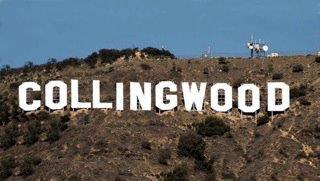
There’s two important trials of political activists going on in Melbourne at the moment. The first, which commenced in March, involves members and supporters of Occupy Melbourne; trial begins again later this week (May 4). The second, which targets 19 individuals associated with the protests against Israeli-owned Max Brenner, began proceedings in the Melbourne Magistrates Court yesterday (May 1).
You can read more about the ‘Boycott Israel 19’ here; one of the 19, Benjamin Solah, shares some of his thoughts on the matter here. At 6pm this Friday (May 4) a public forum on the trial and the right to protest is being held at Trades Hall, with speakers including Kevin Bracken (MUA), Sinai Inbal (Boycott from Within), Jeff Sparrow (Overland) and more.
Inter alia, Jeff Sparrow will be talking about “the connection between Israel’s mainstream defenders and their far right counterparts”. This will presumably include the loons belonging to the ‘Australian Protectionist Party’ (APP), members of which last year joined local Zionists in counter-protesting outside the chain in Newtown, Sydney.
Curiously, APP member and IT wizard Martin Fletcher once celebrated the Holocaust on his website ‘Down Under Newslinks’, while on Stormfront leading APP (and ex-Australia First) member Darrin Hodges once touted his collection of Hitler videos. Joining them on the barricades was folks like Hajnal Black. At the same time as the arrests last year (July 2011), Hajnal addressed a meeting of supporters of 3rd Viscount Monckton of Brenchley during his tour of The Colonies, claiming that The Greens want to gas her to death because of her opposition to The Carbon Tax and climate change denial.
As the Socialist Equality Party’s candidate for president in the 2012 US elections, I want to express my solidarity with workers throughout the world on May Day. The marking of this holiday—which has its origins in the bitter struggle by American workers to win the eight-hour day in the 1880s—takes on a special relevance this year. ~ Jerry White, ‘May Day 2012: Unite workers around the world against austerity and war’
The origin of our present holiday lies in the fight for an eight-hour working day, in which cause the leaders of the socialist Second International called for an international day of protest to be held at the beginning of May 1890. They did so just as the American Federation of Labour was planning its own demonstration on the same date. ~ Richard Seymour, ‘May Day is not about maypoles: the history of international workers’ day’
People seem to know about May Day everywhere except where it began, here in the United States of America. That’s because those in power have done everything they can to erase its real meaning… May Day started here, but then became an international day in support of American workers who were being subjected to brutal violence and judicial punishment. ~ Noam Chomsky, ‘What May Day means to me’
On this day in 1958, President Eisenhower proclaims Law Day to honor the role of law in the creation of the United States of America. Three years later, Congress followed suit by passing a joint resolution establishing May 1 as Law Day.
The idea of a Law Day had first been proposed by the American Bar Association in 1957. The desire to suppress the celebration of May 1, or May Day, as International Workers’ Day aided in Law Day’s creation. May Day had communist overtones in the minds of many Americans, because of its celebration of working people as a governing class in the Soviet Union and elsewhere.
The American Bar Association defines Law Day as: “A national day set aside to celebrate the rule of law. Law Day underscores how law and the legal process have contributed to the freedoms that all Americans share.” The language of the statute ordaining May 1 calls it “a special day of celebration by the American people in appreciation of their liberties and rededication to the ideals of equality and justice under law.”
On a day that, in many parts of the world, inspires devotion to the rights of the working classes to participate in government, Law Day asks Americans to focus upon every American’s rights as laid out in the fundamental documents of American democracy: the Declaration of Independence and the federal Constitution. The declaration insists that Americans “find these truths to be self-evident, that all men are created equal,” and guarantees the rights to “life, liberty, and the pursuit of happiness.” The Bill of Rights amended to the Constitution codifies the rights of free speech, free press and fair trial.
Law Day celebrates the legal construct for the determination of rights that the revolutionary leaders of the 1770s, hoping to prevent the sort of class warfare that went on to rack Europe [sic] from 1789 to 1917, were so eager to create. ~ history.com, ‘May 1, 1958: President Eisenhower proclaims Law Day’
The first eight-hour day procession
On 12 May 1856, over a thousand building workers celebrated winning an eight-hour working day. They marched through central Melbourne behind a banner declaring ‘Eight Hours’ Work, Eight Hours’ Rest, Eight Hours’ Recreation’, to a fete and sports event at Cremorne Gardens in Richmond.
Gaining the eight-hour day
A few months earlier, stonemasons working on some of Melbourne’s major buildings, including The University of Melbourne, Melbourne Public Library and Parliament House, instigated a movement to reduce their daily working hours from ten to eight. They argued that eight hours a day was appropriate in the Australian heat, and that it would give stonemasons time to improve their ‘social and moral condition’. From February 1856, employers conceded the eight-hour day to masons, carpenters and joiners, bricklayers, plasterers and slaters, and then to painters, quarrymen, saddlers and harness-makers.
International pioneers
The gain of the eight-hour day was an astounding international precedent, contributing in later decades to Australia’s reputation as a ‘workingman’s paradise’. New Zealand and Sydney building workers had gained the eight-hour day by 1848 and early 1856 respectively, although Sydney’s gains were short-lived. However, unlike their Australasian counterparts, Melbourne’s building workers did not concede pay or other conditions, and they promoted themselves as national and international pioneers, setting a precedent to which working men of the imperial world should aspire.
The eight-hour day procession and trade union banners
From 1857 the Eight-hour Day procession was held on 21 April. It became Melbourne’s biggest annual procession, growing in popularity when the Eight Hour Day became a public holiday in 1879, and reaching its peak just before World War One, when tens of thousands of spectators watched 13 000 ‘eight-hour men’ march.
…
The procession date changed in 1927 and again in 1949, and in 1934 the Eight-hour Day was re-named Labour Day. Moomba, first held in 1955, superseded the Labour Day procession. Trade unions continue to march with banners in the Moomba procession, May Day and other industrial marches and events. Many unions commissioned new banners in the 1980s. ~ Museum Victoria
The Fatuousness of Cynicism / Theses Against Cynicism
Pleasure Tendency, Leeds, 1987
1.
At a time when people everywhere are being taken in by the lies and distractions presented by the media, we find everyone at the same time defending their cynicism, their self-proclaimed recognition of what is “really” going on.
This cynicism reaches every corner of society. Saturating conversations at work, every discussion of politics and personal life, everyone obliged to give the impression that “we know” what games are being played, what politicians are “really” up to…
“Nobody is pulling the wool over my eyes”. Cynicism is a joke, nowhere more apparent than in the pages of Private Eye or in the spectacle of “Spitting Image”. Here we are all encouraged to laugh hard at how fucked up and corrupt the situation is.
Forced controversies encourage nothing but complacency. They are nothing but a silent agreement to avoid putting anything seriously into question [and] as such are a fraud.
Accepting cynicism as a necessary option, by sacrificing any control over our own destiny, we recognise ourselves only as victims. By molding a recognition of oppression into acceptance of the “facts of life”, we shed responsibility, declaring that the game is rigged as our reason for continuing to play!
Of course there are real enough social reasons for this cynical consciousness, but that doesn’t make it right. Just as there are real enough reasons for the rise of neo-nazism amongst today’s proletarians who snatch at the simple solutions offered. But poverty doesn’t make fascism right. It never has. The causes of a belief don’t justify it. It is the consequences of beliefs that ultimately matter the most.
Cynicism in everyday culture has the character of a pre-emptive counter-revolution, sapping the will to resist or even struggle.
The enemy is transformed into something universally untouchable, rather than something particular. The “know it alls” have substituted the notion of an omnipotent, ever present oppression to mask their own fear. If we really did know all we need to know, were already aware of how the world works and where to place responsibility for our unwilling obedience, then we would hardly be in the mess we are in. Revolution would have overcome its major stumbling block, but this blockage is neatly put into, and kept in place, by cynicism itself.
The Age reports (April 28, 2012) that there are 1.8 million union members in Australia. The report is based on the latest figures complied by the ABS:
Trade union membership has generally declined since 1992. From August 1992 to August 2011, the proportion of those who were trade union members in their main job has fallen from 43% to 18% for employees who were males and 35% to 18% for females.
There was, however, a small rise in trade union membership during the Global Financial Crisis (GFC) period (2008-2009). This was largely driven by an increase in the proportion of male employees who were trade union members which was 19% in August 2008 and 20% in August 2009.
D’oh!
As for the unions themselves…
The ‘Shop Distributive and Allied Employees’ Association’ (SDA) — aka“the Shoppies” — is one of the handful of unions who can legitimately challenge the AWU for the title of ‘Australia’s Worst Union’. The SDA boasts that it’s the largest trade union in Australia with more than 230,000 members, or a little less than 13% of total union membership. The AWU (Australian Workers’ Union) claims a membership in excess of 135,000, or 7.5%. According to their own estimates, the membership figures for other large unions in Australia are:
• Australian Nursing Federation (ANF): 200,000
• Australian Education Union (AEU): 180,000
• Community and Public Sector Union (CPSU): 160,000
• Australian Manufacturing Workers Union (AMWU): 130,000
• Construction, Forestry, Mining and Energy Union (CFMEU): 120,000
• Australian Services Union (ASU): 120,000
• United Voice (the union formerly known as the Liquor, Hospitality and Miscellaneous Workers Union or LHMWU): 120,000
• Communication, Electrical and Plumbing Union (CEPU): 100,000
If the bean-counters at the ABS are correct and the membership estimates given by them are in fact accurate, then Australia’s ten largest unions contain over 80% of all union members in Australia. Of course, both sets of figures may be slightly rubbery…
As for Australia’s biggest and bestest union, it functions as a sinecure for a clique of older, ‘conservative’ Catholic blokes; appropriate given its largely young, female membership. For the last 6,000 years or so, its National Secretary has been Joe de Bruyn: “a Dutchman who hates dykes” as Gough Whitlam once reportedly quipped. When he’s not desperately fighting for the rights and entitlements of young retail workers, Joe can sometimes be found addressing the Australian Christian Lobby (ACL), on such pressing issues as the need to keep teh gheys from marrying, and generally railing against “aggressive secular humanism” and the pursuit of Godless, self-centred paganism.
Last Thursday I wrote about ‘Doss Blockos’, the faux-squatter beer produced by local marketing company Big Dog. When they’re not simply swingin’ on the flippity flop — Hell, maybe even when they are — the bRanes behind Big Dog are “[s]pecialists by results” (whatever that tortured phrase means), moving:
…brands and products through the laneways, hidden paths, tunnels and bush-bash-like facets of social media to ensure the best results are obtained. We have a proven track record at being online traffic officers, database development gurus, and brand awareness ambassadors to ultimately generate hits on any online creation with a URL.
You see, at Big Dog, we frequently roll over in our sleep and accidently [sic] post on Twitter, Facebook and a couple of hundred blogs. We really do embody social media and marketing: with a database of 50,000 and growing, the development of sites from 0-10,000 uniques a day, and a track record in seeding for festivals, virals and magazines, we are an intrinsic part of the hive and its shared intelligence.
They also write good.
Speaking of the machinery of stupidity, I should also give a shout-out to ‘Anarchy’, the deodorant manufactured by LYNX, a subsidiary of Unilever. The “Dutch food and cosmetics giant Unilever said Thursday that its first quarter sales soared 11.9 percent to 12.14 billion euros ($16 billion), lifted mostly by emerging market demand.”
In marketing lingo, I’m pretty sure this makes Unilever ‘street’.
On libcom, Ramona has written an interesting blog entry on ‘Safer spaces, false allegations, and the NYC Anarchist Bookfair’. It concentrates on addressing what she argues is the mistaken fear that the implementation of somesuch policy lends itself to abuse; in the case of the Bookfair, this includes the private dissemination of email (on behalf of the Bookfair’s ‘Safe(r) Space Group’) asking the nominated person not to attend. The alleged problem is that: “By providing anonymity to the person who requested the recipient be asked not to attend the bookfair, this letter paves the way for abuses of power and a slew of false allegations”. As for the policy itself, while problematic in some respects, it reads (to me) like a fairly sensible one on the whole. Somewhat oddly, however, it makes no reference to the issuing of the letters that Ramona writes of and which is also the subject of disco elsewhere on libcom (and no doubt numerous other cyber spaces).
As far as I’m aware, formal policies regarding the creation and maintenance of ‘safe(r) spaces’ at radical events and institutions evolved only in the last decade or two, largely, it seems, in response to feminist or feminist-derived concerns at the fact that men in radical milieus, like those outside of them, also commit rape and sexual assault, and that this and other forms of ‘anti-social’ or discriminatory behaviour (lawful or not) required action. As I see it, the real concern here is not the possibility of false allegations being made by participants in such events or projects, but the use of such structures by elements hostile to radical organising full stop. How this concern can be addressed I’m not sure. That aside, an effective policy requires effective policing: nominated individuals can be un-invited, certainly, but there’s no guarantee that they won’t rock up anyway. There are also some technical issues embodied in the letter, and it raises all-sorts in terms of invested authority…
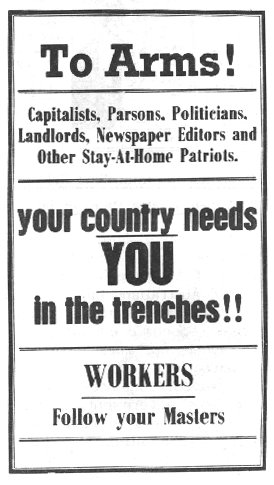
In 2007, the ‘Melbourne Anarchist Communist Group’ issued the following statement re ANZAC Day. I don’t think the Group’s had much luck with Ending the Patriotic Myth and/or the production of Militarist Propaganda, Rallying (Australian) Workers to Take Action to End War, or done much else to impede the progress of the War Pigs, but youse can’t blame Them for trying.
END THE PATRIOTIC MYTH
END MILITARIST PROPAGANDA
Gallipoli
In April 1915, Australian and other troops of the British Empire attacked Turkey, in a doomed attempt to knock a minor ally of Germany out of World War I. Many soldiers on both sides died, but a myth was born. According to this myth, Australians are tough, honest, irreverent towards authority, fiercely loyal and possess courage of legendary proportions. Further, these virtues are embodied in the ordinary Australian “digger”. And, according to this myth, these qualities are uniquely Australian.
Imperialism Today, Australian Style
Today, Australian soldiers are deployed in Iraq and Afghanistan, minor players supporting the failing U.S. “Global War on Terror”. These actions are insurance premiums on the Australian alliance with its great and powerful U.S. friend, and are unrelated to the pretexts advanced for these imperialist wars. Australian troops also occupy East Timor and the Solomon Islands and have recently returned from occupying Tonga. These actions are about maintaining Australian control of its smaller neighbours and the Pacific islands.
Patriotism and Militarism
It’s hard to miss the patriotic and militarist propaganda these days. Both the Howard Government and the ALP are determined boosters of the military and the worst criticism they can make is to call someone “un-Australian”. By supporting militarist myths and patriotic propaganda, they are trying to make it impossible to criticise the military in any way and to compel support for imperialist wars.
Workers can end war
War is endemic in capitalism. Each national capitalist class employs its military to promote its interests at the expense of its own working class and that of other capitalist classes. Workers in Australia, however, have more in common with workers in other countries than with “our own” capitalist rulers. We have nothing to gain from supporting the Australian Government’s imperialist wars. As in every country, we do the fighting and the dying, while the bosses stay safe and reap the benefits. But we can end war by refusing to support governments that go to war. By refusing to supply military forces. By refusing to fight in their wars. And we can make a revolution to put an end to capitalism, to all governments and all armies worldwide. We can have a world of freedom, peace and equality.
The public be damned! I work for my stockholders.
–William H. Vanderbilt, 1879
Break the rules. Stand apart. Keep your head. Go with your heart.
–TV commercial for Vanderbilt perfume, 1994
Capitalism is changing, obviously and drastically. From the moneyed pages of the Wall Street Journal to TV commercials for airlines and photocopiers we hear every day about the new order’s globe-spanning, cyber-accumulating ways. But our notion about what’s wrong with American life and how the figures responsible are to be confronted haven’t changed much in thirty years. Call it, for convenience, the “countercultural idea.” It holds that the paramount ailment of our society is conformity, a malady that has variously been described as over-organization, bureaucracy, homogeneity, hierarchy, logocentrism, technocracy, the Combine, the Apollonian. We all know what it is and what it does. It transforms humanity into “organization man,” into “the man in the gray flannel suit.” It is “Moloch whose mind is pure machinery,” the “incomprehensible prison” that consumes “brains and imagination.” It is artifice, starched shirts, tailfins, carefully mowed lawns, and always, always, the consciousness of impending nuclear destruction. It is a stiff, militaristic order that seeks to suppress instinct, to forbid sex and pleasure, to deny basic human impulses and individuality, to enforce through a rigid uniformity a meaningless plastic consumerism.
As this half of the countercultural idea originated during the 1950s, it is appropriate that the evils of conformity are most conveniently summarized with images of 1950s suburban correctness. You know, that land of sedate music, sexual repression, deference to authority, Red Scares, and smiling white people standing politely in line to go to church. Constantly appearing as a symbol of arch-backwardness in advertising and movies, it is an image we find easy to evoke.
The ways in which this system are to be resisted are equally well understood and agreed-upon. The Establishment demands homogeneity; we revolt by embracing diverse, individual lifestyles. It demands self-denial and rigid adherence to convention; we revolt through immediate gratification, instinct uninhibited, and liberation of the libido and the appetites. Few have put it more bluntly than Jerry Rubin did in 1970: “Amerika says: Don’t! The yippies say: Do It!” The countercultural idea is hostile to any law and every establishment. “Whenever we see a rule, we must break it,” Rubin continued. “Only by breaking rules do we discover who we are.” Above all rebellion consists of a sort of Nietzschean antinomianism, an automatic questioning of rules, a rejection of whatever social prescriptions we’ve happened to inherit. Just Do It is the whole of the law.
A few months ago a friend of mine bought some beer.
No wait.
The interesting thing about this particular beer was that it had been made to appear as tho’ it had been brewed by squatters or some shit. From like, (OMGOMGOMG) New York. The beer was called ‘Doss Blockos’, and it came armed in a brown paper bag (adorned with a squatting symbol) and accompanied by a rather dubious back-story…
I filed it for later reference, and then promptly forgot all about it. Then Last Thursday I saw the same beer for sale at hip underground venue Dan Murphy’s.
So I thought I’d do a little more digging.
Dos Blockos
Once Upon A Time, ‘Dos Blockos’ was the name of a squat in New York City. Located at 713 East 9th Street, Dos Blockos was squatted for many years before being evicted on April 27, 1999 (Steve Wishnia, ‘Pigs Evict Dos Blockos Squat on Lower East Side’, The Shadow). Among its former residents was Brad Will, an independent journalist murdered by police in Oaxaca in 2006.
So far, so good marketing gimmick.
Doss Blockos
Fast forward to February 2011 and ‘Dos Blockos’ has undergone a transmogrification, from evicted squat to ‘Doss Blockos’, a brand name for a beer.
Why?
According to Springwise (“required brain food for entrepreneurial minds!”):
Compelling product stories have long been a selling point for alcohol brands, who often conjure nostalgic imagery in an effort to capitalize on their heritage. Now, hoping to draw upon a more unconventional story, we recently came across Doss Blockos and their paper bag-wrapped beers inspired by the New York squat scene.
The story in this case is like, completely unconventional and totally cool. According to the manufacturer, Doss Blockos was:
… born from the underground squatting fraternity that came about in New York in the [1990s]. It was a time when squatters in the infamous Dos Blockos building were renovating with every tooth and nail they could find to make vacant buildings habitable […] whilst shark-like developers were throwing around their fat-corporate weight to force the squatters further down into the discarded underground.
Tough living wasn’t tough when it was what people believed in. It was art and music and party and the beer that developed was bare of anything but the essential taste. The speciality pale malt and cascade hops were used because that’s what was available.
The Doss Blockos that is getting drunk now still comes in the brown paper bag that everyone knows beer had to be drunk from when people needed to be able to keep the law out [of] their face. Each one of these has been wrapped in brown paper bags by hand, then pushed into the distinctive hand-constructed six-pack basket.
That’s quite some handiwork eh.
The bRanes behind both Doss Blockos and its brewer are Stephen Wools and Josh Lefers (aka the Free Sh!t Men) of local company ‘Big Dog’ (2006–). The deep affinity between the housing struggles of the 1980s and 1990s on New York’s Lower East Side and their Prahran-based advertising and marketing agency is further commemorated in the name given the ostensible brewer: ‘East 9th Brewing Company’. Both Big Dog and East 9th are located at 20–28 Chatham Street, tho’ how on Earth a brewery manages to squeeze into a building already bursting with a legion of fabulously creative people beats me.
In any case, the precise composition of the “fat-corporate weight” that Stephen and Josh imagine forced New York squatters (literally) underground is unknown, but it’s certainly the case that Big Dog does its best to lift other fat-corporate weights, their client list including such obese companies as “Unilever, AMP, Red Bull, Ministry of Sound, Domaine Chandon, McDonald’s, AEG, Keep Australia Beautiful, Top Gear, Channel V and beyond”. According to Big Dog, these companies and projects “approached us because we are experts in communicating to youth and young adult markets”.
As noted, Doss Blockos is ostensibly produced by the ‘East 9th Brewing Company’, which would appear to be one of many legs belonging to Big Dog, along with ‘Killrockstar Big Dog Entertainment’. In 2011, KrBde organised something called ‘The Boroughs Festival’, *ing (surviving members of) The New York Dolls. Their tour caused some minor controversy when it was revealed that the Dolls were also gonna play some shows sponsored by Big Tobacco, shows which were not arranged by Big Dog (and which would appear to have been subsequently cancelled). Whatever the degree of success experienced by the Dolls and the other groups (including Aqua and The Dead Kennedys) KrBde have brung out, the campaign to promote Doss Blockos won Big Dog the Silver Pentaward 2011 in the ‘Beverages: Beer, cider and low alcohol’ category.
A fitting tribute to Brad Will and all the other New York squatters amirite?
Two Greek anarchists are making molotov cocktails. One says to the other: "So who will we throw these at then?" The other replies: "What are you, some kind of fucking intellectual?"