Nine anti-fascists acquitted at Welling trial

Nine anti-fascists acquitted at Welling trial [October 3, 2011: see Leeds ABC for more infos]

Nine anti-fascist defendants were acquitted today, but six more remain in prison in need of support.

The remaining nine defendants in the Welling anti fascist trial were today* acquitted, with cheers and loud applause from the gallery. The defendants had been charged with conspiracy to commit violent disorder, after trying to attend a picket of a gig by neo-Nazi band Blood and Honour at the Duchess of Edinburgh pub[1] on 28th March 2009.

A total of 22 anti-fascists were arrested following an incident at Welling train station where two known neo-Nazis who had arrived for the Blood and Honour gig were apprehended by activists, with one of the neo-Nazis injured. Police were called to the scene, and as neither of the neo-Nazis were around to press charges of assault, the entire group, and anyone intending to picket the gig, were all charged with conspiracy to commit violent disorder.

Today’s trial followed the conviction of seven other anti-fascists on 28th June 2011. Their trial lasted for 17 days, and sentences of 21 months were received. A further four anti-fascists were acquitted in June. Leeds Anarchist Black Cross have set up a support fund for the prisoners, and the addresses of those in prison are as follows:

Andy Baker
A5768CE
HMP Highpoint
Stradishall
Newmarket
Suffolk
CR8 9YG

Thomas Blak
A5728CE
HMP Wormwood Scrubs
PO Box 757
Du Cane Rd
London
W12 OAE

Thomas is Danish and would appreciate European/International stamps to keep in touch with his family and with comrades abroad.

Sean Cregan
A5769CE
HMP Coldingley
Shaftesbury Road
Bisley
Surrey
GU24 9EX

Sean can receive books (they must be new or in very good condition).

Phil De Souza
A5766CE
HMP Elmley
Eastchurch
Sheerness
Kent
ME12 4AY

Ravinder Gill
A5770CE
HMP Wayland
Griston
Thetford
Norfolk
IP25 6RL

Ravi can receive posters, so if you hold a support event consider sending him one in.

Austen Jackson
A5729CE
HMP Stocken
Stocken Hall Road
Stretton
Nr. Oakham
Rutland
LE15 7RD

Brighton ABC have a guide to writing to prisoners, and over the coming months it is likely that many more people will face convictions relating to anti-austerity actions, our support from the outside will be crucial.

1. The Duchess of Edinburgh [172 Upper Wickham Lane, Welling, Kent, DA16 3DX] regularly hosts Blood and Honour, and are well aware of their neo-Nazi ties.

Posted in Anti-fascism | Tagged , | Leave a comment

Occupy Melbourne?

Big (A)//Little (a) says:
September 29, 2011 at 12:58 am

So when are you going to do a post on the Occupy Wall Street protest? Yes there are activists of all sorts there but the banksters need a kicking and at least should be hauled in front of Congress or a people’s court and be interrogated by the people who want answers for the financial mess that they got the US into.

*cough*

OCTOBER 15TH
UNITED FOR #GLOBALCHANGE

On October 15th people from all over the world will take to the streets and squares.

From America to Asia, from Africa to Europe, people are rising up to claim their rights and demand a true democracy. Now it is time for all of us to join in a global non violent protest.

The ruling powers work for the benefit of just a few, ignoring the will of the vast majority and the human and environmental price we all have to pay. This intolerable situation must end.

United in one voice, we will let politicians, and the financial elites they serve, know it is up to us, the people, to decide our future. We are not goods in the hands of politicians and bankers who do not represent us.

On October 15th, we will meet on the streets to initiate the global change we want. We will peacefully demonstrate, talk and organize until we make it happen.

It’s time for us to unite. It’s time for them to listen.

People of the world, rise up on October 15th!

In Melbourne, people will be assembling at the City Square.

Or what remains of it.

Opened by Her Majesty in May 1980, over half the Square was purchased for $12.5 million from the Melbourne City Council in 1993 to house a ***** luxury hotel, one of over 180 Westin Hotels (“havens of wellness and rejuvenation for those seeking a transformative hotel experience”). Westin is owned by Starwood Hotels and Resorts Worldwide, Inc., a multi-billion dollar US-based corporation. (Note that the other, much larger ‘public’ space in the CBD, Federation Square, is privately-owned land.)

The organisers of Occupy Melbourne are demanding that politicians do a better job of representing the masses, and will be joining who-knows-how-many others at the Square for who-knows-how-long before, presumably, either: a) Australian politicians start doing a better job or; b) they go home.

Afaik, the last time a tent city was established in Melbourne was in 2001 (October 14–November 2), although on that occasion the happy campers were located up the road at the State Library. The camp was established in order to protest the wars in Afghanistan and Iraq, but proved somewhat ineffective in stopping the 19,799 million-dollar (USD) Australian war-machine. Thus the occupation of Afghanistan by US, Australian and allied forces has lasted slightly longer than the tent city: on October 7, ‘Operation Enduring Freedom’ celebrated its 10-year anniversary.

The US “War on terrorism” removed the Taliban regime in October 2001, but it has not removed religious fundamentalism which is the main cause of all our miseries. In fact, by reinstalling the warlords in power in Afghanistan, the US administration is replacing one fundamentalist regime with another. The US government and Mr. Karzai mostly rely on Northern Alliance criminal leaders who are as brutal and misogynist as the Taliban.

RAWA believes that freedom and democracy can’t be donated; it is the duty of the people of a country to fight and achieve these values. Under the US-supported government, the sworn enemies of human rights, democracy and secularism have gripped their claws over our country and attempt to restore their religious fascism on our people.

Whenever fundamentalists exist as a military and political force in our injured land, the problem of Afghanistan will not be solved. Today RAWA’s mission for women’s rights is far from over and we have to work hard for establishment of an independent, free, democratic and secular Afghanistan. We need the solidarity and support of all people around the world.

Women eh?

As for ‘Occupy Melbourne’, the ad hoc nature of the event(s) mean that anything could happen–but probably won’t.

Posted in Media, State / Politics, That's Capitalism! | Tagged | 25 Comments

“Gypsies into soap”?

It’s interesting times in Bulgaria, last week witnessing “the country’s worst outbreak of unrest in more than a decade”. According to one report (Bulgarian Police Arrest 168 People in Second Night of Violence, Elizabeth Konstantinova, Bloomberg Business Week, September 28, 2011):

The violence was triggered after Roma clan leader Kiril Rashkov in the Katunitsa village, near the second city of Plovdiv, was blamed for the death of 19-year-old Angel Petrov during the weekend, Vesselin Vuchkov, deputy interior minister, said yesterday. Villagers set on fire several of Rashkov’s cars and houses in retaliation.

The New York Times (Anti-Roma Demonstrations Spread Across Bulgaria, Matthew Brunwasser, September 27, 2011):

The news media referred to the protests as “pogroms.” The protesters shouted racist slogans like “Gypsies into soap” and “Turks under the knife.”

The police guarded entrances to Roma neighborhoods across the country as demonstrators announced protests on Tuesday evening in 20 cities, including Sofia, the capital. Roma men are reported to have taken up clubs and axes in response to rumors of invasions by boneheads.

The English-language blogger ‘Sofia Notes’ has more disco here and here.

A Presidential election is scheduled for October 23. The Roma-hatin’ ultra-nationalists of National Union Attack/Ataka are standing Parliamentary leader Volen Siderov (Bulgarian anti-Roma protests escalate, Valentina Pop, EU Observer, October 3, 2011): “Ahead of the presidential elections on 23 October, far-right Ataka party leader Volen Siderov tried to capitalise on the tensions and called for the death penalty to be reinstated and for Roma “ghettos” to be dismantled.” Both Turks and the United Nations are reportedly worried about the growth in anti-Roma and, potentially, anti-Turk sentiment in the country ahead of the elections.

See also : Bulgarian Helsinki Committee | Jock Palfreeman on Australian Story (September 10, 2011).

Posted in Broken Windows, Death, State / Politics, That's Capitalism! | Tagged | Leave a comment

SP v SB

From a disco on Facebook…

To recapitulate:

R, you made some comments about state repression of anarchists under the Bolsheviks, the status of the death penalty, and recommended Serge (‘The Bolsheviks’ pet anarchist’) on Kronstadt. I pointed out that the first major Cheka action against anarchists took place in April 1918: that is, prior to the re-introduction of the death penalty. I also noted that I’d read Serge on Kronstadt (‘Exchange of Views on Kronstadt’ (pp.124–141) in Kronstadt, V.I. Lenin & Leon Trotsky, Monad Press, 1979), and quoted him on the Cheka.

On a point of clarification: the Cheka did not, apparently, murder 40 anarchists during the raids, but this is the number est to have been killed OR wounded (hundreds more were arrested) by Avrich. Further, while Avrich provides a v brief description of the context (which I quoted), Maximoff (The Guillotine At Work, Vol 1: The Leninist Counter-Revolution, Cienfuegos Press, 1979 (1940), p.57) writes:

On the night of April 12 [1918], an armed force, acting upon government orders, smashed the Anarchist organizations of Moscow. Against those organizations the government forces threw in action not only rifles and machine guns, but also cannons. This “military expedition” resulted, according to M. Y. Latzis, “in 30 casualties–killed and wounded–on our part–12″[.] All that was done under the slogan of fighting “banditry in the Anarchist ranks”, but the real cause lies elsewhere. It was laid open by Lenin in his, “A letter to the Comrades” (issued September, 1917) in which he wrote that: “All agree in characterizing the prevailing mood of the masses of people as one nearing despair and as one giving rise to the generally acknowledged fact of growing Anarchist influence”.

In addition to the eighteen killed and wounded Anarchists, it is rather difficult to ascertain the exact number, the Che-Ka killed the arrested Anarchist Khodounov, during an alleged “attempt to escape”. From that time on persecutions of Anarchists continued at an ever growing rate and by the use of all kinds of means and methods.

In any event, there’s a long disco on my blog on the subject of the Bolsheviks and the Russian Revolution here.

More broadly, the question is (or was): are anarchists socialists? The title of the meeting implies not. However, you wrote that, in a broad sense, yes, anarchists might be considered socialists; a position Vincent Kolo maintains in his essay on anarchism–an important document if only in the sense that it appears to constitute the fullest expression of the CWI’s position as a whole. As noted, according to Kolo: “Anarchism represents a pre-socialist ideology”, a “fundamentally middle-class perspective with the individual rather than the position of social classes as its focus.”

So, @R:

Inre yr questions and comments:

1. By definition, anarchism is not ‘petit-bourgeois’, terrorist, unorganised or undemocratic. This is not to suggest that some anarchists have such social origins (that is, the lower-middle class), have not engaged in political violence (they have), are ‘unorganised’ or hostile to ‘democracy’.

As I see it, the argument being advanced by Kolo et al (it’s quite common among Marxists, of var hues) with regards anarchism being a petit-bourgeois ideology has to do with Marx and Engel’s understanding of ideology as being a reflection of class interests (cf. ‘The German Ideology’: 1845). Thus, while anarchism represents the interests of a 19th C social strata (the artisans or skilled, semi-independent workers), Marxism, it is argued, is, or should be properly considered as being, the ideology of the industrial working class (proletariat). This idea is also closely-related to the status of Marxism as a science as opposed to an ideology, one taken up w great gusto by Engels in, eg, ‘Socialism: Utopian and Scientific’ (1880).

2. A recent survey of the movement in Britain is Rebel Alliances: The Means and Ends of Contemporary British Anarchisms by Benjamin Franks (2006). John Quail’s The Slow Burning Fuse: The lost history of the British Anarchists (1978) is a good source on the movement’s origins in the mid- to late-19th C.

3. Bakunin’s role in the IWMA is hotly-contested. Paul Thomas’s Karl Marx and the Anarchists (1980) is worthwhile reading.

4. Anarchism has had a presence in the working class of many countries in addition to Spain. Eg: Argentina, Brazil, China, Cuba, France, Italy, Japan, Korea, Mexico, Portugal and Russia. On the origins of Spanish anarchism, George Esenwein’s Anarchist Ideology and the Working Class Movement in Spain (1989) is good.

5. Afaik, I’ve not made any ref to the CNT.

6. I’m aware of the distinction b/w the early (EPM) and later Marx; there are many debates regard this supposed ‘epistemological break’ (cf. Althusser).

7. EH Carr’s 1937 bio of Bakunin is one of a number of (English language) bios: its status as an accurate portrayal is also hotly-contested by (among others) Mark Leier in Bakunin: The Creative Passion (2006).

8. The activities of anarchists and others on demos in the UK is another story, and I don’t feel obliged to defend the perspectives of ‘UK Uncut’. Note that this is not to suggest that these aren’t worthy of disco; rather that it departs from the focus of our own.

@D:

1. I understand yr point (I think) about Lenin not being in full control of events, and it therefore being unreasonable to assume he personally was responsible for all of the actions carried out by or in the name of the Bolshevik regime while he was leader. I also agree that the newly-formed Russian state evolved over time, and its policies and constitution were the subject (which is to say outcome) of multiple forces, both internal and external. In other words, the subject should be approached in the critical spirit with which any history should.

That said:

1. Part of this history (the history of the Russian Revolution) is the history of the Russian Social Democrats, which requires an understanding of its internal structure, as well as its policies, including the ones which Lenin advocated. I maintain that this structure was highly-authoritarian, and consciously so. Partly, this is (or was) a product of the circumstances of Tsarist Russia, and the brutality w which the regime acted against its political opponents. It was under these circumstances that the doctrine of ‘democratic centralism’ developed.

2. No, Lenin didn’t hold absolute power. But he did hold a good deal of power and authority as head of state, and moreover did a good deal to help construct a totalitarian political system, one which Stalin inherited from him. That Lenin engaged in furious polemics during the period 1917–1924 (in fact for his entire adult life) does not detract from these facts.

3. You write that you support the actions of the Bolshevik regime in suppressing the Left-SRs in July 1918. Supposedly, their revolt was triggered by the signing of the treaty of Brest-Litovsk. However, repression of the SRs began prior to this revolt. In May their eighth conference in Moscow was dispersed and in June both they and Menshevik delegates were expelled from the ‘All-Russian Executive Committee of the Soviets’ (Maximoff, pp.73–74). I’m not esp familiar with this event (the assassination or revolt) or those surrounding it, but this essay offers some insight: Lutz Hafner, ‘The Assassination of Count Mirbach and the “July Uprising” of the Left Socialist Revolutionaries in Moscow, 1918’, Russian Review, Vol.50, No.3 (July, 1991), pp. 324–344 [PDF]. It casts some doubt on the official line.

4. The r/ship of the SP to the Bolsheviks is another matter, but it may be placed in a particular context, which is the dev of post-WWII Trotskyism, esp in the UK, the history of the Revolutionary Socialist League/Militant Tendency and Ted Grant. How precisely the contemporary SP in Australia could be “mapped onto” the Bolshevik/Communist Party during the period 1917–1921 is a question I’ll leave it up to you to answer.

5. That Lenin and the Bolshevik regime made mistakes is an uncontroversial proposition. It’s also not one that’s in dispute. In other words, what is really at issue, I think, is not this or that policy but Bolshevik doctrine as a whole. Rightly or wrognly, the Bolsheviks actively suppressed their opposition, and in doing so created a one-party state (“the ones that took political power in the soviets, and tried to construct a state capable of defending the revolution”). You and the SP “don’t regard [‘Stalinism’] as a natural extension of Bolshevism” whereas I do. The ‘excesses’ of the Cheka, for example, were not ‘excesses’ or extra-ordinary but routine and systematic.

Regarding the ‘degeneration’ of the regime, as suggested, I think Aufheben provides a useful summary of the var debates regarding the nature of the Soviet Union.

And oh yeah:

Continue reading

Posted in Anarchism, Broken Windows, Death, History, State / Politics, Trot Guide | Tagged , , | 9 Comments

Angry Anderson : Bound for Glory and Gunnin’ for a seat in Parliament

A w e s o m e.

The Nationals finally have their answer to Labor’s Peter Garrett:

Angry Anderson!

You may remember Angry from such political campaigns as 2010’s “If you’re thinking of voting for the Greens, listen to Angry Anderson” and ‘Knives are bad, mmmkay?’

Angry Anderson joins National Party
ABC
October 2, 2011

Rose Tattoo frontman turned anti-carbon tax campaigner, Angry Anderson, has joined the National Party and says he is interested in standing for a seat at the next federal election.

The 64-year-old from Sydney’s northern beaches says he would be prepared to move to the country if necessary…

As well as destroying Collingwood’s confidence before the match, Meatloaf’s stunning performance at yesterday’s Grand Final naturally brought to mind Angry’s legendary 1991 exploit:

Whether or not Angry remains angry at becoming a figure of fun courtesy of his glorious performance 20 years ago is an open question, but there are certainly far moar important ones to consider, such as:

Do we really think that this present government are about the people, for the people, of the people? [D]o we really believe that this push for a TAX on [c]arbon pollution is about anything but raising more revenue for the government and the United [N]ations […] in league with the [i]nternational banks using the “New [W]orld [O]rder” as [a] blueprint for the [g]lobalization of the now free world?

Yes and no. Or should that be no and yes?

1. This is Australia mate. Gettysburg is in Virginia, USA.
2. The “push for a TAX” is kinda complicated, actually.
3. The United Nations? WTF?

It’s a warrior’s destiny to contest a seat in rural NSW from Sydney’s northern beaches on behalf of the Nationals, I guess.

Posted in !nataS, Music, State / Politics, Television, That's Capitalism! | Tagged | 11 Comments

Mike Davis talks about the “Heroes of Hell”

Stumbledupon this interview with Mike Davis while searching for infos on los justicieros and thought I may as well re-publish it here. As far as I can tell, Davis’ Heroes transmuted into Buda’s Wagon. [See also : Daggers, Rifles and Dynamite: Anarchist Terrorism In Nineteenth Century Europe (January 4, 2011).]

Mike Davis Talks about the “Heroes of Hell”
Radical History Review
No.85 (2003)

Jon Wiener: I’ve heard through the grapevine that you are working on a book about terrorism.

Mike Davis: My day job currently is a grassroots history of Los Angeles in the sixties [“Setting the Night on Fire”]. But I have also been busy on an extracurricular project entitled, after a poem in Mother Earth, “Heroes of Hell.” It aims to be a world history of revolutionary terrorism from 1878 to 1932.

Why did you choose those specific dates as bookends?

Eighteen seventy-eight was the inception of the “classical” age of terrorism: the half-century during which the bourgeois imaginary was haunted by the infamous figure of the bomb-throwing nihilist or anarchist. Beginning in 1878, in fact, Bakuninists of several nationalities and their cousins, the Russian Narodniki, embraced assassination as a potent, if last-ditch weapon in the struggle against autocracy. The calendar of that year is extraordinary. In January, Vera Zasulich wounds General Trepov, the sadistic jailer of the Narodniki. In April, Alexander Solovev makes his attempt on the czar, the beginning of the royal game hunt that will culminate in Alexander II’s assassination by Peoples’ Will in 1881. In May and June, there are the successive attacks on the aged kaiser in Berlin by the anarchists Holding and Nobiling, which provide Bismarck with his long-sought-after pretext for repressing the utterly innocent German social democrats. In the fall, meanwhile, Moncasi tries to kill Alfonso XII of Spain, and Giovanni Passannante, hiding a dagger in a red flag, slashes at the king of Italy. The year ends with a hysterical encyclical from Pope Leo XIII on the “deadly pestilence of Communism.”

The debut of modern terrorism, I should emphasize, followed in the wake of defeated hopes for popular uprisings in Russia, Andalusia, and the Mezzogiorno. [The Italian Bakuninists did briefly established a Che-like guerrilla foco in the Matese mountains above Naples for a few weeks in 1877.] Terrorism, in other words, was one response to the double failure of old-style urban Blanquism and rural Garibaldeanism. There is an obvious parallel with the contemporary experience of the Irish Revolutionary Brotherhood: after the betrayal and suppression of the great Fenian conspiracy, a secret cadre turned from insurrection to individual assassination as well as the first dynamite campaign against English cities.

And 1932 as a finale?

Nineteen thirty-two was the last in a series of desperate but unsuccessful attempts by Italian anarchists, direct descendants of Passanante, to assassinate Mussolini. Fascism and Stalinism succeed-where previous regimes failed-in bringing anarchism, and in Russia, the powerful social revolutionary movement, to the brink of extinction. The classical attentat [assassination attempt] is rendered powerless in face of the modern totalitarian state, although members of the Spanish FAI [Federación Anarquista Ibérica (FAI, Iberian Anarchist Federation)] will persist through 1950s to help reignite “propaganda of the deed” with a blaze in the 1960s. But that is the story for another volume.

Continue reading

Posted in Anarchism, Broken Windows, Death, History, State / Politics, That's Capitalism!, War on Terror | Tagged , , | 8 Comments

Move over Frank Cassar, here comes George Maatouk!

Frank Cassar, Australia’s BEST landlord, has a challenger.

George Maatouk.

The two men have much in common.

For example, both struggle under the enormous burden of determining what to do with the sizeable incomes they derive from their numerous properties around Melbourne.

CAV alleges that Frank, his wife and their business Betta Housing “own and manage the operation of up to 12 residential accommodation houses in Fitzroy, Clifton Hill and Carlton North”, while a government inquiry in 2006 concluded that George & Co. controlled a mere 60 properties, and had to make do with a paltry weekly income of $40,000.

Hopefully, residing in a $1.2 million mansion in Kew helps Frank to relax; Maatouk has had to content himself with access to a $100,000 powerboat.

Aside from attending to their many administrative duties, the pair also have to somehow cope with the massive financial penalties applied to them by the court system, and a media campaign seeking to portray them as “notorious” (Maatouk) and “extremely aggressive” (Cassar). Thus only this week Maatouk was “ordered to pay more than $9000 in accumulated fines and costs for breaches of the residential tenancies act over the past two years.”

$9,000!

For his part, in August, Cassar was fined the colossal sum of $13,500 for various offences extending over several years.

Obviously, for landlords (if not their wealthy tenants), breaking the Residential Tenancies Act and associated laws is no trifling matter. Those who would seek to either provide shelter for the homeless or even–God forbid–seek to gain unfair financial advantage at the plight of the vulnerable will eventually have to pay the costs. And it is well to remember that, in its majestic equality, the law forbids rich and poor alike to sleep under bridges, beg in the streets and steal loaves of bread.

See also : Rooming house slums put families in crisis, Whittlesea Leader, June 19, 2009 | Glenroy rooming house boss busted, Mark Smith, Whittlesea Leader, February 9, 2010 | George Maatouk – Court action, February 2, 2010 | Housing rogues untroubled by watchdog, Tom Reilly, The Age, June 21, 2009 | Death threats at rogue rooming houses, Tom Reilly, The Age, August 9, 2009 | Hostel owner ‘avoiding’ inspections, Dan Oakes, The Age, October 27, 2008 | Inside Melbourne’s seedy boarding house world, Dan Oakes and Dan Silkstone, The Age, October 14, 2006.

Posted in Broken Windows, That's Capitalism! | Tagged , | Leave a comment

Mark Esterhuysen is pretty fucking cool eh?

Good morning, I’m Mark Esterhuysen. Fuck racism. Fuck the pigs who killed Andries Tatane. Fuck the AWB. Fuck racism. We are all wild animals meant to live free. Fuck capitalism. Fuck fascism. Fuck this fucking wage slavery graveyard shit. Fuck domestication. Fuck Malema. Fuck the state. Fuck perpetual economic growth on a finite planet.

This is the only fucking planet we have.

If you don’t agree with me please see my blog Mark Esterhuysen dot Blogspot dot com. Peace, love, respect, anarchy. Follow me on Twitter Mark Esterhuysen. You can see me on Facebook as well Mark Esterhuysen.

“In a time of universal fucking deceit, telling the fucking truth is a revolutionary fucking act.” ~ George Orwell (attrib.)

BoNuS!

Peace, love, respect, anarchy, liberation, revolution
Wednesday, September 28, 2011

I am not sorry for what I have done. All is fair in love and war.

I do not belong to any organisation that has hierarchy. I am not aware of any media person who is not compromised. Having said this, Kristen van Schie wrote a pretty good article about my situation for The Star in Joburg. I hope she maintains her journalistic integrity in this corrupt world. Graeme Hosken is one of the reasons why I lost faith in the media. I went to him with my experience of police corruption and intimidation. He did not report the truth. He tried to sell papers. When I e-mailed the Pretoria News about this injustice, I was ignored.

I don’t believe anything that I read.

Thank you all for the love and support. I wouldn’t be able to carry on if it weren’t for all of you amazing people.

I have no spokesperson. My spokespeople are the friends I have made in my 23 years as a creature on this planet.

Peace, love, respect, anarchy, liberation, revolution, Deep Green Resistance.

Posted in !nataS, Anarchism, Broken Windows, Death, History, Media, Poetry, Sex & Sexuality, State / Politics, That's Capitalism! | Tagged | 5 Comments

Hate: My Life in the British Far-Right (Matthew Collins)


[Combat18 Part2] [Combat18 Part3]

Hate: My Life in the British Far-Right (Biteback, 2011) is exactly what it says on the tin: a 300-plus page account by Matthew Collins of his involvement in the British far right during the late 1980s and early 1990s. Like David Greason’s I was a teenage fascist, which documents Greason’s participation in the Australian far right a decade earlier, Collins got stuck-in early, and initial chapters detail how Collins negotiated his teenage anxieties by becoming a violent little fascist.

Rather than, say, by forming a band.

While Greason–whom Collins acknowledges as an inspiration–participated in the formation of ‘National Action’ (one of ‘Australia First Party’ leader Dr James Saleam‘s former political vehicles), Collins joined the ‘National Front’–then under the leadership of now dead nutzi Ian Anderson (1953–2011)–and, like any other good litle nazi, helped distro both bucket-loads of nutzi agit-prop and other political slop while treating the left and other enemies to lashings of politically-motivated (and psychologically deeply satisfying) violence. Collins spent roughly six years of his life weaving a drunken path through the NF and–occasionally–the BNP, and was lucky enough to be present at the formation of ‘Combat 18’ by “an overweight, knife-carrying, drug-peddling lout” named Charlie Sargent, who in 1998 was eventually–and inevitably–jailed for murder. As Jeremy Jones notes, “the individuals at the heart of the book are dysfunctional, pathetic, morally bankrupt and highly self-delusional”. Or as Malatesta puts it: “Collins sees the far right scene as a tedious heavy drinking club enlivened by occasions of violence, full of lonely deviants who deserve each other[‘s] company, trying desperately to convince themselves that their political programme is not a waste of time”.

So, on one level, the book is a litany of meetings and beatings: meetings with various far-right luminaries–Anderson, Richard Edmonds, Tony ‘The Mad Bomber’ Lecomber, Eddie Whicker, Terry Blackham, Phil ‘The Thug’ Edwards (aka Stuart Russell) [sic]–and accounts of numerous beatings dished out to his racial (Asian, black, Jewish) and political (leftist) foes. Of course, Collins also includes brief descriptions of the assaults to which he and his comrades were subjected by dastardly ‘reds’.

Among all the ultra-violence, the key turning-point for Collins in his career as a fascist bully occurred on June 29, 1989, when he joined a BNP assault on a meeting at Welling Library, a room “packed with women, most of them Asian…”, of whom seventeen required hospitalisation courtesy of the BNP’s flying visit. (Note that one reviewer who, apart from being a member of the ‘New Communist Party of Britain’, happens to have much in common with Collins, writes that “according to accounts from the anti-fascists… the battle of Welling… was not as one-sided as Matthew’s recollection.”) The attack on the “little old ladies” of Welling is just one in a book filled with violent stories, details of the various, rather grubby political machinations of the BNP, NF, British Movement and sundry other fascist groupuscules, and many literal as well as political references to wanking. Why this particular event should have been the one to turn Collins away from the far right isn’t really explained, but it could be that in the bloodied faces of these ladies he spied his mother’s: the book is dedicated to her and intended partly as an apology.

As noted, Hate also includes a few references to the anti-fascist opposition: apart from Searchlight, militant antifa belonging to ‘Anti-Fascist Action’ and the “ïnfamous” ‘Red Action’, described (pp.33–34) as being rather unlike social workers and rather more like a “bunch of blokes with angry faces”, generally happy to have a full and frank discussion with the likes of the NF. The SWP’s ‘Anti Nazi League’ also gets a guernsey, tho’ it “seemed to do little more than provide more young, wide-eyed victims for Sargent and his gang’s appetite for violence against the left” (p.273). The book more-or-less ends with Collins’ appearance on an episode of BBC ITV current affairs TV show ‘World in Action’, broadcast in April 1993 and detailing the violence organised by Sargent’s C18.

Collins writes (p.242) that the initial impetus for C18’s formation was the disruption in 1991 of a meeting at Kensington Library of old-skool nutzis belonging to the ‘League of St George’; in White Noise: inside the international nazi skinhead scene (Searchlight, 1998) Nick Lowles and Steve Silver claim C18 was formed following the disruption of a Skrewdriver gig in 1992. Of the gig, Collins claims (p.287) “that C18 deliberately let the boneheads get done over at Waterloo so that they could run Blood and Honour themselves”. Which seems reasonable, as at the time the network/label was something of a cash-cow, and Sargent’s struggle to deal drugs and violence status as an aspiring small businessman could only have been helped by assisting young patriots relieve themselves of their meagre incomes by selling them Nazi tat.

Be that as it may, in Melbourne local nutzis will be commemorating Ian Stuart’s entry into Valhalla in a coupla weeks. By the same token, word on the virtual street is that a tiny handful of members of the Australian iteration of C18 are organising their own commemoration in Sydney, along with members and supporters of nutzi groupuscule ‘Volksfront’. A key supporter (and travelling businessman) Welf Herfurth has recently had a collection of his essays titled A Life in the Political Wilderness issued by a fascist publisher in Portugal; a (former) WA police officer, Robert David Critchley, is still apparently facing charges for providing infos to the group in Perth.

One of the more curious aspects of Collins’ book is the account (p.120ff) he gives of the involvement of a certain ‘Mr X’ in the British far right, elsewhere reported to be hack journalist (previously immortalised by Crass) Garry Bushell. Revelations of Bushell’s alleged involvement in the NF were featured in the February 1991 issue of Searchlight (No.188) in a front page article titled ‘Gotcha: Front’s Chum on The Sun‘, for which Bushell sued and eventually won a settlement of £1,009–but no apology (p.216).

Collins’ disillusionment with fascist politics eventually brought him into contact with Searchlight, for which he agreed to become an informant. His role as an informant lasted up until his appearance on ‘World’, which in turn placed him on a C18 hit-list and shortly thereafter forced him to leave the country. After leaving the far right, Collins travelled to Australia (St. Kilda, Melbourne, to be exact), returning to England a decade later to rejoin the fight against his former comrades. Currently, Collins is helping ‘Hope Not Hate’, “Searchlight‘s campaign to counter racism and fascism”. In the concluding chapter on the ‘Aftermath’ of his hateful career he writes (pp.309–316):

The changes and modernisation of the BNP was a thoroughly Griffin piece of work. Labour and the left described him as all kinds of things, opportunist among them. That he may have been and be, but he built a fascist party right under their noses on the very council estates that the left were abandoning faster than their ideology. Labour’s ongoing dislocation from the working class, in particular in England, was happening during a quite benign economic climate. The far left want us to believe that the national growth of the extreme right was solely due to a difficult economic climate, but how did that explain gains in Burnley, Bradford and Barking and Dagenham for the BNP? Probably the dirty word, class…

How identity politics replaced class politics in those ten absent years I spent in Australia is breathtaking… But the explosion of identity politics from groups like the English Defence League, and the seeming inability of many to understand it as well as counter it effectively, is the most worrying thing we face right now. Because they are working class, because they are overwhelmingly white and from the football terraces, it’s almost as if no one wants to tackle their message head-on. And it is the Muslim community that faces their threat, daily.

On the whole, Collins’ book is a worthy addition to the small but growing body of literature on fascist politics of the era. Otherwise : Collins is interviewed by Richard Coles on ‘Saturday Live’ on BBC4 (9:48–24:09) | The Biblio File: The Right’s Wrongs, Review by Jeremy Jones, AIJAC, September 26, 2011 | How loyalists got out of step with fascism, Henry McDonald, Belfast Telegraph, September 15, 2011 | Book review: Hate, Ruth Smeeth, Progress, September 9, 2011 | Back from the Front: Inside the mind of a reformed UK far-right extremist, The Independent, August 9, 2011 | Rock Against Racism‘s thirtieth anniversary, Rebecca Taylor, Time Out London, March 25, 2008 | I was a fascist boot-boy, Andrew Orme, The Independent, March 10, 2004 | One man’s war against his demons, Rosie Boycott, The Observer, March 10, 2002 | Growing up in London’s Deep South, Matthews Collins, Searchlight, September 1998.

See also : AFA zine Fighting Talk (rar file comprising #1–21) | Beating the Fascists (The Untold Story of Anti-Fascist Action, Sean Birchall, Freedom Press, 2010) | Dave Hann (October 3, 2009) | Fightdemback interview with Dave Hann, co-author No Retreat (July 11, 2006).

Posted in Anti-fascism, Broken Windows, History, State / Politics | Tagged , | 5 Comments

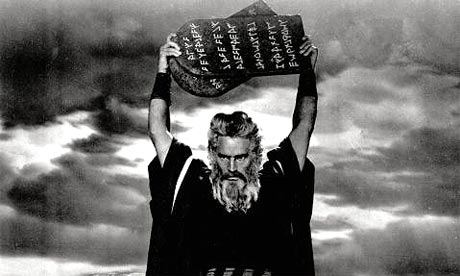
10 commandments for liberation

Ha! Stolen from Red & Black, No.5, April 1973 (also feat. ‘Karl Korsch: A Marxist Friend of Anarchism’ by A. R. Giles-Peters).

1 • thou shalt clean up thine own messes. no servants whether paid (cleaning ladies) or indentured (wives).
2 • thou shalt not use other people. as tom hayden used james rector to advertise people’s park, as marxists use workers to overthrow the ruling class, as i just used tom hayden for demonstration purposes.
3 • thou shalt not foul. the air, with motor vehicles, the water, with detergents, the earth, with chemicals and pesticides.
4 • thou halt not deny any person’s humanity. blacks are not niggers, vietnamese are not gooks, women are not chicks, cops are not pigs.
5 • thou shalt not endanger other people for an idea.
6 • thou shalt not be ashamed. we are all perverts. we all have pasts we could spend our whole lives denying.
7 • thou shalt revel in what you really are: don’t change your looks, don’t stop talking, go ahead and be.
8 • listen to your body: it will let you know whether or not you are content.
9 • living things shall be allowed to breathe and grow.
10 • write your own commandments. i am only a person like you. “burn this & memorize yourself.”

Source : Burn This and Memorize Yourself — Poems for Women, Alta, Times Change Press, c.1971.

See also : Burn This Press.
Hear also : Diane di Prima:

Posted in Anarchism, History, Poetry | Tagged | Leave a comment