The International Campaign Against Anarchist Terrorism, 1880-1930s (Richard Bach Jensen)

    Blah blah blah anarchist terrorism blah blah blah state control blah blah blah…

The International Campaign Against Anarchist Terrorism, 1880-1930s
Richard Bach Jensen
Terrorism and Political Violence, Vol.21, No.1 January 2009

Abstract

This essay presents a short overview of the “classic” era of anarchist terrorism between 1880 and World War I, while concentrating on an analysis of the little-known efforts by diplomats, politicians, and the police to control and repress anarchist terrorism. These efforts included the Rome Anti-Anarchist Conference of 1898 and the St. Petersburg Protocol of 1904. Before World War I, a combination of economic, social, and political factors, combined with a systematic government effort to redefine and downplay the nature and importance of anarchist terrorism provides the best explanation for why this form of violence declined in certain countries but not in others. Careful police intelligence work and international police cooperation, together with a more rigorously professional system of protection for monarchs and heads of state, could aid in reducing the problem of anarchist terrorism, but heavy-handed repression only worsened it. The essay concludes with a sketch of anarchist terrorism after 1914 and a brief comparison between present-day terrorism and its nineteenth-century predecessor.

David C. Rapoport has chosen to label the first era of modern terrorism as the “anarchist wave,” a persuasive designation.1 This article will examine the specifically anarchist qualities of the first wave, presenting a short overview of its archetypical era between 1880 and World War I, concentrate on analyzing the little-known efforts to control anarchist terrorism during that period, and conclude with both a sketch of anarchist terrorism after 1914 and a brief comparison between present-day terrorism and its nineteenth-century predecessor. Although the Irish Fenians, the Italian nationalists, and the Russian populists, particularly the Nihilists, all made their contributions to the creation of modern terrorism, it is only after 1880 with the widespread appearance of anarchist terrorism, or “propaganda by the deed,” that terrorism became a European-wide, and then an international, phenomenon. The powerful and frightening symbolism inherent in the idea of anarchy and anarchism, and in the reality of the anarchist bomb thrower and assassin, proved so powerful that it tended to dominate all perceptions of terrorism, at least until the Bolshevik revolution of 1917. Anyone who threw a bomb or assassinated a prominent person tended to be labelled an “anarchist” whether or not he or she subscribed to anarchist ideology.

The period from 1880 to 1914 might be termed the canonical, and certainly the most famous, era of anarchist terrorism.2 It was a worldwide phenomenon spread and connected by emigration (principally from Europe) and immigration, and by worldwide webs of shipping lines, communications networks, and not least, by cheap publications—above all, the mass market newspaper. Countries on every continent, except Antarctica, experienced acts of terrorism committed by real and alleged anarchists; even those lands free of anarchist violence became seriously concerned about such deeds. Anarchist assassinations and bomb-throwings occurred in sixteen countries on three continents: in Europe, Australia, and North and South America.3 Among other places, important anarchist groups developed in Egypt, China, and Japan. In 1898 Kaiser Wilhelm did not visit Egypt precisely because he feared an attack by resident Italian anarchists. In 1910, before their arrest and trial, Japanese anarchists were apparently plotting to murder the Emperor.4 For Australia, one can point to a single act of propaganda by the deed, and that is, the July 27, 1893, bombing of the ship Aramac by an Australian anarchist named Larry Petrie (or De Petrie) during a labour dispute.

Multiple acts of violence in India demonstrated both the global reach of the “anarchist wave” and the way in which the anarchist label was applied (and misapplied) to non-anarchist terrorism. Anarchism, which normally viewed the nation-state and religion as oppressive forces, exercised relatively little influence on the development of Indian terrorism.5 Nonetheless, before the first World War the British press and the British government tended to label all Indian nationalists carrying out violent anti-British deeds as “anarchists,” and linked them directly to anarchist attentats in Europe. Following an April 1908 bomb explosion killing two Britons in Bengal, the London Times quoted a “high police official” in India as attributing “the Anarchist tendency now to be observed in India to the influence upon a certain section of the population to the doings of Anarchists in Europe and America.”6

The death toll caused by anarchist terrorism, at least outside of Russia, was relatively small compared to today’s horrifying standards. According to my calculations, during the period 1880-1914 and leaving the Tsar’s empire apart, at least 160 people died and about 500 were injured due to anarchist bombs, guns, or daggers.

Anarchist terrorism in Russia deserves a separate discussion both because of its peculiar features and its late development. It did not exist before the 1905 revolution. In that revolution’s conditions of insurrection, quasi-civil war, and the temporary collapse of central state authority, however, terrorist acts by both Socialist Revolutionaries and anarchists mushroomed astronomically. Four thousand people were murdered in 1906-1907 for political ends, and if Anna Geifman’s estimates are correct, at least half of these were killed by anarchists. She claims that the majority of the 17,000 wounded and killed between 1901 and 1916 by terrorists suffered their fate at the hand of the anarchists.7

If, outside of Russia, anarchist terrorism before World War I killed relatively few people, it is significant for a number of other reasons. “Anarchists began the use of letter-bombs and automobiles for terrorist purposes.” In Russia, some became suicide bombers.8 They also initiated the mass and random slaughter of innocent civilians.9 This feature of anarchist terrorism, although it had begun in Spain, reached its height in Russia with its limitless, “motiveless,” and purely criminal terror. In Spain, besides the terrorist bloodbath, the special contribution made to terrorism’s murderous history (and often attributed, perhaps falsely, to the anarchists) was the anonymous bombing campaign in which explosions went on for years at a time, but without a clearly identified author or motivation. Anarchist “deeds exercised an enormous impact due to the powerful symbolism of the targets chosen and the advent of a mass journalism eager to publicize terrorist acts.” For example, seven European, Russian, and American monarchs and heads of state or government were assassinated by anarchists (or former anarchists) in the fourteen years between 1894 and 1912. No other terrorist group in history murdered so many rulers. Several other assassinations during this period, e.g., of Prime Minister Petkov of Bulgaria in 1907, and of the King and Crown Prince of Portugal in 1908, were often attributed to the anarchists, although probably falsely. “Anarchist ideology had less to do with unleashing this wave of terrorism than local and national traditions of violence and conditions of socio-economic and political malaise” in individual nations.10


Continue reading

Posted in Anarchism, Broken Windows, Death, History, State / Politics, War on Terror | Tagged , | 3 Comments

Support Carrie and Scott!

Support Carrie and Scott!
Resist State Repression!

“Carrie Feldman and Scott DeMuth are activists from Minneapolis, MN, who were subpoenaed to a federal grand jury in Iowa investigating animal rights vandalism from 2004. They both refused to cooperate with the grand jury, and were put in jail. Carrie is still being held on civil contempt of court. On [November 19], Scott’s civil contempt was dropped and he was indicted for conspiracy under the Animal Enterprise Terrorism Act. Scott was released on [November 30] pending trial…”

On December 16, Carrie had a motion for release denied. On December 26, it was reported that despite an appeal being lodged, Carrie is still being kept in confinement @ Washington County Jail.

For more infos, please see : Support Carrie and Scott!

See also : Jeff ‘Free’ Luers : “Free” (December 24, 2009).

Posted in Anarchism, Anti-fascism, Broken Windows, State / Politics, Student movement, War on Terror | Tagged , | Leave a comment

Free Tash! Solidarity action on Monday (Sydney)

Free Tash! Solidarity action

Date: Monday, January 4, 2010
Time: 11:00am – 11:45am
Location: Sydney Danish Consulate, Goldfields House
Street: 1 Alfred Street, Circular Quay

The Copenhagen meeting was an abject failure – with rich countries like Australia pushing false solutions of offsetting and carbon trading, and avoiding urgently needed emissions reductions. But instead of taking action, the authorities locked up those who actually were.

We already gave the Danes a princess – give us back our protestor!

More information

Danish authorities are continuing to detain an Australian, Natasha Verco, for a third week since the Copenhagen climate conference. She will appear in court in Copenhagen on Monday January 4th 2010.

Natasha was arrested on Tuesday December 15th, a day before the major ‘Reclaim Power’ protest during the United Nations climate negotiations in Copenhagen, Denmark. She is being charged with “incitement” for her role in organising the climate justice protest.

Tadzio Mueller, a German arrested alongside Natasha, said on his release from custody, “The Danish government’s appallingly disproportionate reaction, the political policing used to gaol some 1800 activists for nothing at all; using tear gas, pepper spray, baton charges and mass preemptive arrests; sets a precedent dangerous not only for Denmark, but for the future of the world.”

Tash Verco is a long-time advocate for social change in Sydney, Australia. She is a graduate of the University of Technology honors program in Social Inquiry; a founder of Rural Australians for Refugees; and a co-founder of Friends of the Earth Sydney.

A direct appeal to the Danish Consul General in Sydney, Michael Hansen, will be launched as Friends of the Earth Sydney will hand-deliver a personal letter. The letter asserts the right to protest as a fundamental human right, and demands the charges against Tash and all other climate justice activists be dropped and they be immediately released.

For more information, contact Holly Creenaune on 0417 682 541

People can send letters addressed to Natasha Verco via this email address: [email protected]. The group (Anarchist Black Cross – prison support) are visiting daily to deliver letters.

Posted in State / Politics, War on Terror | Leave a comment

Through a Glass Darkly: Alain Badiou’s critique of anarchism (Benjamin Noys)

    Blah blah blah Alain Badiou blah blah blah anarchism blah blah blah…

Through a Glass Darkly: Alain Badiou’s critique of anarchism
Benjamin Noys
Anarchist Studies, Vol.16, No.2 (2008)

ABSTRACT

The French philosopher Alain Badiou is one of a number of contemporary theorists whose work has been identified as a source for postanarchism. This essay questions that identification by focusing on Badiou’s sustained criticism of anarchist and libertarian currents for their failure to engage fully with the difficulties of political power, and in particular their failure to break with capitalist and statist political forms. Although problematic, these criticisms converge with existing debates in the ‘movement of movements’, which have started to address the difficulty of finding egalitarian forms of practice to sustain the movement. These debates lead us towards the often elided problem of the relationship between postanarchist theory and anarchist practice.

It has become a commonplace to argue that we have witnessed the resurgence or renaissance of anarchism in recent years, particularly with the emergence of the ‘movement of movements’ after the Seattle uprising of 1999 or the earlier Chiapas uprising of 1994. David Graeber has poetically summarised the case: ‘Anarchism is the heart of the movement, its soul; the source of what’s most new and hopeful about it’ (2002: 62). This new attention to anarchist practice has been accompanied by a renewed interest in anarchist theory. In this, important parallels have been noted between the work of leading thinkers and philosophers, including Gilles Deleuze and Félix Guattari, Michel Foucault, Jacques Ranciére, and anarchist themes and approaches. What is striking in both cases, especially the second, is the general absence of anarchism as an explicit reference point. It seems as if anarchism is the politics that dare not speak its name. One of the results of this absence has been the significant effort by anarchists or those sympathetic to anarchism to re-establish the anarchist credentials of the present. As Saul Newman, one of those responsible for this effort has put it: ‘perhaps anarchism can be seen as the hidden referent for contemporary radical politics’ (2007: 12). In fact, as Newman himself stresses, this is one way to define postanarchism: as the production of a synthesis that will establish that both contemporary radical political practice and political theory constitutes a new form, or new paradigm, for anarchism.

To make good on this argument postanarchist thinkers have typically made a double move. First they have argued that many contemporary theories, which are usually identified as post-structuralist or post-Marxist, are better understood through the lens of a revised anarchism. While these theories often remain attached to a residual Marxism or are vague about their political implications, integrated into anarchism they can become truly radical. The ways in which these theories challenge the primacy of class explanation, attack the dominance of the state and attend to the micro-politics of power, converge with anarchist thought and practice. The second move is to argue that these theories allow us to purge ‘traditional’ anarchism of its humanist, naturalist, and positivist residues. Post-structuralist or post-Marxist thought allows us to shift anarchism away from its supposed reliance on a set of ‘essential’ human qualities or norms that would then dictate a natural, or true, politics. In this way, it is argued, these theories open anarchism up to a new thinking ‘that embraces contingency and indeterminacy and rejects essentialist identities and firm ontological foundations’ (Newman 2007: 16). The postanarchist synthesis is then often linked to the new forms of decentered and dispersed practice in the movement of movements, to this new political and social inventiveness that remains unconstrained by the limits of traditional anarchism. In this way a narrative has been constructed in which the ‘hidden referent’ of anarchism is explicit: our moment is anarchist in theory and practice if we fundamentally revise what we mean by anarchism to become postanarchist.

Critics rightly argue that this seemingly persuasive narrative tends to flatten the depth of traditional anarchism into the cliché of ‘essentialism’ (Conn 2002). Yet my concern is the way in which postanarchism operates with a smooth and trouble free narrative of its emergence as a new paradigm, while claiming to inject into politics conflict and antagonism. I want to suggest that the making of postanarchism is considerably more problematic by focusing on the case of one thinker who has started to be assimilated within postanarchism, the French philosopher and political militant Alain Badiou. My reason for selecting Badiou is that despite having much in common with anarchism and postanarchism he is also highly critical of anarchism, claiming that it is unable to deal with the complexities and practicalities of power. In this way Badiou raises crucial issues for both anarchist theory and anarchist practice, questions which remain unsettled.

First I will consider the reason why Badiou has been considered attractive to postanarchism. This will involve a discussion of Badiou’s own political and theoretical evolution. In particular I will focus on his discussion of the Paris Commune of 1871, in which his arguments concerning this workers’ uprising converge with anarchist arguments. Secondly, I will consider in more detail Badiou’s criticisms of anarchism. These are not so much directed at anarchism per se but they do take in many of the currents of thought that have influenced postanarchism. Finally I want to examine how Badiou’s criticisms have found an echo in recent discussions within the anarchist and anti-capitalist milieu. Here we can see emerging a new debate concerning the practical means by which we might achieve and sustain egalitarian and anarchist social forms. My approach then is not to confront directly postanarchism, nor is it to answer the question of whether we can really consider Badiou to be a postanarchist. Instead, by taking a detour through Badiou’s criticisms of anarchism, I want to return to consider the difficult question of the link, often elided, between postanarchist theory and anarchist practice.

Continue reading

Posted in Anarchism, State / Politics | Tagged , , | 8 Comments

Tales of Ordinary Fatuousness

Very Ordinary

“The League of Ordinary Gentlemen is a group blog that hopes to bring a new style and sensibility to blogging.”

Uh-huh.

In reference to an apparent attempt to blow up an aeroplane in Detroit by a Nigerian-born mentalist, Ordinary Gentleman Chris Dierkes writes (An(archy)-Qaeda, December 28, 2009):

Whatever else comes up in the pseudo-analysis of the (thankfully) failed terrorist attack, we see yet again that the terrorists are largely from middle to upper classes. The ones who are recruited to perform suicide attacks are usually young and increasingly drawn from a self-selecting pool, communicating through the internet.

This lends credence to the notion that al-Qaeda is the anarchist movement of today. It follows in the patterns of the Baader-Meinhof, the Red Brigade, and the earlier anarchist movements of the late 19th and early 20th centuries. Contrary to the right-wing US motifs of the early 2000s (which thank God are soon about to end), the analogy for an Al-Qaeda is not to Nazism or Communism…

…but to anarchism.

A few points.

…the terrorists are largely from middle to upper classes…

In the case of Al Qaeda, yeah, it seems so. (And their leader, Osama bin Laden, was a member of the Saudi ruling class.) But when applied to the anarchist/terrorists of the late nineteenth century, it’s a false proposition. Most of these ‘propagandists by the deed’ were drawn from the working classes. And while it may be said that Al Qaeda operatives are — and the anarchist/terrorists were — largely drawn from the ranks of yoof, the anarchists were drawn from a rather large pool, were fewer in number, and did not belong to an organised, hierarchical, religious network of the kind Al Qaeda is understood to be. (Nor were they bankrolled by a billionaire.) As for the ah, Internets, unless Dierkes is composing a riff on, say, The Difference Engine, anarchists of the period were incapable of communicating through this highly complex arrangement of soup cans and string.

…[Al Qaeda] follows in the patterns of the Baader-Meinhof, the Red Brigade, and the earlier anarchist movements of the late 19th and early 20th centuries…

The principal problem with including “Baader-Meinhof” (aka the Red Army Faction) and the Red Brigade among ‘later’ anarchist movements is that they were neither a) anarchist nor b) movements. They were, in fact, Marxist urban(e) guerilla groups, whose relationship to the state was rather more complex than that of the few score anarchists who, by executing its titular Hydra head, tried to topple some of its other, earlier manifestations.

Of the anarchists’ Greatest Hits, one might include President Sadi Carnot (France, 1894); Prime Minister Antonio Cánovas (Spain, 1897); Empress Elizabeth (Austria, 1898); King Humbert (Italy, 1900), and (arguably) President William McKinley (United States, 1901). Note that Gavrilo Princip, the assassin of Archduke Franz Ferdinand — whose murder is popularly believed to have been the trigger for WWI — is also often described as an anarchist (for example, by Michael Moore in Stupid White Men) but was in reality a nationalist.

…the earlier anarchist movements of the late 19th and early 20th centuries…

Which, it is important to note, were social movements, not terrorist cells.

In any case, the Ordinary Gentleman adds:

“I mean it [Al Qaeda is anarchist] in the sense that their (al Qaeda’s) political goals are totally utopian (and unrealistic) and therefore there are no real actions they can take in this world to get closer to their political goals, so they end up just trying to destroy what currently exists.”

A statement which, as far as I can see, is more or less in accord with the post as a whole: nonsense.

See also :

“Declaration of War against the Americans Occupying the Land of the Two Holy Places”, Al Quds Al Arabi, August, 1996 | Second fatwa, February 1998 | October 7, 2001 statement.

On state involvement in leftist terrorism, see : Gladio, a documentary by Allan Francovich, BBC Timewatch (1992). Episode 1 : The Ring Masters | Episode 2 : The Puppeteers | Episode 3 : The Foot Soldiers.

On the subject of Al Qaeda as a form of resistance to ‘modernisation’, as well as a comparison with the actual political vanguards — from Lenin through to “Baader-Meinhof” and the Red Brigade — upon which it models itself, see Afflicted Powers: Capital and Spectacle in a New Age of War, Retort, Verso, 2005.

On the relationship between Al Qaeda and anarchism, see Anarchism and Terrorism (In the Real World) & Al-Qaeda and Anarchism: A Historian’s Reply to Terrorology by James L. Gelvin, May 6, 2009.

This article situates al-Qaeda and similar jihadi movements within the category of anarchism. In so doing, it challenges the central pillar of the terrorology paradigm: the notion that terrorism is useful as an independent unit of analysis. The article takes a two-fold approach; in the first part, it offers a five-part definition of anarchism, based on the literature in the fields of history, political science, and sociology. Anarchism is distinguished by five characteristics: First, anarchism is an episodic discourse which provides its adherents with a prescription for action and which has been consistently available to, but only sometimes adopted by, political actors in the modern world. Second, anarchism makes for itself the claim of being defensive in nature. Third, anarchism is anti-systemic; i.e., the target of anarchist grievances is the very system (the nation-state system, capitalism) anarchists view as the source of oppression. Fourth, by “othering” the source of oppression, anarchists delineate, either implicitly or explicitly, an ideal counter-community. Finally, unlike the disarticulated domain of, for example, scientific socialism, the discursive field of anarchism draws heavily from the specific cultural milieu from which it springs. The second part of the article examines al-Qaeda and similar movements in terms of these five characteristics, contrasts al-Qaeda with other organizations (Hamas, Hizbullah) which have often been conflated with al-Qaeda under the terrorist rubric, and argues that, based on those characteristics, al-Qaeda does not represent a new or sui generis phenomenon, but rather fits squarely into the anarchist mold.

Conclusion

Bad analogy.

Bringing the Real

Venturing further into The Real World™, in this case the territory stamped on maps as being Serbia, six anarchists — Sanja Dojkić, Tadej Kurepa, Nikola Mitrović, Ivan Savić, Ratibor Trivunac and Ivan Vulovic — were arrested in September 2009 and have been charged with the crime of ‘international terrorism’ by Serbian authorities. Denied bail, the six have now been imprisoned for almost four months, and will not be presented with another opportunity for release until their trial, scheduled to commence next year.

The dreadful crime of which the six have been accused took place on the evening of August 24/25, 2009, when two Molotov cocktails were thrown at the Greek Embassy in Belgrade. One window was damaged by the fire caused by the cocktails, and there was also some minor damage to the building’s façade; the fire did not spread, however, and was quickly extinguished. Further, no person was injured in the incident (the building was empty at the time) and the following morning work at the Embassy resumed as normal.

This is ‘terrorism’, according to Serbian authorities. Further, it is ‘international’ in its scope as the building targeted belonged to the Greek Embassy. As a result, if convicted, the six may be sentenced to up to 15 years in jail. All six deny the charges, and argue that state authorities are more interested in destroying the anarchist movement in Serbia than in defeating terrorism; a claim which depends, of course, on the ability to make a distinction between the two isms schisms — something with which a number of Gentlemen, whether in academia, the blogosphere or the corporate/state media, obviously still struggle.

See : ASI Report to IWA Congress 2009 on the Belgrade 6, December 17, 2009 | Serbian Intellectuals Write New Letter Condemning Charges Against Belgrade Six, libcom.org [December 10, 2009].

Bonus Utopianism!

Posted in Anarchism, Death, History, State / Politics, War on Terror | Tagged , , , , | Leave a comment

Rue McClanahan vs Alan Jones vs John HoWARd vs Keyser Trad

I have been inspired by ‘The Rue McClanahan Hour – Week 1′ (now available with 4.5 times the recommended dosage of podcast)’ and its deliberate and provocative opposition to the use of the letter ‘l’ except in the case of the word “McClanahan”.

John HoWARd on Alan Jones: “I don’t think he’s a person who encourages prejudice in the Australian community, not for one moment, but he is a person who articulates what a lot of people think.”

slackbastard on Dylan Lewis: “Dylan Lewis is The Best : And That’s Official!”

See also :

David Marr on Trad vs 2GB : “Alan Jones’s legal case over anti-Lebanese comments has been lost, but inflammatory jocks might not change their tune, writes David Marr.”
Trad v Jones & anor (No. 3) [2009] NSWADT 318 : “…destined to become prescribed reading for lawyers, students and anyone wanting to know how talkback radio works to excite its audience.”
Our defamation win sends a caution: 2GB, Michael Pelly, The Australian, August 3, 2009. Trial judge Peter McClellan “even adopted [2GB presenter Jason] Morrison’s words in his judgment, saying Mr Trad “incites acts of violence, incites racist attitudes, is dangerous and perhaps most significantly is a disgraceful individual”… Mr Trad may never again be able to sue for defamation, with Justice McClellan declaring he was “a person with a seriously compromised reputation”.

“If ever there was a clear example that Lebanese males in their vast numbers not only hate our country but our heritage, this was it,” Jones raged. “They’ve got no connection to us. They simply rape, pillage and plunder a nation that’s taken them in. No one who’s written to me could believe what they saw. Without exception, you asked what did we do as a nation to have this vermin infect us like this. And what about the sacrifices of our war dead, made for this country to make it what it is today, and to have these mongrels laugh at them on national television?”

Posted in Media | Tagged , , , | 1 Comment

N – – – – r lovers and faggots // Bullets in your head!

From the Department of anarchy is a fag! comes:

    Nigger lovers and faggots
    Bullets in your head
    Nigger lovers and faggots
    Now your [sic] dead

    Bombing the faggots into oblivion
    Bombing the niggers into oblivion

Pretty funny eh?

These are the lyrics penned by a kick-ass band from Chicago called Evil Incarnate, from a song later added to a list of toons by other talented artistes for the No.1 smash hit album Smashing Rainbows: Rock Against Homosexuality. Evil Incarnate have excellent taste too: they reckon West Wall are FUCKIN AWESOME!!!just like “Hoelzer Reich Clothing would like to introduce our FAVORITE band, WESTWALL!”

Sadly, stoopid so-called ‘anti-racists’ have ganged up with The Pink Mafia to stop this poor innocent rock ‘n’ roll band from raising money for needy children. Poor needy White children. Of course, ZOG spins a very different li(n)e (see : Neo-Nazi Band’s West Side Appearance Canceled, Joseph Erbentraut, Chicagoist, December 18, 2009).

Luckily for Australians fans, local Australian neo-Nazi 100% true blue dinky-di distro 9percentproductions has the compilation album Smashing Rainbows: Rock Against Homosexuality available for purchase for just $20! Empire Falls asks the question on everybody‘s lips: ‘Why Has Hardcore Gone Gay?’. The album also features legendary grindcore artistes Grinded Nig, responsible for such classics as Freezer Full of Nigger Heads.

    Late night mutilation – freezer full of nigger heads
    Deprived brain of violence – freezer full of nigger heads
    Manical rage, the cause of a – freezer full of nigger heads
    Frozen rot it comes from a – freezer full of nigger heads

    Demented thoughts, sharpening my blade
    Racially motivated, my actions are what I love
    Unsympathetic attacks on the nasty nigger
    It’s my sickening urge to kill for my race

    Beat his fucking head with a baseball bat
    Drag the stiff simian back to my retreat
    Pull out the saw, cleave the vertebra
    Now I take the head, add to my collection

    Jive talkin’ nigger, an axe for his neck
    Just a lower race, breed like roaches
    Extermination of the black race
    OF THE BLACK RACE!

Luckily YouTube can see the funny side (of a freezer full of nigger heads), just as MySpace can see the funny side of Evil Incarnate. Sadly for me, YouTube objects strenuously not to neo-Nazi bands calling for mass murder but to images of dead dicktators and Klansmen on fire.

I guess I just wasn’t funny enough… hmmm. Probably should’ve thrown the words ‘nigger’ and ‘faggot’ into my video. That’s pretty funny. And remember kids: “It’s not okay to post gross-out videos of accidents, dead bodies or similar things intended to be shocking, sensational or disrespectful.”

Oh, and in other sad news for the Master Race, three boneheads who decided it would be, like, a totally neat idea to put their theory into practice by, like, stabbing a random Latino d00d, have been sentenced to prison. Their sentencing comes after the three “were beaten up by neighbors and then arrested by police as they tried to drive away” from the scene of their so-called ‘crime’. Funnily enough, “[one of the three, Bret MacDonald Hicks, 30, of Riverside] also co-hosted a program called “88 Degrees” on a white-power Internet radio station. In the months before the stabbing, Hicks railed against blacks, Mexicans, and Jews on the show, making statements like, “I think it time to actually go out and kill,” according to a report in the OC Weekly. The show’s archives were taken down after the Weekly published its story.” (See : Beaten by the barrio, boneheads plea out for prison, One People’s Project, December 21, 2009).

See also : The Worst thing about being a fag is… (December 20, 2009) | On The Prowl : A Mid-Atlantic journal of anti-fascist theory and action | Bash Back! (Note that the degenerate filth have spread their disease to Melbourne!)

Metalheads Against Racism

Bonus Nipples!

Posted in !nataS, Anti-fascism, Death, History, Media, Music, State / Politics | Tagged , | 9 Comments

Dauvé ~versus~ NOT BORED!

Oh alright: I’ll bite.

Just a few hours after it was posted to http://libcom.org, my translation of a text by Didier Daeninckx (it’s about Gilles Dauvé’s father, Guy Dauvé) was deleted and I personally was summarily banned from this “libertarian communist” site.

To follow the history of this affair:

1. my original comments concerning Dauvé’s “The X-Filers” and the reactions to them:

http://libcom.org/library/x-filers-troploin

2. the page that used to host my translation of Daeninckx’s text, before it was censored:

http://libcom.org/library/professional-career-guy-dauve-father-gilles-dauve

3. the text as it appears on the NOT BORED! website

http://www.notbored.org/guy-dauve.html

http://www.notbored.org
[email protected]

Gilles Dauvé is a cheese-eating surrender monkey who has also scribbled as Jean Barrot. In addition to having a rather cranky old man, Gilles is noted, inter alia, for his contributions to the French journal Troploin.

December 27, 2009:

Happy Birthday Operation Cast Lead!

See also : Peace process surges further ahead (January 3, 2009) | Lead Casted (January 5, 2009) | Whoops (January 7, 2009) | Victory for Israeli Right : Bringing the Zionist Dream to Life (February 15, 2009) | Police detain 16 leftists on Gaza border, Anat Shalev, Ynet news, December 27, 2009: “Activists marking one year since launch of IDF offensive protest Israeli blockade, prevented from entering Strip. Israel continues to perpetuate destruction, suffering,’ one of them says.” | The Past Didn’t Go Anywhere: Making Resistance to Antisemitism Part of All of Our Movements, April Rosenblum, 2007.

On a vaguely related note, BobFromBrockley has a moment with Chomsky, Moore and Bérubé here, and commentary features a minor debate over whether or not Uncle Gnome is an anarchist. Or not. One commentator notes that Chomsky has some mean things to say about pomo; so does John Zerzan. Zerzan has some mean things to say about Chomsky too. And Marx (see : ‘The Practical Marx’, in Elements of Refusal (Left Bank Books, 1988)). As for Bookchin, Billy Blamer Bob Black has a crack, as does Negative Nelly Chuck Morse.

Posted in !nataS, Anarchism, Anti-fascism, Broken Windows, Death, History, State / Politics | Tagged , , | 3 Comments

Don’t mess with Uncle Kerry! !nataS strikes again in New Zealand

I’ve said it once and I’ll say it again: I’m beginning to believe that Kerry Bolton really does have !cinataS powers. The latest victim of his magick spells and potions is the accursed Kiwi sociologist Scott Hamilton and the New Zealand Broadcasting Standards Authority (BSA) — Joanne Morris, Tapu Misa, Paul France and Mary Anne Shanahan — which has issued a statement, described by the meddling sociologist as ‘The Broadcasting Standards Authority’s Christmas gift to anti-semites’ (Reading the Maps, December 24, 2009).

In recent years Bolton has attempted to deny much of his political history, and to repackage some of his most unpleasant views. Bolton was not happy, then, at an interview I gave to Chris Laidlaw on Radio New Zealand earlier this year during which I discussed anti-semitism and Holocaust denial in New Zealand. During my chat with Laidlaw I cited Bolton as one of New Zealand’s leading Holocaust deniers, observed that he has had connections with Holocaust deniers overseas, and suggested that he has had a thoroughly bad influence on the young people who make up the majority of the membership of neo-Nazi groups like the National Front.

Bolton complained about my comments to the Broadcasting Standards Authority, telling them that he is neither a Holocaust denier nor a neo-Nazi. Given the weight of evidence for Bolton’s views, and the [notoriety] he enjoys as New Zealand’s longest-serving neo-Nazi, I expected the Broadcasting Standards Authority to treat his complaint with the contempt it deserved.

Instead, the BSA has just issued a bizarre, convoluted judgement which refuses to take a position on whether or not Bolton is a Holocaust denier, and which finds that my comments about his beliefs were unfair, and should have been censored by Radio New Zealand. Bolton and the international Holocaust denial community will be delighted by their unexpected Christmas present.

Ho ho ho.

Note that Uncle Kerry has also contributed to the first issue of Ab Aeterno: Journal of the Academy of Social and Political Research. Michael O’Meara writes that ‘Though the new journal is not explicitly racialist and Jew-wise (this is a luxury now denied to most publications in the white world), it is implicitly so. This is evident in Ab Aeterno’s eloquent “Introductory Message”’ (Ab Aeterno & The Occidental Quarterly, The Occidental Quarterly, November 24, 2009).

http://www.academy-of-social-and-political-research.com/

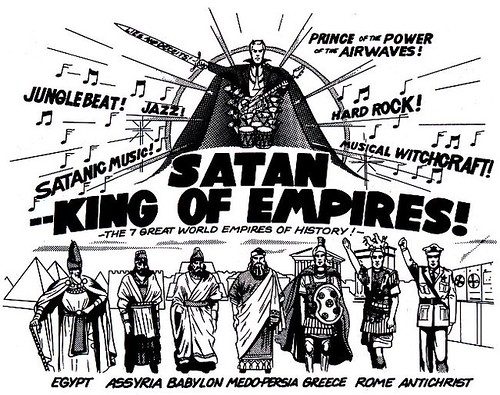
See also : “Wellington Nazis. I hate Wellington Nazis.” (Two) (October 22, 2009) | Satan : 1 University of Waikato : 0 (July 13, 2009) | Let Waikato @#$% you! | Satan King of Waikato (February 4, 2009).

Posted in !nataS, Anti-fascism, Media, State / Politics | Tagged , , | Leave a comment

Defend the Chinese Bureaucratically Deformed Workers State from Liu Xiaobo and Witting Tools of U.S. Imperialism!

China jails critic and sends message
Andrew Jacobs
The Age (AFP, The New York Times)
December 26, 2009

IN AN unequivocal rebuke to those pursuing political reforms, a Chinese court has convicted Liu Xiaobo, one of the country’s best-known dissidents, of subversion and sentenced him to 11 years in prison.

Liu, 53, a literature professor and a vocal critic of China’s single-party political system, was detained in December 2008 after he helped create a petition known as Charter 08 that demanded the right to free speech, open elections and many other liberties…

14. Protection of Private Property. We should establish and protect the right to private property and promote an economic system of free and fair markets. We should do away with government monopolies in commerce and industry and guarantee the freedom to start new enterprises. We should establish a Committee on State-Owned Property, reporting to the national legislature, that will monitor the transfer of state-owned enterprises to private ownership in a fair, competitive, and orderly manner. We should institute a land reform that promotes private ownership of land, guarantees the right to buy and sell land, and allows the true value of private property to be adequately reflected in the market.

An integral part of Sydney PEN’s commitment to defend freedom of expression for writers around the world is the Empty Chair campaign, which featured at all major writers’ festivals and literary events throughout the year. At each event, an Empty Chair was used to represent a writer who could not be present because he or she was imprisoned, detained, threatened or killed. At the AGM, the Empty Chair acknowledged Liu Xiaobo, a renowned Chinese writer and human rights activist arrested earlier this year for co-authoring a declaration calling for political reform, greater human rights, and an end to one-party rule in China.

~ Sydney PEN Magazine, November 2009, p.4.

China
Charter 08: Program for “Democratic” Counterrevolution

Defend the Chinese Bureaucratically Deformed Workers State!
For Workers Political Revolution!

“Human Rights” and “Democracy” in the Service of Counterrevolution
Charter 08 Pushes “Free Market” Capitalism
Anti-Communist Social Democrats Laud Charter 08
Witting Tools of U.S. Imperialism
For Proletarian Political Revolution!
Workers Vanguard No.933, March 27, 2009

The truth behind China’s Charter 08 manifesto
Eugene Puryear
PSLweb
February 10, 2009

Crisis in China
prol-position
March 8, 2009

“Socialism in One Country” Before Stalin, and the Origins of Reactionary “Anti-Imperialism”: The Case of Turkey, 1917-1925
Loren Goldner
November 2009

[“But I went to the lengths I did because if the tale these Turkish comrades have to tell is true, it represents a theoretical bombshell for the international revolutionary movement, such as it is, today.” What was the Ukraine? Chopped liver?]

The Explosion Point of Ideology in China
Situationist International
August 16, 1967

Rene Vienet: The bad boy of Sinology
Written by Helene Hazera and published on-line by Radio France, on the occasion of the Book Exposition devoted to China, March 2004. Translated from the French by NOT BORED! March 2006.

Pause! Read! Consider!

Comrade in the Red Army! You were sent by your commissars and commanders to capture the insurgent Makhnovists. Following orders from your chiefs, you will destroy peaceful villages, search, arrest and kill people you don’t know but whom they have pointed out to you as enemies of the people. They tell you that the Makhnovists are bandits and counter-revolutionaries.

They tell you; they order you; they do not ask you; they send you; and, like obedient slaves of your leaders, you go to capture and kill. Whom? For what? Why?

Think about it, comrade Red Army Man! Think about it you toiling peasant and worker, taken by force into the cabal of the new masters, who claim the stirring title of worker-peasant authority.

We, the revolutionary insurgent Makhnovists, are also peasants and workers like our brothers in the Red Army. We rose against oppression; we are fighting for a better and brighter life. Our frank ideal is the achievement of a non-authoritarian labourers’ society without parasites and without commissar-bureaucrats. Our immediate goal is the establishment of the free soviet order, without the authority of the Bolsheviks, without pressure from any party whatsoever. For this the government of the Bolshevik-Communists sends punitive expeditions upon us. They hurry to make peace with Denikin, with the Polish landlords, and other white guard scum, in order to crush more easily the popular movement of revolutionary insurgents, who are rising for the oppressed against the yoke of any authority.

The threats of the white-red high command do not scare us.

We will answer violence with violence.

When necessary, we, a small handful, will put to flight the legions of the bureaucratic Red Army. For we are freedom-loving revolutionary insurgents and the cause we defend is a just cause.

Comrade! Think about it, who are you with and who are you against?

Don’t be a slave – be a man.

Insurgent Makhnovists

[June 1920]

Posted in State / Politics | Tagged | 3 Comments