“The history of the world is but the biography of great men.”
Local Chávistsas in the DSP/Resistance/Socialist Alliance have been busy counting their pollos before they hatch. A breathless piece of late-breaking news recapitulating The Great Leader’s warning should the Yanqui imperialistas interfere in the country’s domestic politics accompanies the rather obvious expectation of a win in the December 2nd referendum:
Breaking news on Venezuela’s constitutional reform referendum
Green Left Weekly
December 1, 2007
BREAKING NEWS — As Green Left Weekly goes to press, the Venezuelan government has released video evidence of a violent destabilisation campaign being planned by US-funded opponents of the Chavez government and the process of change. The campaign is based on reject[ing] the outcome of the referendum being held on December 2. Speaking to up to a million supporters of the constitutional reforms and the revolution on November 30, President Hugo Chavez threatened to cut off oil supplies immediately to the US, in retaliation against any violent attacks. Chavez has referred to the constitutional reform campaign, which aims to open the way to socialist transformation, as the revolution’s most important battle yet…
As it happens, the referendum (and “the revolution’s most important battle yet”) has been lost — just. Exactly why it was lost is obviously very difficult to establish, but of the 69 proposed changes to the Venezuelan Constitution voters were asked to approve, the most controversial appears to have been that which would’ve allowed Hugo to remain in office until 2050 (God-willing) (Venezuela rejects bid by Chávez to amend charter, Simon Romero, International Herald Tribune, December 3, 2007). In which case, minus Chávez, the referendum may have succeeded, and Venezuela be that much further along the road to ‘socialism’.
Oddly enough, at the same time Venezuelan voters rejected ‘socialism’, Russian voters endorsed Putin’s continued rule of the former Communist stronghold. And while the election in Venezuela appears to have been relatively ‘fair’ — at least in the sense that votes were counted, even if they were contra the ‘reforms’ — the same cannot be said for Russia. Well, not according to independent observers anyway. Putin’s Party Wins Russian Election, Vladimir Isachenkov, AP, December 3, 2007: “European election monitors said Monday that Russia’s parliamentary ballot was unfair, hours after President Vladimir Putin’s party swept 70 percent of the seats in the new legislature. The victory paves the way for Putin to remain Russia’s de facto leader even after he leaves office next spring…”
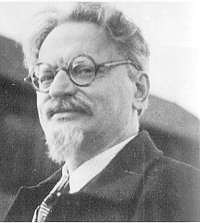
Still, like Chávez in Venezuela, Putin does have his supporters, including among youth. The BBC recently profiled one: Andrei Tatarinov, “an activist for the youth wing of the United Russia party” (Viewpoint: Pro-Putin cheerleader, Patrick Jackson, November 26, 2007). A few interesting facts about Andrei are that he used to be a follower of Eduard Limonov’s National Bolshevik Party (“I was going through a rebellious phase, reading books about Che Guevara, Trotsky, the Russian Revolution”) and that he identifies the political opposition to Putin as being “either anarchists or… want[ing] to drag us backwards – to the chaos of the 1990s or to the communist past”. Chávez, on the other hand, has described opponents of the referendum not as “anarchists” but ‘as “daddy’s little children”, “fascists” and “the children of the rich”, accusing them of acting on orders from the US Government’ (100,000 march against Hugo Chavez reforms, The Times, November 30, 2007). In Venezuela, anarchists — routinely denounced as bourgeois, fascist and right-wing, not only by Chávez, but by all the lapdogs of all the powers, old and new — have issued a few statements on the proposed reforms. One, Venezuela’s Constitutional Reform: A Threat to What Was Won Through Struggle is available via World War 4 Report; an extract from another is below.
INSURGENTES against Venezuela’s constitutional reform
Various organizations and individuals within Venezuela, each with a history of social struggle and each bringing with them diverse proposals from the anti-authoritarian and critical left, have assembled in the space of INSURGENTES (INSURGENTS) to forge a position against the proposed constitutional “reform” offered by the republic’s President, Hugo Chavez Frias.
Constitutions, in all countries, invariably reflect the power relations that exist between society’s different social classes. Today’s proposed “reform” simply confirms the victory obtained by transnational capital during the coup and petrol sabotage of 2002-2003 which created mixed businesses and has led to the handover of vast new mineral and petroleum concessions to foreign capital.
The President’s “reform” proposals, the modifications passed by the National Assembly and all of the other modifications that have been announced, fundamentally inscribe and accommodate global capitalism’s agenda to demolish, across the board, any obstacles which impede the growth of profit, access to the country’s enormous energy and mineral reserves, and the free circulation of capital, goods and services. They are an extension of what is called the “globalization” of the world economy – a process which reflects the predatory nature of international capital.
As a provider of energy, minerals and hard currency, Venezuela is one of the pillars of the world capitalist economy, offering vital support to the profitability of the big energy and mineral corporations and thus entirely implicated in a perverse and genocidal model of civilization.
The principal objective pursued by big capital with this “reform” is to give constitutional authority to the system of mixed property established between the National State and private capital (through mixed businesses), which is implied in the offering of sovereignty to the transnationals and foreign governments — and not only in oil but also in minerals and all public services.
This alliance was legalized in 2006 by the National Assembly when, without consulting anyone, they approved the Standard Contract of Mixed Businesses. By applying this organizational structure, transnational oil businesses changed their role from that of service providers to owners of 40% of the hydrocarbons that are under the subsoil of Venezuelan territory. This represents the essence of the so-called “reform” and explains the speed with which they want to place this issue before the people — in order to legitimize electorally their new political swindle. Once it has attained its primary objective of privatization, global capitalism will permit the Bolivarian government any number of corresponding structural changes; so long as it continues to allow the intensification and stabilization of their lucrative and exploitive activities. With the subordination of the State firmly in place via the creation of mixed-property (State/international Capital alliance) sovereignty is violated at the economic base of the entire society – not only in the oil industry but in all branches of the economy.
To obtain this the government, in the interest and behest of international capital, has by necessity to introduce, among others, the following changes:
1. Concentration of power in the President of the Republic (Articles 11, 16, 18, 70, 136, 141, 156, 158, 167, 184, 185, 225, 230, 236, 251, 252, 305, 307, 318, 320, 321, 328, 329 and the transitory measures), in flagrant contradiction to the principle of popular participation and leadership.
The proposed “reform” grants the President extensive powers which are not subject to any external control: Chief of State; Head of Government; Administrator of Public Finances and the National Budget; Author and Ratifier of International Accords and Treaties; Commander and Chief of the Armed Forces with the power to intervene in all of its branches and appoint officials; Creator and Director of New Territorial Entities and Public Powers; Directing the Budgets for the Missions; naming vice-presidents; establishing and arranging international reserves; Inspector and Director of the National Counsel of Government and the Counsel of State, and establishing and unilaterally directing the country’s developmental plans.
It is abundantly clear that the usurpation of the right to choose local and regional representatives by the President of the Republic — who under the terms of the reform will appoint them himself — is in direct contradiction to his claim of public electoral responsibility (article 70). In open complicity with the National Assembly and other public powers, the President will have the unilateral authority to execute these sweeping powers…
[Continued… DOC]
On a vaguely-related note, see also Alex Nunns, Car crash on the left, Red Pepper, December 2007–January 2008. “The increasingly bitter division of Respect into two conflicting factions looks set to destroy the most effective electoral challenge to the left of Labour in many years. Alex Nunns spoke to the main protagonists on either side of the split…” RESPECT (SWP) // RESPECT (non-SWP) // Socialist Alliance (UK) // Democratic Socialist Alliance (UK) // Campaign for a New Workers’ Party (UK) // Campaign for a Marxist Party