A former leading European neo-Nazi has claimed that he was the middleman in the theft of the Auschwitz sign bearing the three most powerful words from the Holocaust: “Arbeit Macht Frei”.
According to Polish and Swedish investigators, the theft was organised by Anders Hoegstrom — who set up the virulently anti-immigrant National Socialist Front in Sweden in the 1990s. “My role was to get the sign in Poland,” he told the Swedish tabloid Expressen. “I was the middleman and was supposed to take care of the sale.”
Högström, accommodation in Karlskrona, was the leader of the organization National Socialist Front before he was in December 1999 jumped to record and subsequently distanced themselves from Nazism. Högström was about to convert NSF to a party. Supporters greeted him with “Hail Högström.” After the defection Högström began to engage young people with problems through project Exit in Motala. He has also become well acquainted with TV personality Alice Bah. He was also able to reconcile with the alderman Fries that NSF had a far-reaching conflict. They played golf together, among other things. After the defection went Högström with the Social Democrats but then left the party and joined the Conservatives. Högström was later criticized for being together with the Board of Exit in Motala, acquired a gym with a value of 25 000 crowns and a rowboat with a value of 39 000 kronor. Rowing boat was taken over later by Högström yourself when Exit went bankrupt. Högström was charged 2007 for receiving stolen goods after he tried to sell stolen goods. Stolen antiquities found also in Högström’s home. Högström later acquitted of all charges of theft and receiving stolen goods. In August 2007 was sentenced Högström for doping offenses.
On the 12th October it has been ten years since the Syndicalist Björn Söderberg was attacked in his home and killed by Nazis in a suburb of Stockholm. The context in which the murder took place, was that Björn acted openly and consequently against racism and Nazism at his workplace.
One of the Nazis who participated in the killing of Björn Söderberg was Hampus Hellekant, notorious in surveying leftist activists, journalists and others that he perceived as his opponents. Since his release from prison he has changed his name and, according to himself also his politics. But, as the Research Group reveals in this weeks’ issue of Arbetaren, he has never stopped his activities, he has never stopped his monitoring.
The results of which, as we’ve seen, can be severe.
Last December a Syndicalist couple and their two year old daughter were the victims of a Nazi arson in a suburb of Stockholm. The family escaped the flames by climbing down the balcony to the floor underneath. Some months earlier Hampus Hellekant had published pictures and addresses of the couple on a Nazi web page, displaying them as antifascists.
We are experiencing an increasing level of Nazi violence very similar to the situation of the nineties. The social setting of today, with a financial crisis, increased marginalization and bigger divides between classes and a growing sense of insecurity among people is also very similar to then.
But the challenge we as antifascist activists face, lies in finding effective means of resistance.
The political decline of Anarchism in the ‘thirties was considered by many of its followers as a mere temporary setback in the long march towards the form of society that they dreamed of accomplishing. During those dark years of Fascist triumphs they believed stubbornly in the defiant words which end Malatesta’s pamphlet Anarchy and which, in the final analysis, prove to be historically relevant when applied to the anti-Fascist activities of Italian anarchists in Australia:
Whatever happens, we shall have some influence on events, by our numbers, our energy, our intelligence and our steadfastness. Also, even if now we are conquered, our work will not have been in vain; … If today we fall without lowering our colours, our cause is certain of victory tomorrow.
Of course, it would be remiss not to mention that the Communist Alliance is also up and running, at breakneck speed, to the next federal election. (Altho’ it’s unlikely that the CPA will dissolve itself into its Alliance.)
The forthcoming elections offer a good opportunity to commence the process of building a broad coalition of left and progressive forces that will eventually be strong enough to stand up to the power of the corporations and be capable of changing the direction of politics in Australia. Some trade unions are considering standing candidates in the next elections. They should be supported. The Communist Alliance will be standing, as will the Greens and other political forces that offer a new direction in policy. These are some of the forces that could forge a real alternative to the status quo.
Speaking of alternatives, Socialist Alternative is organising a heap ’em big conference over Easter. Titled Marxism 2010, there’s a few items of interest on the agenda: Tom O’Lincoln talks on the new edition of his book on the history of Australian communism; John Pilger (who’s an anarchist when he attends anarchist events) is speaking; Trevor Ngwane will be providing infos on contemporary struggles in South Africa; Lousie O’Shea is discussing Magnus Hirschfeld and German socialism (see : Socialism and Gay Liberation: Back to the Future, Doug Ireland, New Politics, Vol.12, No.2, Winter 2009; also : Hubert Kennedy, ‘Johann Baptist von Schweitzer: The Queer Marx Loved to Hate’, Peremptory Publications, 2003 (1995) [PDF]); a mandatory session dissing anarchism and Did Lenin lead to Stalin? (a debate between lecturer in Russian history at LaTrobe University Adrian Jones and SAlt member Diane Fields) and a presentation by Andrew Moore (Associate Professor of History at the University of Western Sydney) on ‘How real was the threat of fascism in Australia during the 1930s?’.
Oh yeah…
In the UK, the CPGB is calling on proletarians of the world to unite in defence of Rees-German and the Left Platform. Supposedly, the majority of the Party is united in support of AlexCallinicos and Martin Smith, while a minority is united in support of John Rees and Lindsey German. As a result, the SWP may split… or not.
Which Anarchism? Which Autonomism? Between Anarchism and Autonomist Marxism
Heather Gautney WorkingUSA
Vol.12, No.3, September 2009
Anarchists and autonomist Marxists played a vital role in the development of the Alternative Globalization Movement (AGM), especially with regard to their distinct contributions and insights in the realm of strategy and organization. Despite their common anticapitalist and antiauthoritarian orientation, however, their practical and theoretical approaches to issues of organization and change remain substantially different and in some contexts have been deeply divisive. This paper explores the theoretical and practical similarities and differences between anarchists and autonomists. It begins with an analysis of the tenuous binary between “lifestyle” and “social” anarchism, primarily within the U.S., where anarchism has significantly impacted AGM activism. What follows is a discussion of autonomist movements in Italy and Germany from the 1950s onward. The article then compares both tendencies in terms of how they balance the organizational requisites for change with their desires for freedom.
After the smashing of the Niketown and Starbuck’s windows at the 1999 Seattle protests against the World Trade Organization (WTO), the mainstream press marveled at the appearance of a new generation of “anarchist” protesters. Time Magazine journalist Michael Krantz wrote about “How Organized Anarchists Led Seattle into Chaos” to gripe about the young vandals and express his awe at how well organized they seemed to be: “The anarchist movement today is a sprawling welter of thousands of mostly young activists populating hundreds of mostly tiny splinter groups espousing dozens of mostly socialist critiques of the capitalist machine. Ironically, the groups are increasingly organized . . .” (Krantz 1999). Newsweek, The Wall Street Journal, and various other mainstream newspapers and magazines later derided these same activists as young, violent and destructive, politically incoherent, and terrorist.
In 2009 218 aggressive xenophobia assaults were registered in Russia that resulted in 75 killed and at least 284 injured people, Antiracism.Ru reports.
The most popular targets were Uzbeks (14 murdered and 12 injured), Kyrgyz (8 murdered, 10 injured), Tajiks (7 murdered, 18 injured), Russians (7 murdered, 13 injured); the list of injured victims also includes 5 Kazakhs and 3 Turkmen.
Most of the assaults were registered in Moscow and the Moscow Oblast (33 murdered, 131 injured), St. Petersburg and the Leningrad Oblast (8 murdered, 26 injured), Nizhniy Novgorod (5 murdered and at least 44 injured).
According to Antiracism.Ru, in 2008 belligerent nationals killed at least 128 and injured at least 394 people.
Kevin Russell, the singer from German rock band Böhse Onkelz, has been arrested over a hit and run which has left two people in a life-threatening condition.
On New Year’s Eve, the driver of a luxury 420-horsepower Audi caused a horror accident on a Frankfurt motorway.
But while the victims fought for survival in their burning car, the driver who caused the crash fled the scene.
It is now suspected that Russell (45), lead singer with notorious rock band Böhse Onkelz – a play on the German for Bad Uncles – had been behind the wheel of the Audi, and may have been under the influence of drugs.
The accident took place at 8.25pm on the A66. Friends Jamal A. (19) and Fahdi A. (21) were driving in their Opel Astra when suddenly a black Audi R8 sports car rammed into them, pushing their car against the guard rail before it caught fire…
“Böhse Onkelz were founded in Frankfurt in 1979, originally as a punk band. The four-piece group was known during the 1980s for aggressive song titles like ‘Türken raus’ (‘Turks Out’) and ‘Deutschland den Deutschen’ (‘Germany for Germans’). Later the band turned away from the neo-Nazi scene…” “The “rehabilitation” (and commercial success) of the Onkelz has progressed to the extent that they were considered fit to headline an anti-racist (“Rock Against the Right”) concert in September 2004 in Halle-Munsterland”: see : ‘Subcultures, Pop Music and Politics: Skinheads and “Nazi Rock” in England and Germany’, Timothy S. Brown, Journal of Social History, Fall 2004, Vol.38, No.1, [PDF].
Nazi Semiotics
Gazeta Wyborczaidentifies those involved in Auschwitz sign theft. The daily established that among the suspects are a 35-year-old Swedish neo-Nazi group leader Anders H., a 40-year-old immigrant to Sweden from former Yugoslavia Vladimir Z., and a 29-year-old Polish construction company worker Marcin A., who led a gang of four minor burglars.
Two years ago Marcin A. went to Sweden and found a job at the company owned by the father of Anders H. The neo-Nazi leader commissioned the Pole to steal “Arbeit Macht Frei” sign from the Auschwitz gate and his Yugoslavian accomplice provided the car to transport the sign from Poland to Sweden. The Pole hired Andrzej S. alias Soczewa, an unemployed potter with a criminal record who completed the gang and committed the theft.
The alleged instigator of the theft of the “Arbeit macht frei” (“Work will set you free”) sign from the former Nazi concentration camp at Auschwitz, a man living in Sweden, is said to have intended to use the proceeds from the sale of the sign to finance an assassination plot at the Swedish Parliament and at the prime minister’s headquarters in Stockholm. The claim was reported in the Swedish media Jan. 2, citing sources in that country’s intelligence services…
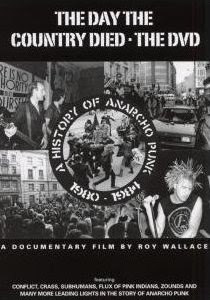
A surge of popular interest in anarchism occurred during the 1970s in the UK following the birth of punk rock. However, while the early punk scene appropriated anarchist imagery mainly for its shock value, the band Crass expounded serious anarchist and pacifist ideas, and went on to become a notable influence in the burgeoning Anarcho-Punk movement. Many anarcho-punks are supporters of issues such as animal rights, feminism, the anti-war movement, the antiglobalization movement, and many other social movements. The story of the movement is told by some of the most influential performers, including; Penny Rimbaud (Crass), Colin Jerwood (Conflict), Colin & Kevin (Flux of Pink Indians) Dick Lucas (Subhumans), Zillah Minx (Rubella Ballet), Gary Buckley (Dirt), Steve Lake (Zounds), Mark Wallis (Liberty), Gee Vaucher (Crass), Dave Hyndman (Hit Parade), Rob Millar (Amebix), Rodney Relax (Alternative), Stringy & Snout (Erratics) and Gerard Evans (Flowers in the Dustbin). The interview footage is laced with both audio and visual music performance, some extremely rare, from the main performers on the scene including – Crass / Conflict / Subhumans / Liberty / Toxic Waste / Chumbawamba / Sacrilege / Inner Terrestrials & many more. (90 Min)
Of course, the “Australian Defence League” or ADL has a history (as does the ADL).
In 1936 [Harrison, Eric Fairweather (1880 – 1948)] had been a government delegate to the International Labour Conference in Geneva and in 1937-43 was president of the Australian Council of Employers’ Federations. As chairman of the Victorian branch of the Australian Defence League he was involved in the 1938 campaign to stimulate voluntary recruitment for the Citizen Military Forces. In World War II he was called from the reserve of officers and again appointed commandant of the R.M.C. on 1 August 1940 as an honorary brigadier; he was also responsible for a school for trainees seeking A.I.F. commissions. One of the Duntroon cadets named him ‘Banana Body’: it ‘may have been irreverent but it was apt; in profile Brigadier Harrison, an imposing figure, was not fat but noticeably convex’. He retired from the R.M.C. on 15 January 1942. In 1944 he became president of the Victorian Employers’ Federation and represented employers as a member of the Discharged Servicemen’s Employment Board. He was still holding these posts when he died in Melbourne on 15 April 1948; he was cremated with Anglican rites.
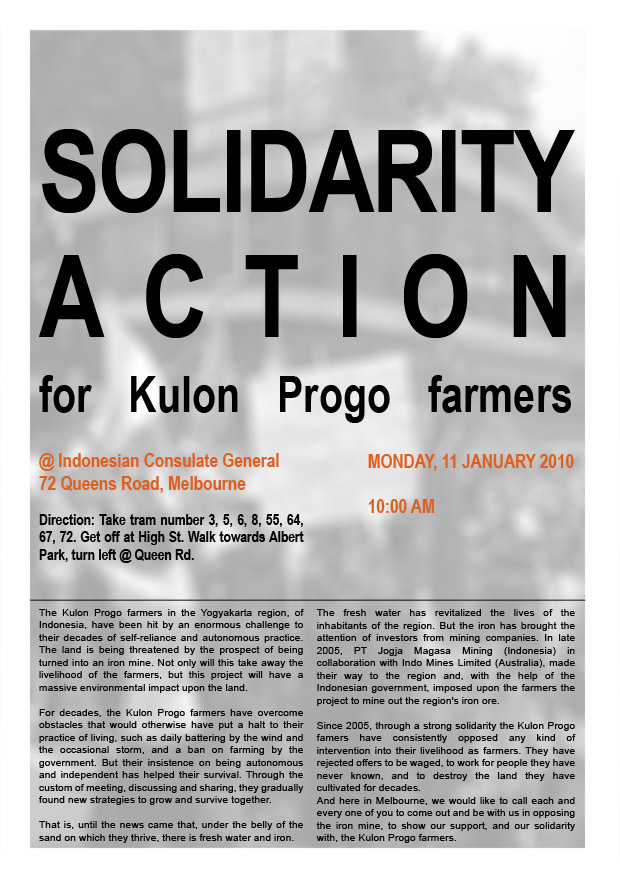
WHEN : 10am, Monday, January 11, 2010 WHERE : Indonesian Consulate General, 72 Queens Road, Melbourne
HOW TO GET THERE : By public transport: Take tram numbers 3, 5, 6, 8, 55, 64, 67 or 72. Get off at High St. Walk towards Albert Park, turn left @ Queens Rd.
The Kulon Progo farmers in the Yogyakarta region of Indonesia have been hit by an enormous challenge to their decades of self-reliance and autonomous practice. Their land is being threatened by the prospect of being turned into an iron mine. Not only will this take away the livelihood of the farmers, but the mining project will have a massive environmental impact upon the land…
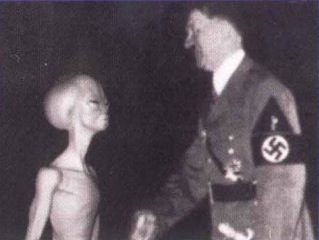
Ex-Nazi scientists continue to develop new flying saucers in secret underground bunkers in the New Swabia region of Antarctica. FACT.
Our discoveries have led us into the production of a number of currently suppressed and sometimes vilified books which are now underground bestsellers. “UFOs–NAZI SECRET WEAPON?” was our first title, now sold out in 5 complete editions. Our second book, “SECRET NAZI POLAR EXPEDITIONS”, is coming up fast and has sold out 2 full editions. Foreign language translations of these books are selling briskly, and it is becoming obvious to everyone that the media-enforced blockade of the truth has now been broken. Three additional books are currently under production and these will round out our Phase I Publishing Program: “THE CIA-KGB-UFO COVERUP”, “THE ANTARCTICA THEORY” and “THE LAST BATTALION”.
“UFOs–NAZI SECRET WEAPON?”
This sensational, underground best seller is now in its 5th edition in English and its 2nd edition in German. French, Spanish and Italian editions are now in the planning stages. This is the most talked-about U.F.O. book of the decade! As the center of controversy, its author, Christof Friedrich, has become the subject of much attention and has been a frequently-invited guest on many internationally broadcast TV and radio talkshows which SAMISDAT technicians have recorded on tape cassettes for sale to the UFOlogers and intrigued members of the public. This book is certainly intriguing, for it reveals for the first time amazing plans for Nazi Germany’s ultimate secret weapon: the Flying Disc!
“SECRET NAZI POLAR EXPEDITIONS”
Now in its second, enlarged edition, with many newly-discovered photos and illustrations. This is our latest best-seller. Read for the first time information which has been suppressed by Allied Censorship for over 40 years.
Author Christof Friedrich tears away the veils of wartime secrecy which surround Nazi Germany’s Arctic and Antarctic activities. Read how the secret THULE Society aided Hitler’s plans for Germany’s future. Discover the truth about Rudolf Hess and the secret knowledge which the Allies fear he will tell the world. Delve deeply into Hitler’s hidden teenage years. Discover Hitler’s submarine strategy and his postwar plans. Study the amazing pictures taken from NATO archives which reveal mystery submarines, U-boat designs and secret production facilities. A truly unique book!
The ‘Fascist’ Cricket Tour of 1924–25
Andrew Moore Sporting Traditions, Vol.7, No.1 (November, 1990)
[PDF]
In the inter-war period Australian political life was influenced by various ideologies imported from Europe. Bolshevism added clarity and rigour to Australian radicalism; class conscious Australian workers found much to celebrate in the successful October 1917 Revolution in Russia.
At the other end of the political spectrum many members of the comfortable classes were inspired by Benito Mussolini and subsequent fascist movements in Europe. Fascism came to be widely perceived as an antidote to Red Revolution. In the elite clubs of Sydney, Melbourne and Adelaide fascist panaceas were applauded over cigars and port, while conservative journals canvassed the prospects of an antipodean Mussolini emerging to teach sections of the militant Australian working class a lesson or two in industrial relations. By 1931 a mature form of Australian fascism had emerged in the form of an organisation known as the New Guard…
France, May 1968 : Even sport was touched by May ‘68. In a long-forgotten incident, a hundred or so footballers occupied the headquarters of the French Football Federation on avenue Iéna to demand reforms to contractual conditions that had previously meant, in effect, indentured players being unable to choose their club at the end of their contract. The standoff lasted five days and resulted in the concessions being met, standard contracts being introduced into French football the following year.
See also : Fire & Flames Riotwear | blog | “If Cantona espouses any political theory, it is anarchism. Conventional politics, he says, leaves him cold. Another hero is the anarchist singer Léo Ferré, whose songs taught him “the taste of rebellion”. “There’s a fine line between freedom and chaos. To some extent I espouse the idea of anarchy. What I am really after is an anarchy of thought, a liberation of the mind from all convention.” ~ Eric: Le Roi., Andy Mitten, Relentless, April 16, 2009.
4.
Jeff Monson was sentenced on October 1, 2009 to 90 days of work release while on electronic home monitoring after pleading guilty in July to first-degree malicious mischief and second-degree malicious mischief for vandalizing the Capitol and an armed services recruitment center. Monson was arrested after admitting in a December 2008 interview in “ESPN The Magazine” to spray-painting an anarchist symbol on the Capitol.
Two Greek anarchists are making molotov cocktails. One says to the other: "So who will we throw these at then?" The other replies: "What are you, some kind of fucking intellectual?"